 Gear
Travel Capsule Wardrobe Guide: Plan, Pack, and Mix
A travel capsule wardrobe keeps Lisbon weekends polished with mix-and-match essentials, stain-smart dinner outfits, and a carry-on packing plan.
The short versionA travel capsule wardrobe is a small set of clothes that mix and match, making it easier to dress for a trip without overpacking. Build it around versatile pieces in a coordinated palette, choose comfortable, travel-friendly fabrics, and make sure each item works in several outfits for the activities and dress codes you have planned. The result is lighter luggage, simpler outfit choices, and looks that can shift from daytime exploring to dinner.
Picture a long weekend in Lisbon: a market lunch, an afternoon walk, and a dinner reservation at eight. You want to look put together for all of it without dragging a heavy suitcase up three flights of stairs. A travel capsule wardrobe handles that.
It’s a small, deliberate set of pieces that all work together, so every outfit mixes with every other one.
This guide covers how to plan your capsule, pick colors and fabrics that travel well, choose the essentials, and pack everything into a carry-on. We’ll also cover the food-led edge: dinner-ready, stain-smart outfits that still fit your carry-on limits.
Why a Travel Capsule Wardrobe Works
A capsule wardrobe is a small set of pieces that all work together, so every outfit you pack earns its place.
The mindset behind a small wardrobe
Start with a few versatile, mix-and-match pieces. Consider a solo diner travelling from Lyon to Porto with one carry-on: dark trousers, two tops and a light jacket cover a market lunch, a riverside walk and a dinner reservation, with no repacking.
The idea is fewer pieces doing more work. Less is more, and quality over quantity matters just as much. A well-cut knit that holds its shape beats five cheap tops that pill after one trip. Pack light, dress well.
What you gain from packing a capsule
Packing this way pays off in five ways:
- Lighter luggage, less stress. Fewer pieces means less to haul through the station and up the stairs to a fourth-floor flat.
- Easier outfit decisions. Every top already goes with every bottom, so there’s no morning standoff over what to wear.
- Room for souvenirs. That spare space fits a jar of olive oil or a ceramic bowl from the market.
- Carry-on or backpack only. A small bag skips the baggage carousel altogether.
- Better organization. Packing cubes keep everything sorted from the first night to the last.
Mistakes people make with a capsule
The first trap is random pieces: one-off items that match nothing else in the bag. Give every new top at least two bottoms to pair with. The second is minimal looks that all look the same, so every dinner feels like the lunch you already wore.
The third is outfits that read as repetitive, where one narrow palette blurs lunch and dinner together in photos. Add one accent color or a single statement piece to break the pattern.
Plan and Build Your Capsule
A capsule wardrobe starts with a closet audit, not a shopping cart. Sort what you own into pieces you reach for and pieces you don’t, then buy only the gaps.
How many pieces you actually need
Picture a reader packing one carry-on for a week in Lyon. They need a small set that mixes:
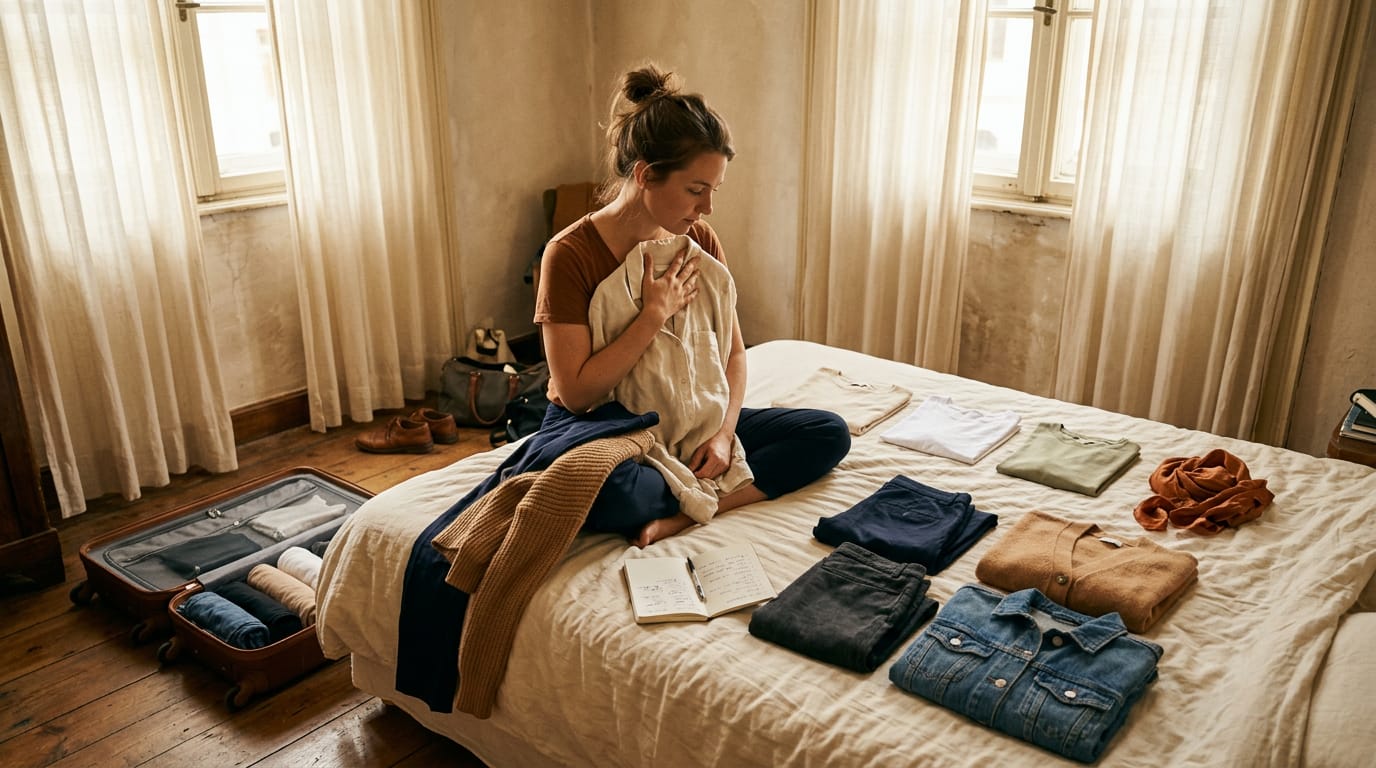
- Nine pieces, 27 looks. Three tops, three bottoms, and three layers. Mix any top, bottom, and layer for 27 outfits.
- 10 to 15 items for a week. Keep your total in that range.
Add a dress or striped pants for dinner. A sample seven-day list looks like this:
- Three tops
- Three bottoms
- Three layers
- One dress or striped pants
Matching your wardrobe to the trip
Match outfits to the trip type:
- Business: pieces that go from meeting to dinner.
- Cruise: day-to-night pieces for ports and dinner.
- Family: easy pieces for long days, plus one dressier outfit.
- Getaway: equal parts long lunch and late table.
Season changes the mix. A warm-weather spring break needs lighter fabrics and one layer for cool evenings. Fall trips lean on layers you can add or shed.
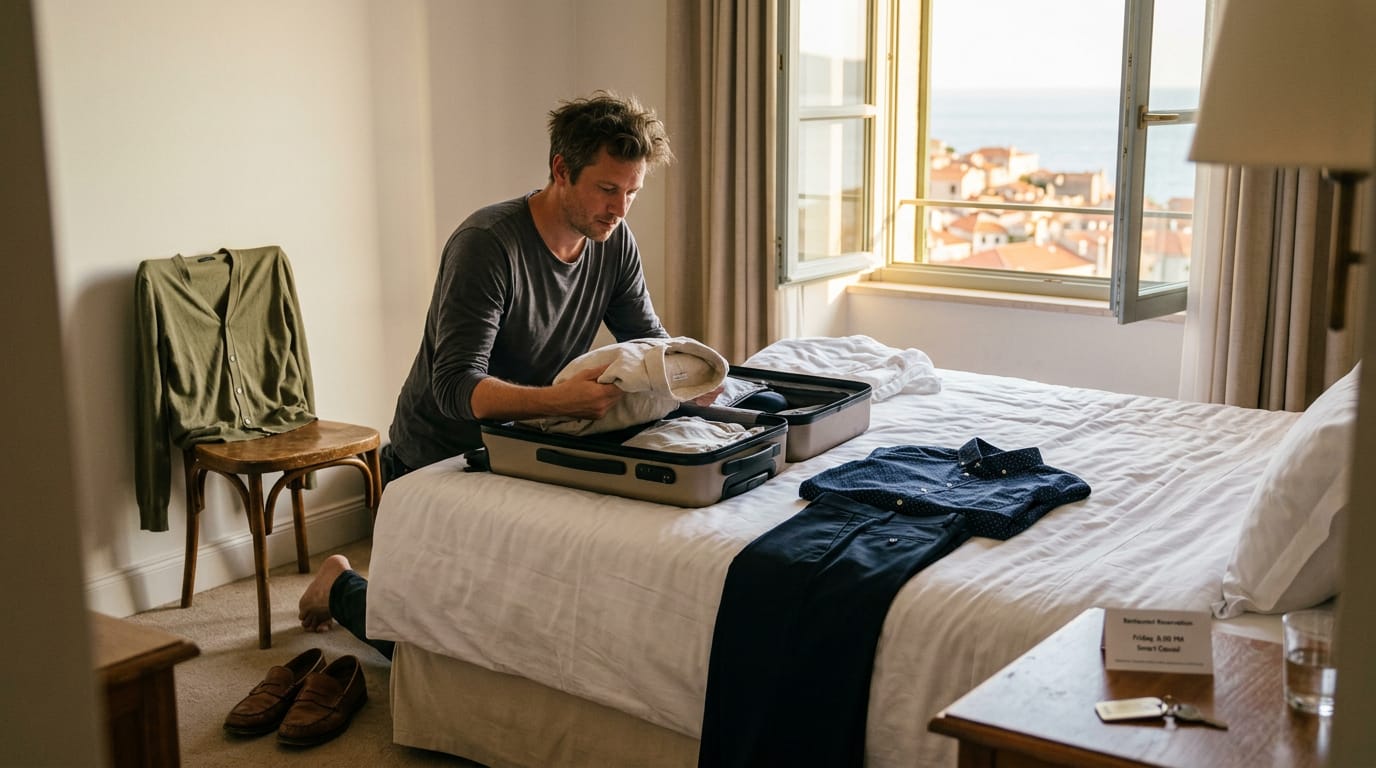
Check the dress code when you book the table. A reader with a Friday smart-casual reservation needs one dressier piece and a layer they already packed. Pack for the dinner you’ve booked, not every possible one.
Favor darker or patterned pieces that forgive a splash of sauce.
Simple rules for what makes the cut
Four rules decide what stays in the bag:
- Rule of three wears. If a piece can’t show up in three outfits, it stays home.
- Only pack what you love. Pack fewer pieces you love, not more you might wear.
- Each piece pairs with several. A plain black skirt works with three tops; a patterned one that matches a single blouse gets left behind.
- Avoid one-match items. Anything that matches just one other piece earns a slot only if the trip truly needs it.
Balancing shape and proportion
- Balance silhouettes. Pair a relaxed piece with a fitted one, so neither overwhelms the other.
- Avoid 50/50 splits. Equal top and bottom space cuts the outfit in half. Let one piece lead.
- Long layers vs cropped bottoms. Pair a longer layer with shorter bottoms, or a cropped layer with fuller pants.
Picking Colors and Fabrics That Travel Well
Your palette and your fabrics decide how much of your bag you’ll actually wear.
Start neutral and add a few accents
Build around neutral foundation colors, like navy, cream, and khaki, because they mix with everything you pack. Then add a few accent colors, two or three at most, so the same trousers look fresh at a bistro lunch and a rooftop dinner.
Add a signature piece or pattern, like a striped shirt, to give the capsule a personality. Neutral prints like stripes do the same job without shouting.
Consider a couple packing for a ten-day trip with dinner booked most nights. They pack two neutrals, one accent blue, and that striped shirt, and dress for any table on the list. Fewer colors, more outfits.
Match your color season: if you know which palette flatters you, start there. Pick colors you’ll wear every day rather than colors that only look good on the hanger.
Fabrics that handle wrinkles and washing
Pick fabrics for how they behave in a suitcase, not how they look in a shop. Look for:
- Wrinkle-resistant fabrics that come out of the bag looking presentable.
- Breathable, lightweight fabrics that stay comfortable on hot walks.
- Cotton, linen, and pima, natural fibers worth starting with.
- Sink-washable pieces that hold their shape after a rinse and a squash in a packing cube.
- Stretch for movement, so climbing to a rooftop bar feels easy.
- Stain-resistant fabrics for dining out, so a splash of sauce doesn’t end the evening.
Test new pieces in the sink before you go.
The Essential Pieces to Pack
Which pieces will carry the whole trip? Start with tops and layers, since they do the most mixing.
Tops and layers that mix easily
Stick to tees and tanks in colors that pair with everything else. Pack a crisp button-up and a lightweight overshirt (a shirt-jacket you can wear open or closed) for cool dinners and warm afternoons.
Add a cardigan or sweater for evenings, plus a blazer or jacket that layers over anything. Hoodies suit flights, and a turtleneck is a smart base under a sweater when the weather turns.
Bottoms, from pants to swimwear
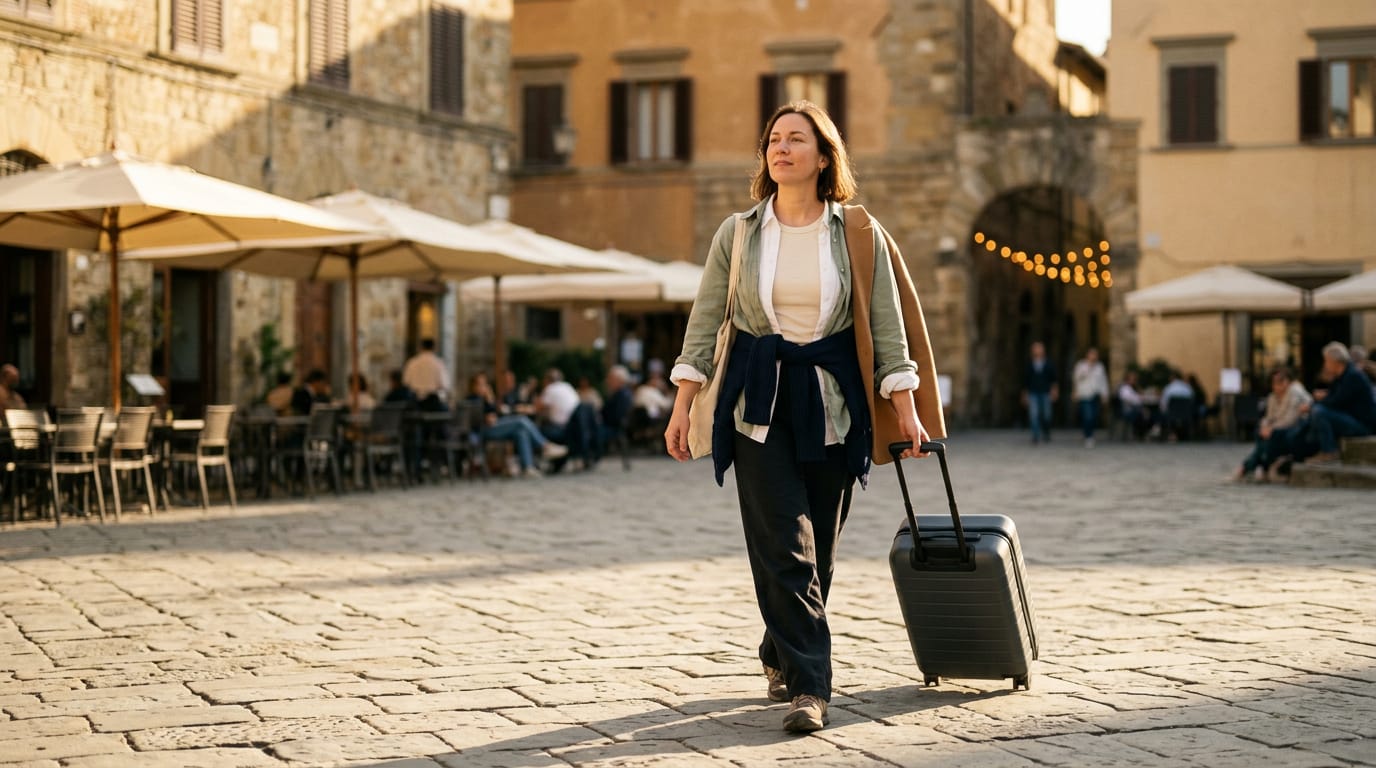
Pack travel pants and trousers in a dark, wrinkle-resistant fabric you’d happily wear to dinner. Jeans and wide-leg pants add variety: jeans for walking days, wide-leg for heat and long dinners.
Shorts earn their space only if you’ll wear them in the warmest hours. Skirts and dresses pack small and dress up fast. Pack swimwear only for a pool, lake, or coast. Choose the piece that works every day over the one that looks good once.
Shoes that cover walking and airports
Shoes take the most wear, so limit yourself to two or three pairs:
- Loafers and ballet flats dress up dinners and look finished with trousers or a skirt.
- Sneakers and sandals cover long walking days and warm afternoons.
- Slip-on clogs come off in seconds at airport security.
- Boots for fall earn their place only if they stay comfortable for hours.
Comfortable shoes matter most on food tours. Think of a reader hopping between a bakery, a market stall, and a wine bar all afternoon. Broken-in sneakers carry them the whole way, and the loafers wait for dinner. Comfort wins.
Bags and extras that finish the look
Your personal item (the bag that fits under your seat) can be a tote, as long as it’s sized right. Think of a reader who shops a market by day and dines out at night.
Their tote carries the haul, and one scarf takes the same outfit from lunch to dinner, with no second bag. Jewelry and scarves take little room, and sunglasses plus a packable hat cover outdoor lunches.
A crossbody or saddle bag keeps your phone and tickets close in crowds. Choose accessories that change an outfit, not ones that add weight.
Stretching a Few Pieces into Many Outfits
How do you cover a week of market lunches and long dinners with nine pieces? Stop packing for single outfits and start pairing.
Easy styling tricks that stretch your pieces
- Cardigan worn backwards. Buttons at your back give it a softer, different look.
- Button-up as shacket. Wear it open over a fitted top. A shacket is a shirt worn like a light jacket.
- Dress as tunic. Belt a simple dress over trousers or leggings, and it becomes a tunic.
- Skirt worn as dress. Wear a long skirt high at the waist with a fitted top tucked in.
- Scarf or bodysuit as top. Tie a scarf at the neck as a halter, or wear a bodysuit under a jacket.
- Convertible tops and vests. One top gives two looks, and a vest over a shirt covers cooler evenings.
How many outfits you can really make
Think of a reader packing for a week of market lunches and one long dinner, with nine pieces that yield 27 looks so no single outfit has to carry every meal. Small bag, full week.
The count climbs in steps:
- Two-piece outfits reach 36 looks by mixing tops and bottoms.
- Restyling reaches 54 or 76 looks once you add the tricks above.
- Suits and matching sets add more, since jackets and trousers work as separates.
Outfits for days, beaches, and evenings
- Daytime casual looks. Pair everyday tops and bottoms for walking from market to museum.
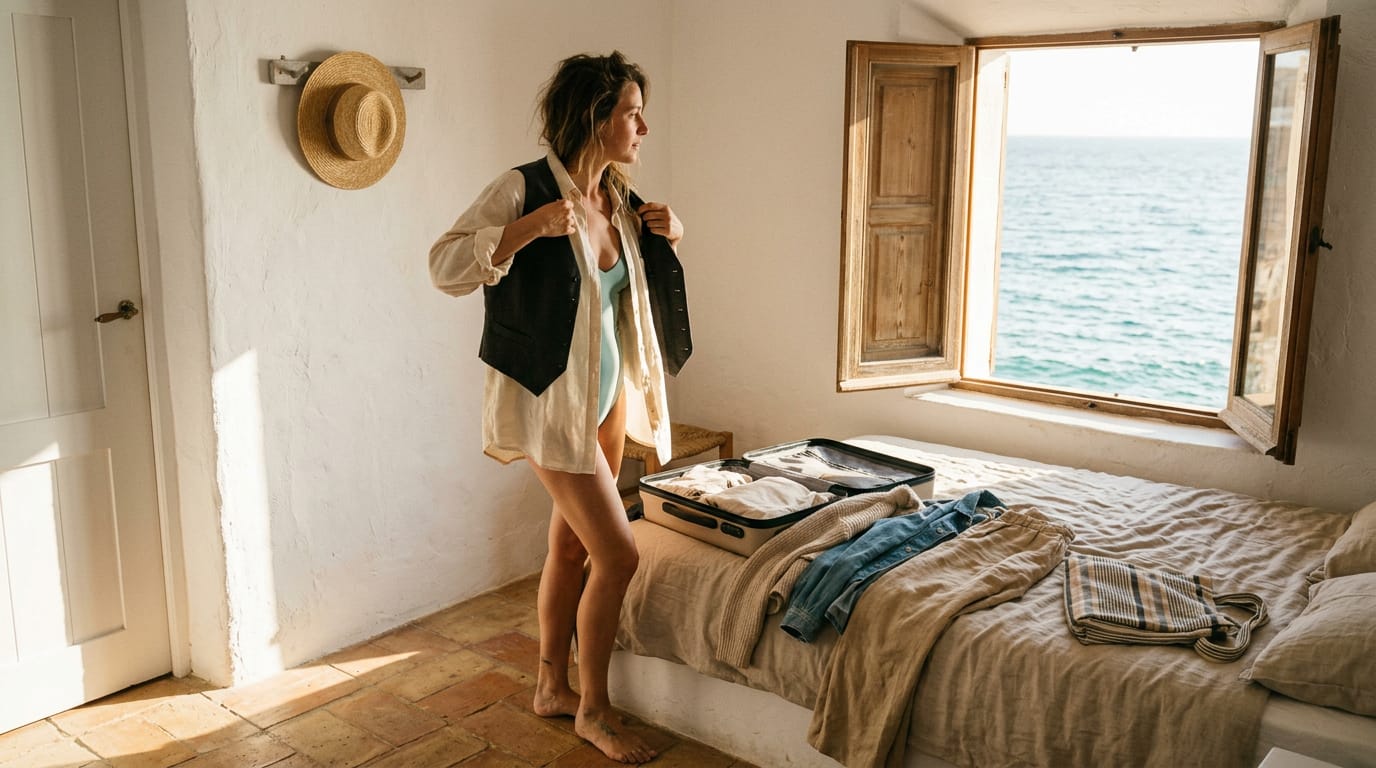
- Beach-ready outfits. Use the lightest pieces, like a shirt worn open over a swimsuit.
- Evening casual looks. Swap in the convertible top and add a dark vest, which hides the odd splash from a long dinner.
- Swap layers for new looks. Keep the base and change the cardigan, shacket, or vest to move from lunch to dinner.
Where to Shop for Your Capsule
Shopping for a capsule is less about finding the perfect wardrobe and more about filling the gaps on your list. Decide where each piece comes from once you know what you need.
Favorite picks at splurge and budget prices
Some pieces are worth a splurge, like a well-cut blazer or leather shoes you’ll wear on every trip for years. Others do fine at budget prices, like a plain tee or a basic knit you’ll wear under a jacket.
For brand picks, start with labels that already fit you well, then look for the same cut and fabric elsewhere. Amazon and Quince are worth a look for budget basics, but check fabric content and recent reviews, since photos can flatter a thin knit.
The question isn’t how much a piece costs. It’s how often you’ll wear it. Pieces on sale only earn a spot when they fill a gap on your list, because grabbing a discount with no plan is how a capsule quietly outgrows your carry-on. Checking cabin bag sizes before you buy keeps the capsule within your carry-on.
Think of a reader heading to Lyon for a work trip who needs one dinner-ready layer for a long lunch. A dark knit that hides a splash of red wine earns its splurge, while a budget tee covers the walking. Pay more where it counts.
Tools for tracking deals and saving picks
A few tools keep your list organized and your budget honest:
- Picksy collection boards. Gather every piece you’re considering in one place so your list doesn’t scatter across tabs.
- Price-drop alerts. Turn them on for the items you want most, then wait for the price to move instead of refreshing the page.
- Shareable shopping boards. Send your board to a travel partner or friend to weigh in on color and fit before anything gets ordered.
Save first. Buy later.
Ways to Pack and Tools That Help
The way you pack decides whether your capsule works on the road, so the methods and tools matter as much as the pieces.
Ways to roll, fold, and organize clothes
Rolling suits soft knits and T-shirts, while folding keeps structured pieces like a blazer in better shape. Use packing cubes to keep categories together and compression bags to press down bulky layers.
They won’t fix an overpacked bag, so start with fewer pieces.
Sketch a sudoku-style packing grid with days down the side and tops, bottoms, and layers across the top. Fill it so each day gets a different combination and every piece earns at least one outfit.
If you’re planning one laundry stop, the grid only needs enough days to reach it.
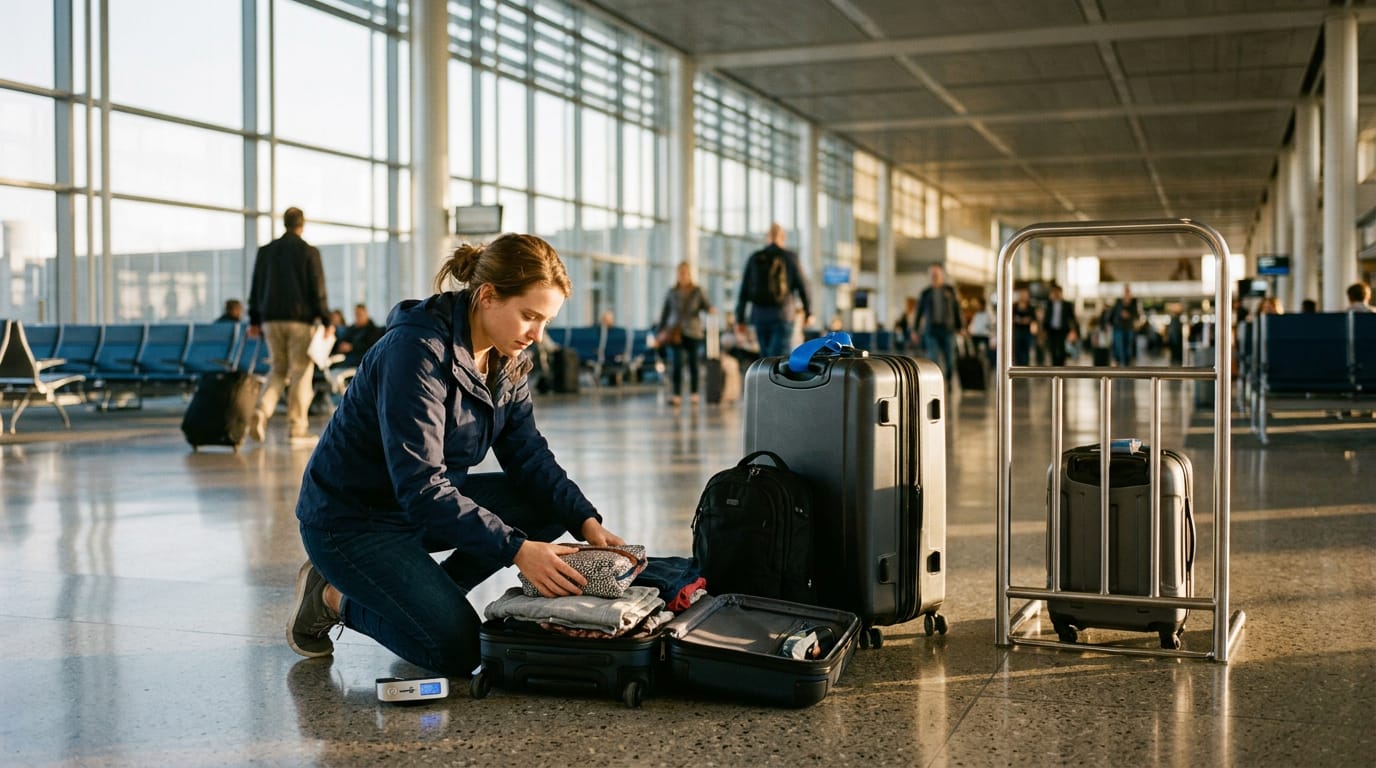
Consider a reader with four food-focused days in Lyon and one carry-on. She rolls her knits, folds her blazer, and reuses two tops and one dark skirt across dinners, so the bag still closes without a fight.
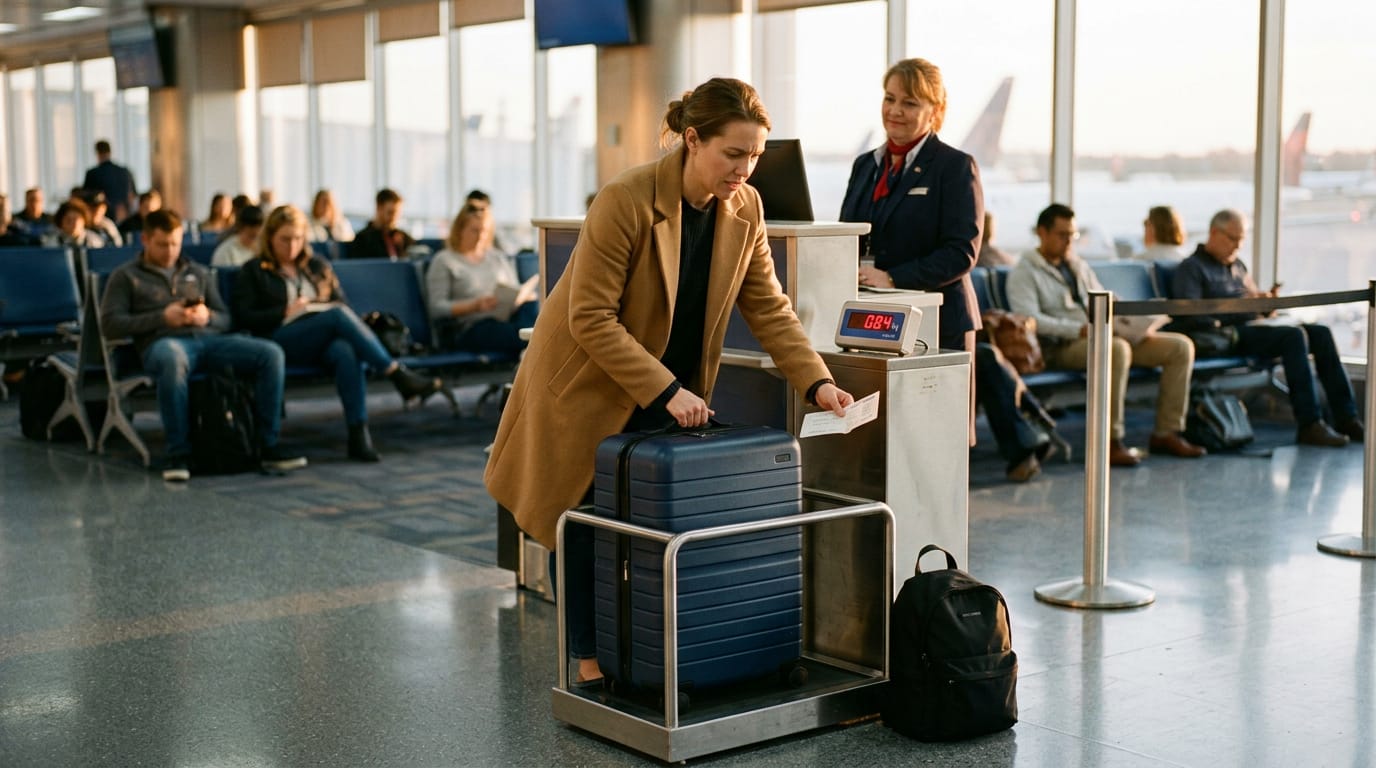
Carry-on limits come first. According to Carry-on baggage on low-cost carriers. A no-frills journey?, low-cost airlines don’t take a common approach to cabin bag size or pricing, so check the size and weight rules on your booking before you pack.
Saving outfit ideas for the road
Save each planned outfit to a lookbook or selfie album on your phone, then pin an outfit grid where you can open it in seconds.
Think of a reader who lands in Bologna too bleary to remember which shoes go with the black trousers. They open the album, copy the saved look, and head straight for lunch.
Saved looks mean less jet-lag decision-making: you decide once, at home, rather than again at the hotel mirror. Less thinking, more lunch.
A travel capsule wardrobe works best when you treat it as a system, not a pile. Plan your pieces, keep the palette tight, and let a few well-chosen items do the heavy lifting.
Every outfit you wear to a market counter or a candlelit dinner is one you didn’t have to overthink.
Pack light, choose fabrics that shrug off a splash of sauce, and save your favorite shoes for the table that matters most. Pack less, eat more, and let the outfit take care of itself.
References
- Carry-on baggage on low-cost carriers. A no-frills journey? — hdl.handle.net (2022)
Sources
- Carry-on baggage on low-cost carriers. A no-frills journey?, hdl.handle.net,