 Gear
Delta Carry-On Bag Rules: Size, Weight and Personal Items
Delta carry-on bag rules cover size, personal items, and gate checks, so you can choose a roller that fits before boarding, even on regional flights.

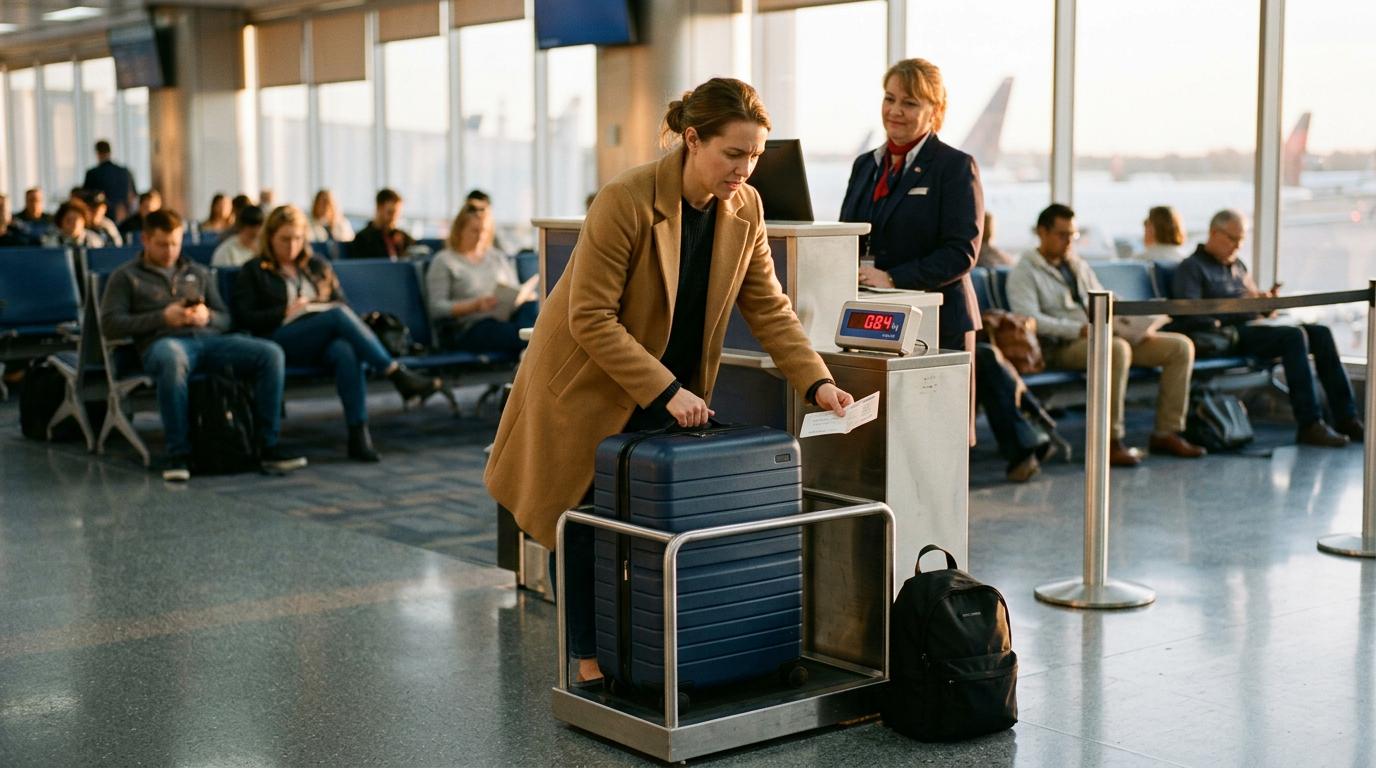
The short versionA Delta carry-on bag is cabin luggage you bring onboard, alongside one personal item that must fit under the seat. For most flights, keep the carry-on within 22 x 14 x 9 inches including wheels and handles, check origin-specific weight limits, and remember that fare, aircraft size, bin space, and partner-airline rules can affect whether it stays with you. Measure and weigh bags before leaving home, and keep essentials in your personal item in case the carry-on is gate checked.
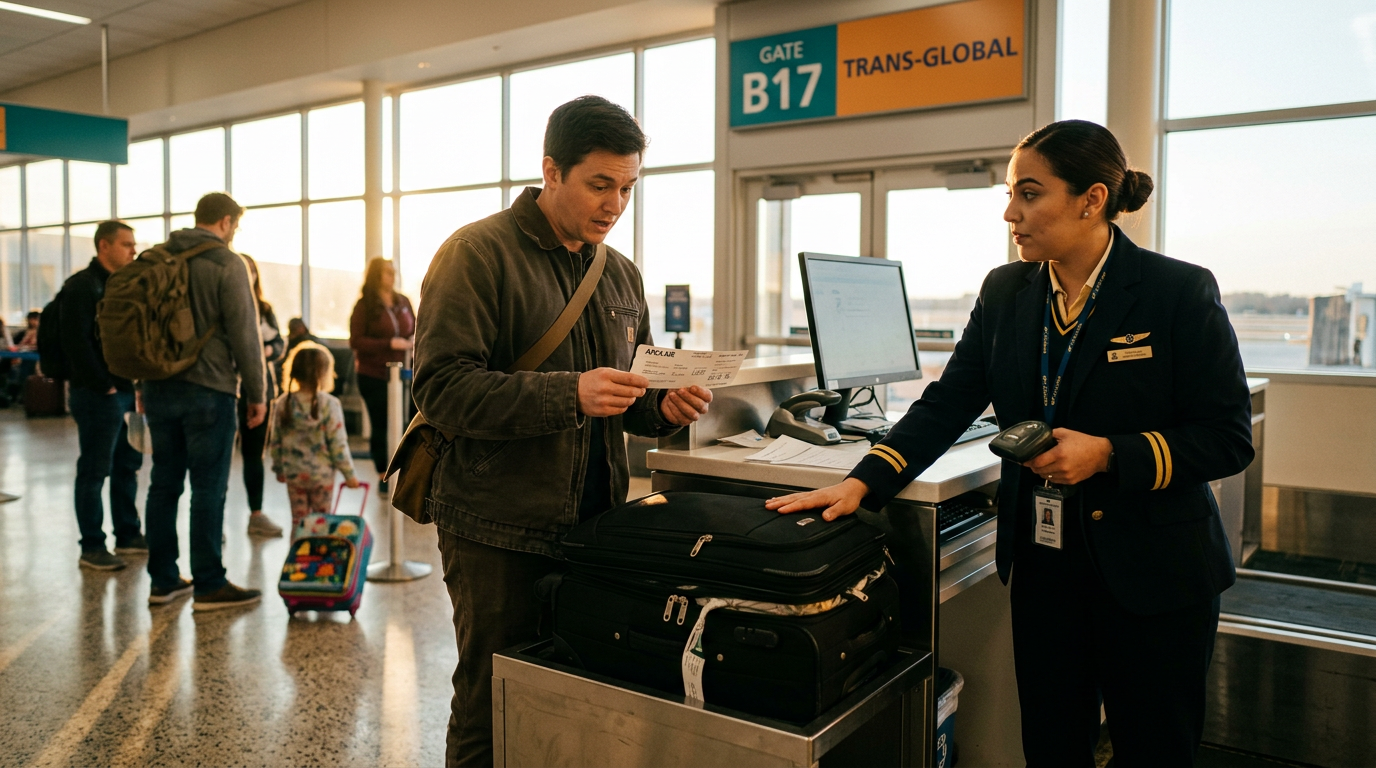
Picture the gate agent eyeing your roller bag while the line behind you grows. A bag that fits the rules keeps you moving, and one that doesn’t can turn boarding into a scramble.
Delta’s carry-on and personal item rules cover size, weight, fares, enforcement, and gate checking, and they’re easy to misread when you’re rushing out the door.
This guide lays out each rule in plain terms, and we add a buyer’s lens so the bag you pick at the store already fits before you reach the airport.
Delta Carry on Bag Size and Allowance
Delta’s carry-on rules come down to size, weight, and fare. Here’s how each one works, and what we’d check before you pack.
What is a carry-on bag in Delta?
A carry-on bag is the bag you take into the cabin with you, rather than the one that goes in the hold. Delta allows one carry-on plus a personal item, and there’s no extra fee for the carry-on.
The allowance applies across most fares, so check your ticket before you assume it’s covered. Infants and pets are the exceptions, so don’t assume the same allowance covers them.
Measurements your carry-on must meet
According to KAYAK’s guide to Delta carry-on size, your bag should fit within 22 x 14 x 9 inches (about 56 x 36 x 23 centimeters), including wheels and handles.
Those three sides add up to a combined cap of 45 linear inches (about 114 centimeters), which The Points Guy describes as the same limit. The bag also has to fit the overhead bin. Fit the bin, and you’re set.
How much your carry-on can weigh
Delta has no general weight limit, so the rule depends less on how heavy your bag is and more on where you’re flying from. The Points Guy lists the origin-based caps:
- Beijing: 22 pounds or less
- Shanghai: 22 pounds or less
- Singapore: 15 pounds or less
Consider a traveler flying home from Singapore with a rolling bag that weighs 17 pounds. That’s two pounds over the cap, so a quick weigh-in at home beats a surprise on departure day.
Whatever the number, the bag has to be something you can lift and stow yourself.
Carry-on rules by cabin and fare
Your fare changes how your carry-on plays out on board:
- Basic Economy. Passengers in this fare board last, so the bins may already be full by the time they reach the cabin. Check your carry-on status before you book.
- Comfort+. Comfort+ includes dedicated bin space, which is the perk to look for if you’re bringing a full-size bag.
- Premium cabins. Premium cabins follow the same carry-on allowance, so the size and weight rules above apply there too.
Rules for Your Personal Item
Your personal item is the bag that sits under the seat in front of you. Here’s what qualifies, and how to measure it before you leave home.
Bags that count as a personal item
Most small bags qualify, as long as they pass the one test that matters. These types typically count:
- A purse, briefcase, or small backpack
- A laptop bag, camera bag, or diaper bag
- A belt bag or fanny pack
The rule is about where a bag goes more than what it’s called. It must fit under the seat in front of you, and a bag that’s too big for that space won’t qualify, whatever its label says.
Size limits for your personal item
You’ll see several sets of numbers quoted, so here’s how they compare:
- Recommended: 17 x 13 x 9 inches, the target most bags should meet
- Underseat space: 20 x 15 x 11 inches, the room you have under the seat in front of you
- Alternative guidance: 18 x 14 x 8 inches, another guideline you may come across
Some sources say there’s no official size at all, so treat these figures as a guide, not a fixed measurement.
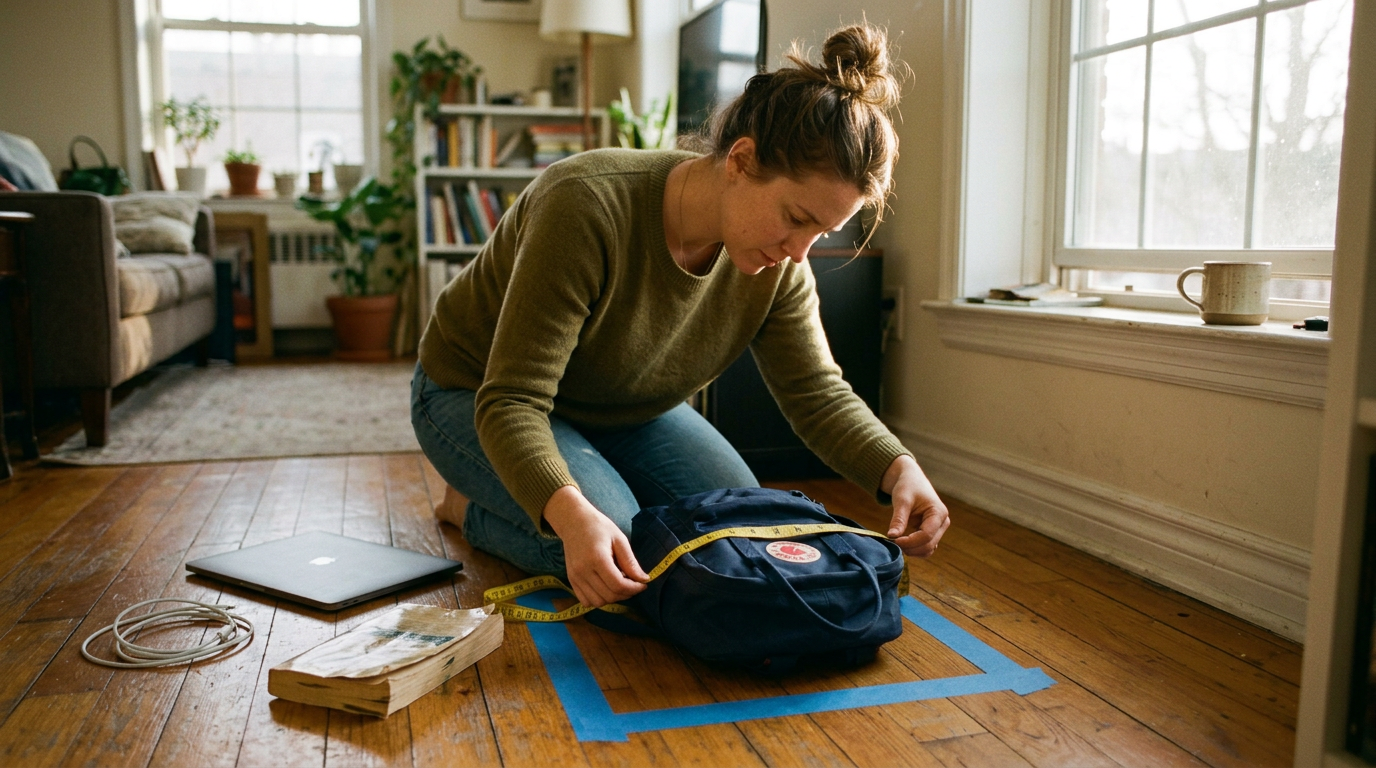
Consider a traveler flying to a Tuesday client meeting who packs a laptop, a charger, and a paperback into a small backpack. They measure it against the 17 x 13 x 9 target, see that it fits, and know the laptop will stay within reach for the whole flight.
Measure it at home, not at the gate.
Things That Don’t Count Against Your Limit
Some items never count against your limit. Here’s what travels free, so you can pack around them instead of guessing at the gate.
Everyday items that travel free
Picture a traveler heading into a rainy city with a coat over one arm and an umbrella in hand. Neither counts against your limit, so the bag stays open for everything else.
The same goes for food bought past security, so the sandwich you grab after the checkpoint won’t take up any room. Wheelchairs and other assistive devices don’t count at all. Those are off your list.
Free gear for kids and infants
Consider a parent flying with a toddler, a stroller, and a car seat. There are free checking options for both, so your carry-on space goes to the diaper bag and snacks. A few other items for little ones travel free as well:
- FAA-approved safety seats: Look for a label showing approval from the Federal Aviation Administration (FAA). That’s what lets the seat ride with your child on board.
- Breast pump and bassinet: Both travel free and don’t count against your limit.
- Unticketed infant allowances: A baby without a ticket gets an allowance of their own, so ask before you fly.
Duty-free purchases and sealed bags
Meet a traveler who picks up a bottle at the duty-free shop on the way to the gate. Kept in its sealed vendor bag, it doesn’t count against the limit, and that holds for travel within region as well. Sealed doesn’t mean guaranteed, though.
It can still be confiscated in transit, so keep the seal intact until you reach your final stop.
Bringing instruments and other special items
Imagine a musician flying to a gig with a violin. Small instruments come into the cabin free, so the goal is to keep it with you rather than in the hold. Here’s how to make that happen:
- Space-available overhead storage: Bin space goes first come, first served, so boarding early gives your instrument its best chance.
- Gate check if no room: If the bins are full, the instrument can be gate checked and handed back at the aircraft door.
- Buy an extra seat for fragile: A cello or other delicate instrument can take a seat of its own.
- Protective case: Pack it in a rugged, shock-resistant case built to the Air Transport Association’s 300 standard (ATA 300).
Security Rules and What’s off Limits
Security is where most carry-on plans snag, usually over a bottle someone forgot counted as a liquid. Check before you pack.
How to pack liquids through security
Liquids follow the 3-1-1 rule. According to a JAMA Dermatology article on a moisturizer flagged at airport screening, each container can hold no more than 3.4 ounces (100 milliliters), and all of them must fit in one quart-size clear bag.
- Medication and infant exemptions. Medicines and baby supplies have their own allowances.
- Purchases past security. Liquids bought after the checkpoint can come on board with you.
- Sauces, oils, and jars. These count as liquids too.
Consider a home cook flying to Lyon with a small jar of pesto. It fits the rule, so it rides in her quart bag. A bigger jar would be taken at the checkpoint, so she buys one after landing.
Where Delta and TSA rules differ
Delta and the Transportation Security Administration (TSA) cover different ground. Delta sets how big your carry-on can be, while TSA governs what goes inside it. Check the TSA website for updates before you fly.
Laptops may also need to come out at the checkpoint, so keep one within easy reach.
Items you can’t bring on board
Some items can’t come on board at all:
- Firearms, fireworks, and fuels. None of these can come on board.
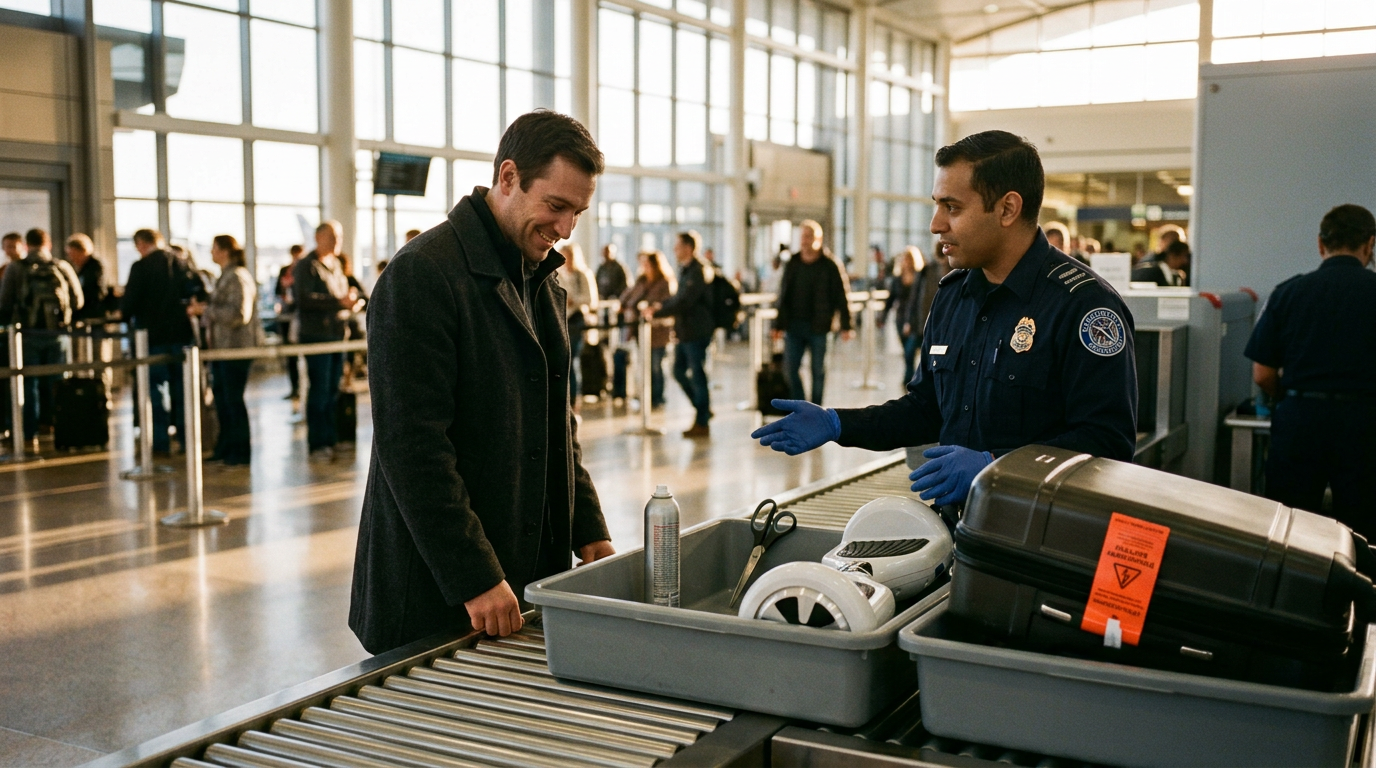
- Aerosols and sprays. Travel-size hairspray stays home.
- Sharp objects. These are off limits in the cabin too.
- Hoverboards and lithium suitcases. Neither can come on board.
- Banned comfort devices. Some comfort devices are banned too, so look it up first.
Enforcing Limits and Gate Checks
Passing the size check at home doesn’t guarantee your bag stays with you. Here’s how we’ll break it down: how strictly Delta enforces its limits, who lifts your bag into the bin, and what gate checking costs you.
How strictly Delta enforces its limits
The size limit is the same on every flight, but how strictly it’s applied is not. Enforcement is tighter on full flights, where bin space runs out first. Consider a traveler on a packed evening flight with a roller bag that’s a little too big.
That bag is likely to be gate checked, so it’s smarter to plan for that than to be surprised at the jet bridge. Weighing is rare outside Asia, so size is usually the check that matters. Boarding early helps. It’s the one part of this you control.
Who lifts your bag into the bin
Flight attendants won’t lift bags, so getting yours into the bin is on you. Gate agents may limit carry-ons, which means the final word on your bag may come at the gate.
Delta takes no liability for unchecked items, so anything valuable you keep with you is your responsibility to watch.
What gate checking costs you
Here’s how the money breaks down:
- No gate-check fee. Having your bag tagged at the gate doesn’t add a charge on its own.
- Checked bag fees may apply. Don’t assume a gate-checked bag is free, since standard checked bag fees may still come up.
- Excess fees if over allowance. A bag over the allowance can bring excess fees. Measure before you fly.
Regional Flights on Delta Connection
Smaller planes mean tighter rules, so check the aircraft before you pack. Here’s what changes on regional flights, and what happens when your bag won’t fit overhead.
Only a personal item on small planes
On flights with 50 seats or fewer, you’re limited to a personal item. There’s less overhead and underseat space on these aircraft, so the full carry-on allowance doesn’t apply. Plan for one bag.
Consider a traveler on a short regional hop with a rolling carry-on and a laptop bag. Under these rules, the rolling bag gets gate checked, and the laptop rides in the personal item, within easy reach.
Assistive devices are exempt from these limits, so they don’t count against your personal item.
Gate checks at no charge
When your carry-on won’t fit, it can be gate checked, and there’s no charge for carry-ons. Your bag gets a pink gate claim tag, so hang on to it.
Back at the door, the rolling bag is checked, the laptop stays with them, and the bag is returned to them when they deplane.
Flying on Delta’s Partner Airlines
Delta’s bag rules don’t always come along for the ride. Some SkyTeam flights are sold on a Delta ticket but flown by a partner airline, and that airline’s rules decide what happens at the gate.
How SkyTeam partner rules can differ
Partner rules may differ. Delta’s allowance is a starting point, not a guarantee. A partner can set its own size limit, weight limit, or bag count, so the bag that passed at your Delta gate may not pass at the partner’s. Don’t assume it will.
Consider a traveler who packed to the edge of Delta’s limits for a trip that connects onto a SkyTeam partner for the last leg.
The bag clears the first check without a second look, then gets pulled aside at the partner’s gate and hit with a bag fee they never planned for.
Your ticket shows the airline you bought from, but the rules that count are the ones of the airline you fly with. That airline is the operating carrier, and it’s the one to check. Before you pack, do three things:
- Confirm the operating carrier. Your booking shows which airline flies each leg.
- Read its bag rules. Check that airline’s carry-on and personal item limits, not just Delta’s.
- Avoid unexpected fees. Confirm the bag allowance and charges before the day you fly, since a bag that’s included on a Delta flight may cost extra on a partner.
Checked Bags and What They Cost
Checked bags are where trip budgets quietly grow, so it pays to know the numbers before you reach the counter. Here’s the limit, the charge, and how sports gear is handled.
How much checked bags cost and weigh
A standard checked bag can weigh up to 50 pounds and measure up to 62 linear inches, which is length, width, and height added together. Fees depend on your route and cabin, not just the bag.
Passengers in premium cabins get bags free, and certain credit cards and Medallion status levels carry bag perks, so check your account before you pay at the airport.
Paying for heavy, oversized, or extra bags
Once a bag goes past the standard limit, it moves into its own charges. Here’s how the extra-bag rules break down:
- Bag count: you can check up to 10 bags.
- Overweight: fees rise in tiers, so the heavier the bag, the steeper the charge.
- Oversized: bags measuring 63 to 80 inches carry their own fee.
- Refused: bags over the limits can be turned away at check-in.
Weigh and measure at home, because the counter is the worst place to find out.
Sports gear like bikes and skis
Since 2019, there’s been no specialty fee for sports gear, but the packaging rule still applies. Bicycles, golf clubs, and ski and snowboard bags follow the standard checked-bag rules.
Protective packaging is required, so a sturdy case or wrap is a must, not an option. Think of a cyclist flying to a race with a padded case protecting the frame. Pack it right, and the bike’s ready to ride when it lands.
Packing Tips for a Lighter Load
Start with the bag itself. Check any carry-on against Delta’s current size and weight rules before you buy, because a bag that’s even slightly too big gets caught at the gate, not the store.
The question is whether it fits the rules, not how roomy it looks on the shelf.
Smart ways to pack your bag
Soft-sided bags give a little when they’re full, which helps in a tight bin. Hard-shell bags keep their shape and protect fragile items, but they offer less give. Pick the style that suits how you pack, and check the fit with everything inside.
Lightening the load comes down to four habits:
- Versatile layered clothing. Pick pieces that mix and match, and wear your bulkiest layers on the flight. A jacket and sturdy shoes take up no bag space at all.
- Use your personal item for essentials. Keep your passport, medication, charger and snacks in the personal item, so you can grab them without unpacking the carry-on. The carry-on holds the bulk, and the personal item holds what you can’t afford to lose. Food souvenirs ride best in the carry-on, wrapped well, and it’s worth checking the airport security guidance on liquids and gels before you tuck in a jar.
- Packing cubes. These small zippered organizers group your clothes by outfit, keeping the bag tidy and making it quicker to find things.
- Consolidate bags with kids. Consider a parent flying with two kids who spreads everyone’s spare clothes across three bags. Moving the kids’ spare outfits into one carry-on means one fewer bag to juggle through the terminal. Fewer bags, fewer stops.
Delta’s carry-on and personal item rules come down to a few checks: size, weight, the fare you bought, and how strictly your flight enforces them.
Measure your bag, pack with those limits in mind, and you’ll spend less time at the gate and more time on the trip.
A bag chosen for the rules is the simplest way to travel light. Get the fit right at the store, and the gate becomes the easy part.
References
- Increased Airport Scrutiny by the Transportation Security Administration of a Patient-Passenger Carrying Ammonium Lactate–Containing Moisturizer — doi.org (2016)
- Delta carry on size: rules, limits and tips for 2026 — kayak.com (2026)
- Delta baggage fees and how to avoid paying them — thepointsguy.com (2026)
Questions
What is a carry-on bag in Delta?
A Delta carry-on is a bag you bring into the aircraft cabin rather than checking into the hold. It must fit within 22 x 14 x 9 inches, including wheels and handles, and fit in the overhead bin.
How many free carry-on bags does Delta allow?
Delta generally allows one carry-on bag and one personal item at no extra fee. Exceptions and limits may apply to infants, pets, small regional aircraft, and flights operated by partner airlines.
How strict is Delta with carry-on bags?
Delta’s size limit applies to every flight, but enforcement can vary. Checks are more likely on full flights when overhead-bin space is limited, and oversized bags may be gate checked; weighing is uncommon outside certain Asian departure cities.
Can I bring a backpack and a carry-on on Delta?
Yes. Delta generally allows one carry-on plus one personal item, and a small backpack can count as the personal item if it fits under the seat in front of you. On Delta Connection flights with 50 seats or fewer, the allowance is limited to a personal item, so a larger carry-on may be gate checked.
Sources
- Delta carry on size: rules, limits and tips for 2026 - KAYAK, kayak.com,
- Delta baggage fees and how to avoid paying them - The Points Guy, thepointsguy.com,
- Increased Airport Scrutiny by the Transportation Security Administration of a Patient-Passenger Carrying Ammonium Lactate–Containing Moisturizer, doi.org,