 Gear
JetBlue Bag Policy Explained: Carry-On, Checked, and Fees
JetBlue bag policy varies by fare, so the same suitcase may be free or cost extra. Compare carry-on rules, checked-bag fees, and ways to skip charges.

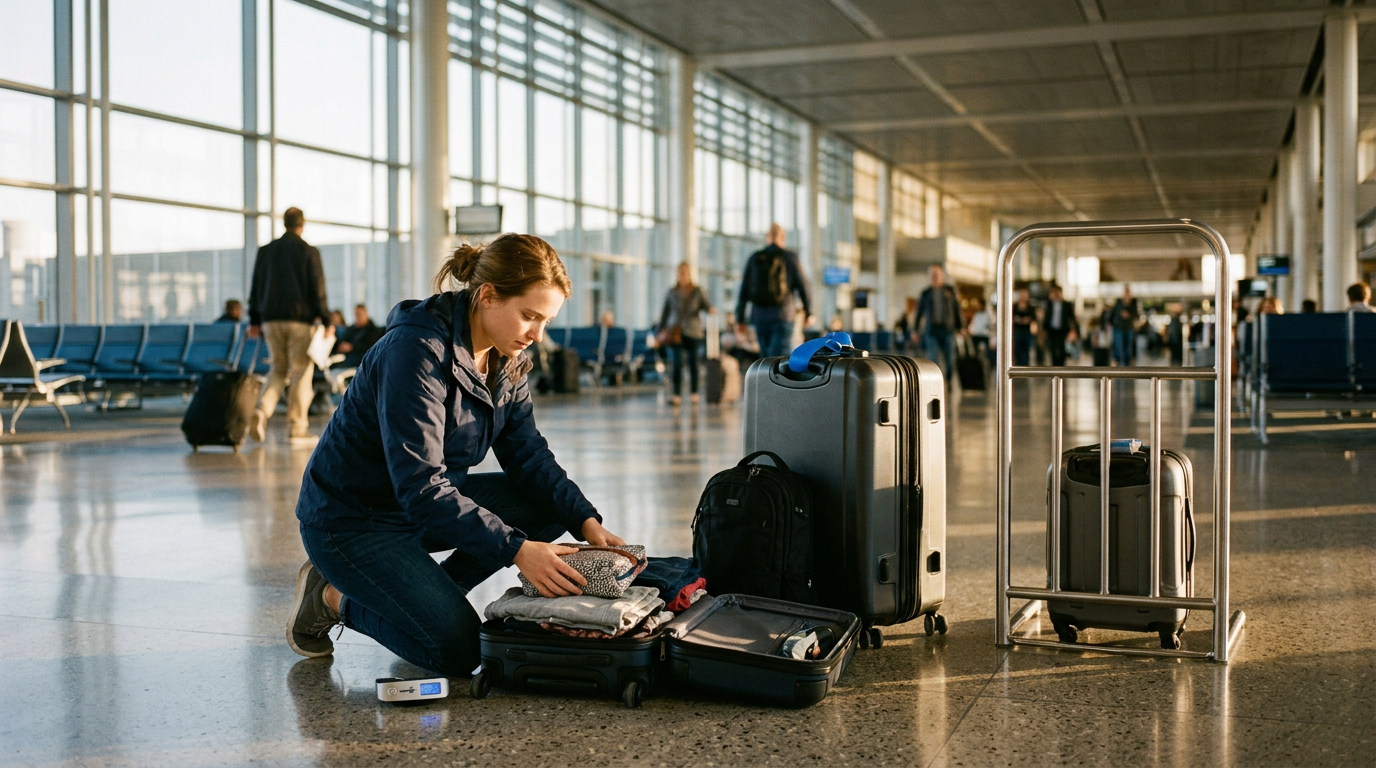
The short versionJetBlue’s bag policy sets what you can carry on or check, what it costs, and which items are allowed, with allowances that vary by fare, route, travel date, and special circumstances. Check your ticket’s exact benefits and current fees, then measure and weigh bags at home and review rules for liquids, pets, and special equipment. The right preparation helps avoid surprise charges, gate checks, and last-minute repacking.
Picture being asked to measure your carry-on at the gate, with the bag already heavy on your shoulder. Nobody enjoys that moment, and it’s easy to avoid. Knowing the rules before you pack does the trick.
Your bag policy is the set of rules JetBlue sets for what you carry on, what you check, what you pay, and what you can’t bring at all. Those rules shift with your fare, so the same suitcase can be free on one ticket and cost extra on another.
We’ll cover fare types, cabin and checked bags, fees, special items, and packing tips on bag choice, sizing, and liquids.
JetBlue Bag Policy by Fare Type
How many bags you can bring depends on the fare class you booked, not the day you fly. Here’s how each fare breaks down, plus what to check if your ticket is older.
How many bags each fare class includes
Find the fare name on your confirmation, then match it to the list below:
- Blue Basic, Blue, Blue Plus, and Blue Extra: each Blue tier sets its own bag allowance, so compare them before you assume they match.
- Mint: includes two bags.
- New Main, Main Flex, and EvenMore: each has its own allowance, so don’t borrow the Blue numbers.
Consider a traveler flying out for a long weekend of market lunches on a Mint fare. Those two bags leave room for a suitcase and a box of olive oil for a friend. Their return is on a Blue tier, so they check that confirmation before they pack.
Two minutes at home beats a surprise at the gate.
Older tickets keep their original benefits. A booking made under earlier terms still carries the allowance it was sold with, so don’t assume a newer fare rule applies. Check the fare name, then pack.
What You Can Bring into the Cabin
Your fare decides what you can carry on, so check it first. The personal item slides under the seat in front of you, and a carry-on rides in the overhead bin.
What each fare lets you carry on
- The full allowance: one carry-on plus a personal item.
- Blue Basic before September 2024: a personal item only.
- Blue Basic from September 2024: a carry-on too. According to Visaverge, starting September 6, 2024, Blue Basic passengers can store a carry-on in the overhead bins at no extra charge.
- Exceptions: Mosaic, Europe and United Kingdom routes, and minors each have their own rules, so confirm yours before you pack.
Consider a Blue Basic traveler on a long weekend. Where that ticket once covered only a personal item, it now covers a carry-on too.
Measurements to check before you fly
Carry-ons measure 22 x 14 x 9 inches. Personal items are smaller still: according to The Points Analyst, they must fit under the seat in front of you and measure 17 x 13 x 8 inches or smaller.
- Wheels and handles count. Measure the whole bag, not just the body.
- No published weight limit. Size is the number to watch.
Here’s what we’d do first: check bag dimensions with a sizer before you leave home, because a bag that looks fine in the hallway can still be too big at the gate. Size it at home.
Items that don’t count toward your limit
Some items sit outside the limit entirely:
- Diaper bag for a lap infant
- Coats, umbrellas, and car seats
- Assistive and medical devices
- Reasonable duty-free items
- Infant food and care items
Picture a parent with a lap infant. The diaper bag, infant food, and car seat don’t count, so both bag allowances stay free for the parent’s own things.
What happens to an oversized carry-on
Bags that miss the size limit get handled at the gate:
- Gate-checked if too large: the airline checks an oversized bag at the gate.
- Gate-check fees: these may apply, so look up current rates before you fly.
- Overhead space: subject to availability, even for a bag that meets the size limits.
Picture a traveler whose bag fits at home but is judged too large at the gate. It gets gate-checked, and a fee may follow.
What Checked Bags Cost
Checked bag fees depend on your route, your fare, and the date you fly, and they’ve changed in 2026. If a bag is delayed, damaged, or lost, report it at the airport before you leave, since that starts the claim.
To track it, give JetBlue your bag tag number and ask for a trace.
Fees for domestic and nearby flights
- First and second bags. Check JetBlue’s current price for your route before you book.
- Peak pricing. Fees shift between off-peak and peak dates, so the same bag can cost more on a holiday weekend than on a quiet Tuesday.
- Fare class. Bag fees vary by fare class, so the fare you buy sets the price.
- Prepay versus within 24 hours. Prepaying earns a discount, while paying within 24 hours of departure costs more.
- Third bag. It’s priced separately, so check it before you pack a third suitcase.
Paying for bags on transatlantic flights
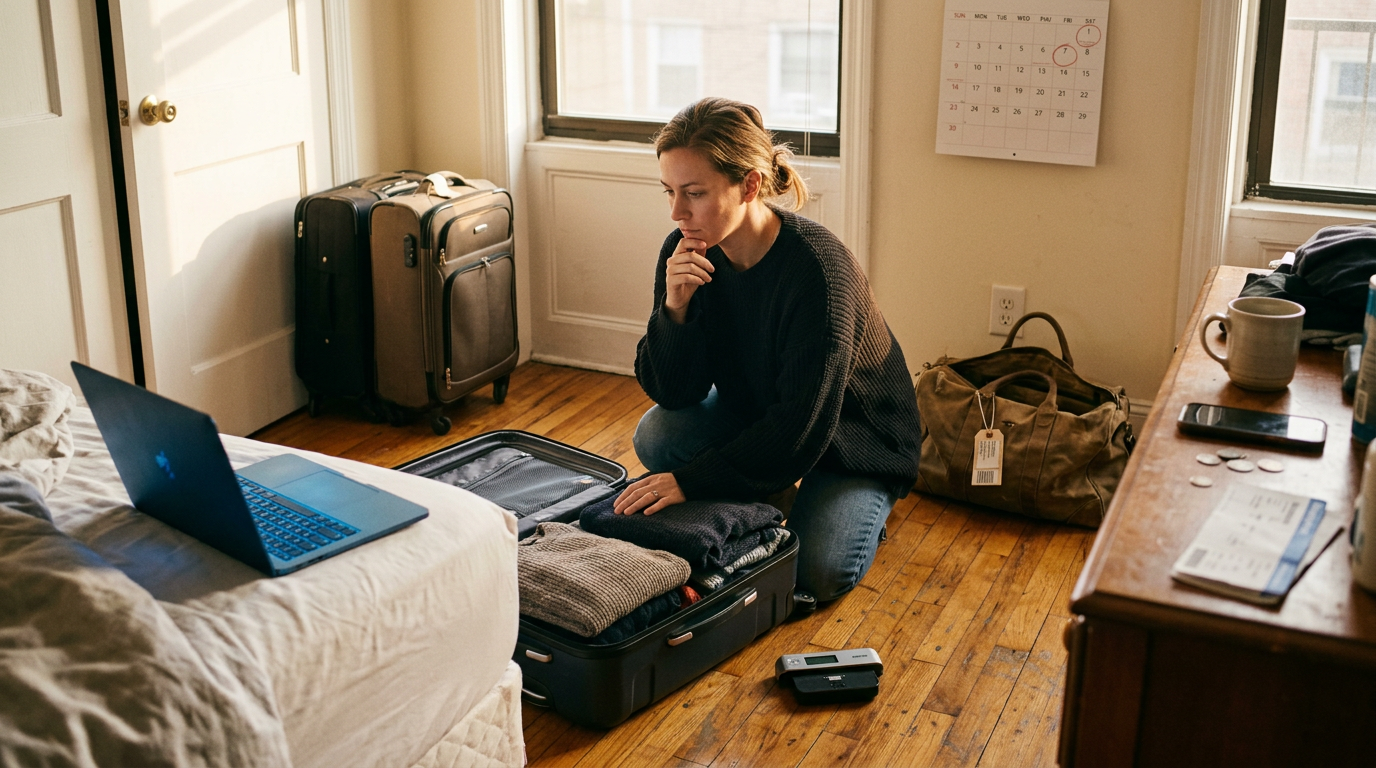
On most transatlantic fares, your first checked bag is included, but a second bag carries a fee. Think of a reader flying to London for a week of market lunches, with one suitcase and a box of cookware for a friend.
They’d add that second bag at booking so the cost is settled before they pack.
A third bag is the expensive one. A WalletHub answer on international JetBlue flights puts a third checked bag at $200 or more on transatlantic routes: $200 off-peak, or $210 during peak periods. That $10 step is the peak surcharge.
Where and when to add bags
You can add a bag in a few ways:
- Online or in the app. Add a bag before you fly without going to the counter.
- Two bags at booking. Prepay two bags when you book, the simplest route.
- At the airport. A third bag can only be added here, so plan for that counter visit if you’re carrying three.
- TrueBlue points. If you have TrueBlue points, you can use them to pay for bags.
Which travel dates carry peak fees
Peak periods follow JetBlue’s own calendar, so that’s the list that counts. Summer and holiday weeks are the peaks to watch, and a trip on those dates can carry higher bag fees. It’s about when you fly as much as how many bags you pack.
Check JetBlue’s exact calendar before you book.
Recent changes to bag fees
JetBlue raised its checked bag fees in late March 2026 as fuel prices soared, according to CNBC. Other airlines have also raised fees, so this isn’t a JetBlue-only trend.
JetBlue also changed its fare names in July 2026 when it updated its fare structure, as Reuters reported. Since bag fees depend on fare class, check your fare’s new name before you rely on an older price.
How Big and Heavy Checked Bags Can Be
Before you pack, know where JetBlue draws the line on size and weight. Both are easy to check at home, so there’s no reason to learn them at the counter.
The usual size and weight caps
JetBlue measures a bag by adding its length, width, and height together. According to JetBlue’s checked bag policy, the total can’t exceed 62 linear inches, and the standard weight limit is 50 pounds.
If you’re flying Mint, the weight limit rises to 70 pounds.
What if my checked bag is over 50 lbs?
If your bag tips past 50 pounds, expect a fee. A bag weighing 51 to 99 pounds triggers an excess weight charge of $150 per piece, as set out in JetBlue’s Contract of Carriage.
A bag measuring 63 to 80 inches carries a $150 oversize charge too, and the two can stack. Bags over the limits can also be refused.
Consider a traveler whose suitcase weighs 54 pounds at home. Weigh it before you leave home, not at the check-in counter, and you can still pull out a heavy item or two. That’s $150 you didn’t need to spend.
Limits that depend on your destination
Your destination changes the rules. Transatlantic flights carry a 70-pound cap. Ecuador limits you to two checked bags, and the Dominican Republic, Peru, Guyana, and Haiti each have their own limits.
Europe has its own third-bag rules, so check those before you add a suitcase.
Consider a couple flying to Ecuador with three bags they want to check. The two-bag limit means the third needs a plan before they reach the counter. Check your route while you’re still packing.
Ways to Skip Paying for Bags
Most travelers can skip some or all bag fees, and we’ll walk through the routes one at a time. Your options depend on loyalty status, your cards, your job, and how you pack.
Free bags with TrueBlue and Mosaic status
If you hold Mosaic status in TrueBlue, you can travel with free bags. Mosaic depends on meeting tile requirements, so check the current figures before you plan around them.
Consider a reader who flies home every few months: once they reach Mosaic, those bags stop costing them money on every trip. Not a member yet? Join TrueBlue before your next booking.
Bag perks on JetBlue and travel cards
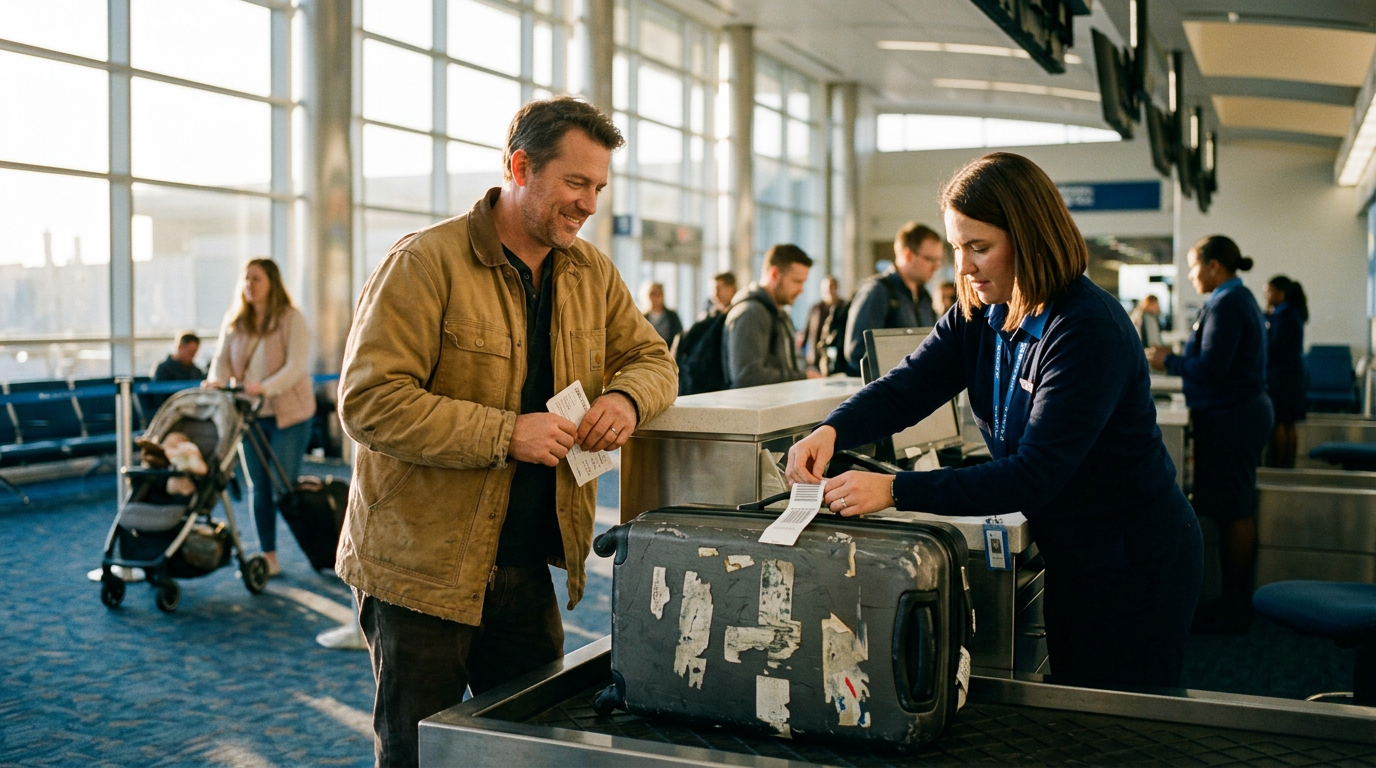
Holding a JetBlue card doesn’t automatically mean free bags, and the type of card matters. Here’s what each covers:
- JetBlue Plus and Business: your first bag is free, and the perk extends to up to three companions.
- Basic JetBlue Card: excluded, so it won’t cover your bags.
- General travel cards and transfers: these may carry bag benefits of their own, but terms vary, so check them first.
Picture a cardholder flying to a wedding with two friends. On a Plus or Business card, the perk can extend to both companions, which adds up fast when every checked bag costs money.
How military members save on bags
Military members have their own benefits, and the one that applies depends on why you’re flying. Active duty service members get free bags on leisure travel: two bags of up to 50 lbs each. Show your military ID at check-in so the benefit applies.
If you’re traveling on official duty orders, WeSalute’s JetBlue spotlight notes that JetBlue lets military personnel on orders check up to five free bags.
Think of a service member moving gear to a new post, where five free checked bags cover what would otherwise cost extra at check-in.
Other ways to cut bag costs
Packing light is the simplest move: if everything fits in a carry-on, you skip checked-bag fees entirely. Flying off-peak and prepaying for bags when you book can keep your total down.
Compare the premium fare cost with a basic fare plus bag fees, since the premium option sometimes comes out ahead.
Measure and weigh your bag before you leave. Catch it at home, not at the gate.
Bringing Instruments and Sports Gear
Instruments, sports gear, camera equipment, and food each have their own rules, so sort them out before you reach the airport.
Flying with a musical instrument
Start with one decision: carry-on or checked. The question isn’t whether your instrument can fly, but where it rides. Larger instruments may need an extra seat, so check before you book.
Either way, keep it in a rigid case, a hard-shelled container that protects it from knocks, and confirm the weight and size limits before you leave home. A cellist who asks about the extra seat when she books avoids surprises at the gate.
Packing golf, ski, bike, and fishing gear
Pack golf clubs, skis, bikes, and fishing rods in a hard case, a rigid shell that keeps gear from getting bent or cracked. Sports equipment has a 99-pound weight limit, so weigh the packed bag before you leave home.
Some items may qualify for oversize exemptions, but confirm yours is covered rather than assuming it is.
Certain sports items are prohibited outright, and some destinations restrict them too, so check both the list and the destination rules before you leave.
Flying with camera and media gear
Camera and media gear is accepted on a space-available basis, so it depends on how full the flight is. A per-bag fee may apply, so budget for it. Give JetBlue advance notice. Don’t wait for the counter.
Packing food, seafood, and dry ice
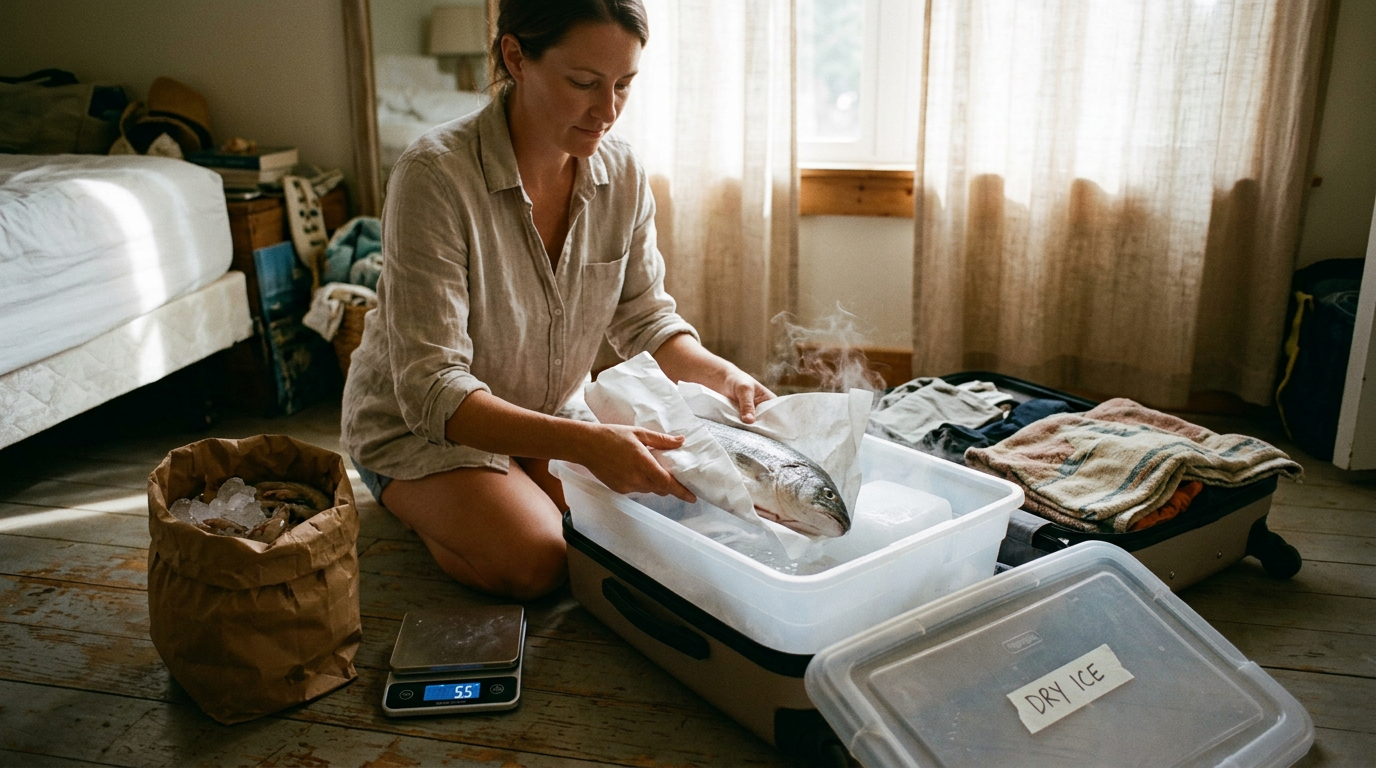
The hard part is keeping dry ice under the limit. According to JetBlue’s prohibited items page, dry ice in checked or carry-on bags is capped at 5.5 pounds (2.5 kilograms).
- Leakproof containers. Seal seafood and other wet items so nothing spills into the rest of your bag.
- Labelling. Mark the container clearly as holding dry ice.
- No styrofoam coolers. JetBlue doesn’t allow them, so pack in something else.
Food souvenirs follow the same logic: wrap each item, then seal it.
A home cook bringing fresh fish back from a coastal market seals it in leakproof containers and keeps the dry ice at or under 5.5 pounds, so the fish reaches her kitchen and her suitcase stays dry.
What You Can’t Pack or Must Limit
Some items can’t fly at all, and others must travel in one specific bag. Knowing the limits before you pack prevents surprises at the counter and the checkpoint.
Rules for guns and ammunition
- Checked bags only. Neither can go in your carry-on.
- Unloaded, in a rigid container. A firearm must be unloaded and packed in a hard-sided case.
- Age 18+. The traveler checking the bag must be 18 or older.
- Ammunition weight limit. Ammunition has its own weight cap, so check JetBlue’s current figure before you pack.
Think of a hunter with a rifle and a box of shells. Unloaded in a hard case and under the weight cap, both ride in the checked bag without a last-minute repack. That’s the whole plan.
What’s banned from carry-on and checked bags?
Some categories are off-limits in both bags: sharp objects and tools, flammables and chemicals, and compressed gas and batteries. Check the Transportation Security Administration (TSA) list of prohibited items before you pack.
What’s not allowed in a carry-on comes down to three things: the banned categories above, firearms, and liquids that break the 3-1-1 rule.
The 3-1-1 rule covers liquids, gels and aerosols in your carry-on. The name spells out the setup: small containers, one bag, and one bag per traveler.
Confirm JetBlue’s current container size before you leave home, because an oversized bottle is the surprise you’re trying to avoid.
You can take full-size shampoo on a plane, but in your checked bag, not your carry-on. It exceeds the carry-on liquid limit, so pack it there from the start.
Flying with Your Pet
A pet in the cabin can make a trip far easier, but JetBlue sets firm rules first. Learn them before you book, so travel day doesn’t bring any gate surprises.
Rules for pets riding in the cabin
Pets can ride with you in the cabin as an in-cabin pet, but only small cats and dogs qualify. Each pet needs its own carrier, so it’s one pet per carrier, with no sharing.
The carrier must also meet JetBlue’s size and weight limits, so measure and weigh it before you pack.
The fee is $125 each way, which means a round trip costs $250. Each flight also caps how many pets it carries, so don’t assume a spot is open. Ask when you book.
Think of a traveler flying across the country to visit family with a small cat. She books early, pays the $125 fee for each leg, and checks her carrier at home so nothing gets turned away at the counter.
Health documents and age minimums for pets
Your pet must be at least 16 weeks old to fly. Bring vaccination documents showing its shots are current, and keep them in your carry-on where you can reach them at check-in.
Use a leakproof carrier, and line the bottom with an absorbent pad so an accident stays contained. Check these details at home, and the gate stays calm.
How JetBlue Compares to Other Airlines
Bag rules only matter next to the fare you could book somewhere else. Here’s how JetBlue stacks up against rivals, point by point:
Less than Spirit and Frontier
JetBlue’s bag fees come in lower than Spirit’s and Frontier’s, so a bag you’d pay to check on either airline usually costs you less here.
In line with other airlines
On most other bag rules, JetBlue looks much like the rest of the industry. Check the size and weight limits for your fare before you pack, since that’s where surprises usually hide.
Better than United Basic carry-on
This is where JetBlue pulls clearly ahead. Consider a solo traveler heading to a Tuesday client meeting on the cheapest fare. On JetBlue, a Blue Basic ticket already includes the carry-on, so the suit and laptop come along without a surcharge.
According to Travelvient’s 2026 United vs JetBlue comparison, United strips the carry-on from domestic Basic Economy, costing $45 extra per flight. Same trip. Different bill.
Yahoo Lifestyle reports that JetBlue will now include a free carry-on bag with Blue Basic tickets starting September 6, which makes flying with the airline more cost-effective.
Bag rules look complicated until you see them in one place.
Once you know how your fare handles carry-ons, checked bags, and fees, the rest is mostly packing: choose a bag that fits the limits, measure it at home, and keep liquids and special items in mind.
Pack to your fare’s policy, and the only decision left at the gate is where to grab a bite.
References
- Checked Bag Policy | Size and Weight Requirements — jetblue.com
- JetBlue’s Latest Perk Eases Passenger Pain Points in Key Cities — visaverge.com (2025)
- JetBlue Airways Guide: Seats, Baggage Fees, Amenities, Customer Service, And More — thepointsanalyst.com (2025)
- Are Checked Bags Free on International JetBlue Flights? — wallethub.com (2026)
- JetBlue Airways raises checked bag fees as fuel prices soar — cnbc.com (2026)
- JetBlue updates fare structure as airlines see benefit of segmented pricing — reuters.com (2026)
- JetBlue Baggage Fees Change: New Perks for Basic Blue Fliers — kiplinger.com
- Contract_of_Carriage — cms.jetblue.com
- Prohibited Items — jetblue.com
- United vs JetBlue 2026: United’s Reach vs JetBlue’s Comfort — travelvient.com (2026)
- JetBlue Honors America’s 250th — wesalute.com
- JetBlue Makes a Big Update to Basic Economy Baggage Policy — yahoo.com
Questions
What is not allowed in a carry-on bag?
Carry-ons cannot contain firearms, sharp objects and tools, flammable items or chemicals, compressed gas, or liquids that exceed the carry-on liquid limit. Some items, including firearms, may be allowed in checked baggage if packed according to the rules.
What is the 3:1:1 rule on JetBlue?
The 3-1-1 rule limits carry-on liquids, gels, and aerosols to containers of 3.4 ounces (100 milliliters) or less, all fitting in one quart-size clear bag, with one bag per traveler. Larger containers, such as full-size shampoo bottles, belong in checked baggage.
What are the carry-on baggage requirements for JetBlue flights?
JetBlue carry-on allowances depend on your fare and any applicable exceptions. Most eligible passengers may bring one carry-on and one personal item; Blue Basic tickets booked before September 2024 generally include only a personal item, while Blue Basic tickets from September 2024 include a carry-on too. Carry-ons must be no larger than 22 x 14 x 9 inches, including wheels and handles, and personal items must fit under the seat and measure no more than 17 x 13 x 8 inches.
How do I track my JetBlue bag?
To trace a checked bag, contact JetBlue and provide your bag tag number. If the bag is delayed, damaged, or lost, report it at the airport before leaving so the claim process can begin.
What happens if my checked bag is over 50 lbs JetBlue?
A checked bag weighing more than 50 pounds generally incurs a $150 excess-weight fee if it weighs 51 to 99 pounds. The fee may apply in addition to an oversize charge, and bags exceeding applicable limits may be refused; Mint and some destinations have different weight limits.
Can you take full size shampoo on a plane?
Yes, you can bring full-size shampoo in a checked bag. In a carry-on, shampoo must follow the liquid rule: each container can hold no more than 3.4 ounces (100 milliliters) and must fit in your one quart-size liquids bag.
Sources
- JetBlue's Latest Perk Eases Passenger Pain Points in Key Cities, visaverge.com,
- JetBlue Airways Guide: Seats, Baggage Fees, Amenities, Customer Service, And More, thepointsanalyst.com,
- Are Checked Bags Free on International JetBlue Flights?, wallethub.com,
- JetBlue Airways raises checked bag fees as fuel prices soar, cnbc.com,
- JetBlue updates fare structure as airlines see benefit of segmented pricing | Reuters, reuters.com,
- Checked Bag Policy | Size and Weight Requirements | JetBlue, jetblue.com
- JetBlue Baggage Fees Change: New Perks for Basic Blue Fliers | Kiplinger, kiplinger.com
- Contract_of_Carriage, cms.jetblue.com
- JetBlue Honors America's 250th | WeSalute Spotlight, wesalute.com
- Prohibited Items | JetBlue, jetblue.com
- JetBlue Makes a Big Update to Basic Economy Baggage Policy — and It's Making Flying Cheaper, yahoo.com
- United vs JetBlue 2026: United's Reach vs JetBlue's Comfort, travelvient.com,