 Gear
Spirit Carry-On Size: Limits, Fees, and Fit Checks
Spirit carry-on size rules can surprise you at the gate. Compare personal-item and overhead limits, fees, and fit checks before choosing a bag.

The short versionSpirit’s carry-on limit is 22 x 18 x 10 inches, including wheels and handles, while the free personal item must fit within 18 x 14 x 8 inches. Measure the bag’s full outer dimensions, check trip-specific fees, and remember that a carry-on costs extra; bags that exceed the limits may be checked. Spirit ceased operations in May 2026, so travelers with tickets need to arrange another flight and check the new airline’s baggage rules.
Picture reaching the gate with a bag that looked perfectly fine in the hallway, only to watch it not quite fit the sizer. Luggage rules feel simple until you’re standing in front of one.
On Spirit, the gap between what you packed and what’s allowed comes down to two bags: your personal item (the small bag that fits under the seat) and your carry-on (the larger bag for the overhead bin). Each has its own limits and fees.
Here, we’ll walk through Spirit’s size rules, fees, and fit checks, then help you choose luggage that actually fits, including what to do when a bag runs slightly over.
Personal Item Allowance Versus Spirit Carry-on Size
Every Spirit ticket includes a free personal item, which is a smaller bag than a carry-on. Knowing where one ends and the other begins keeps you from guessing at the airport.
How big a free personal item is
According to KAYAK’s breakdown of Spirit’s carry-on rules, the maximum personal item size is 18 x 14 x 8 inches, or 45 x 35 x 20 cm.
Handles and wheels count toward those measurements, so measure the whole bag, not just the body. Anything larger becomes a carry-on.
Where it goes and whether weight counts
Here’s what the free item allows:
- Under the seat in front. It fits beneath the seat ahead of you.
- Overhead bin. You can also stow it in the overhead bin.
- No weight limit. Weight doesn’t count toward the allowance.
Think of a traveler with a laptop, a charger and a paperback. With the bag tucked under the seat, all three stay within reach for the whole flight. The rule is about size, not weight, so a heavy laptop bag still qualifies if it fits.
Is a backpack a personal item?
A purse is allowed as your personal item, and a backpack can be one too. Compact backpacks, laptop bags and duffles all qualify if they fit within 18 x 14 x 8 inches, and a small backpack or purse follows the same rule.
So is a backpack a personal item or a carry-on? It’s judged by its dimensions, not its name. Within 18 x 14 x 8 inches, it’s your personal item. Anything bigger counts as a carry-on. Pack it, then measure it.
Spirit Carry-on Size and How to Measure
Spirit’s carry-on rules come down to a few hard numbers and one habit: measure the bag with its wheels and handles before you pack it. Here’s what the limits are and what happens when a bag runs over.
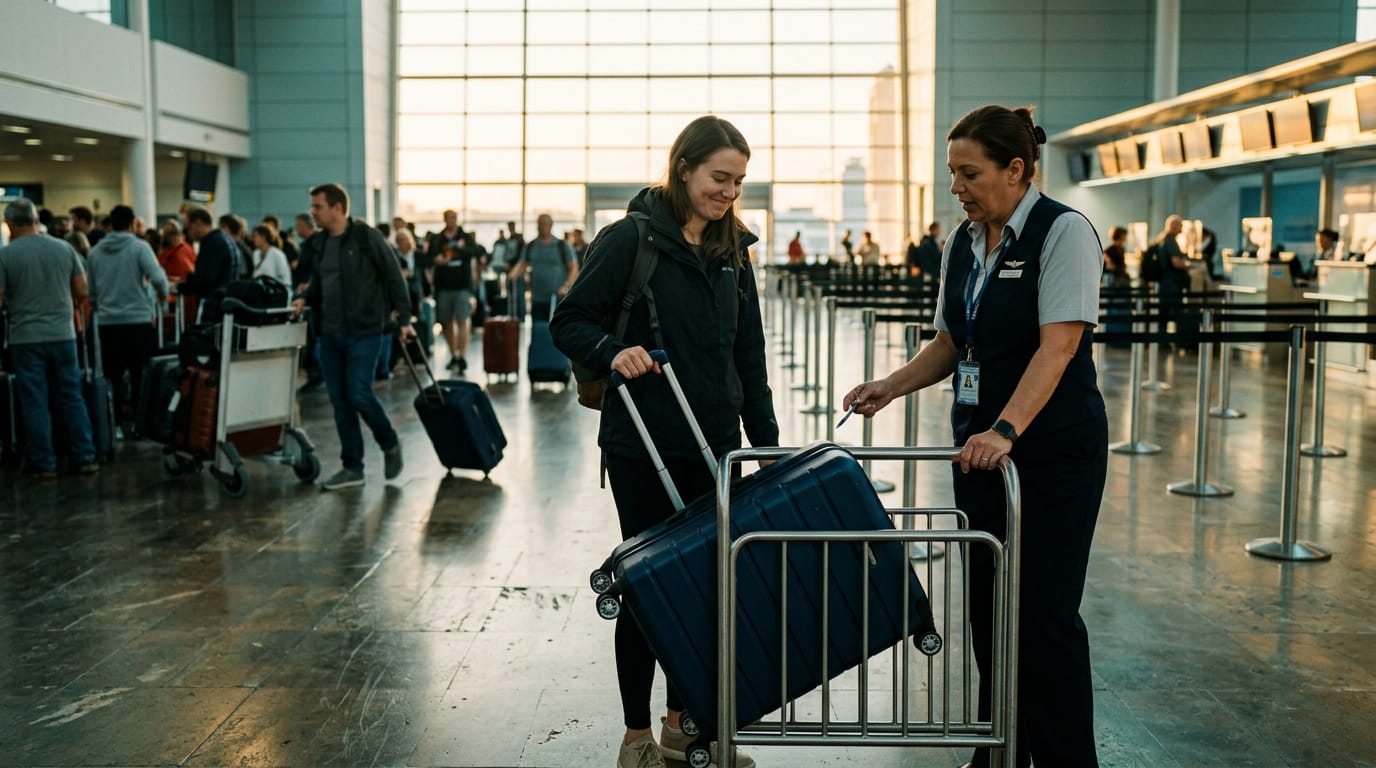
Can I take a 22.5 inch carry-on?
No, you can’t take it as a standard carry-on. According to Simple Flying’s comparison of Spirit and Frontier, a Spirit carry-on can measure up to 22 x 18 x 10 inches, including handles and wheels.
A 22.5 inch bag runs past the 22 inch length, so it doesn’t fit.
- Maximum size: 22 x 18 x 10 inches (56 x 46 x 25 cm), handles and wheels included
- Linear inch cap: 80 linear inches, meaning length, width and height added together
Bags over these limits count as oversize, and oversize bags are treated as checked. So a 22.5 inch case won’t stay with you in the cabin.
How heavy a carry-on can be
Spirit states no weight limit, but your arms set one. You must be able to lift the bag unassisted, including into the overhead bin. Think of a solo traveler who has to heave a packed rolling case up there alone.
If they can’t manage it without help, the bag is too heavy for them. Gate agents can still check a bag even when you can lift it.
Measure with wheels and avoid gate checks
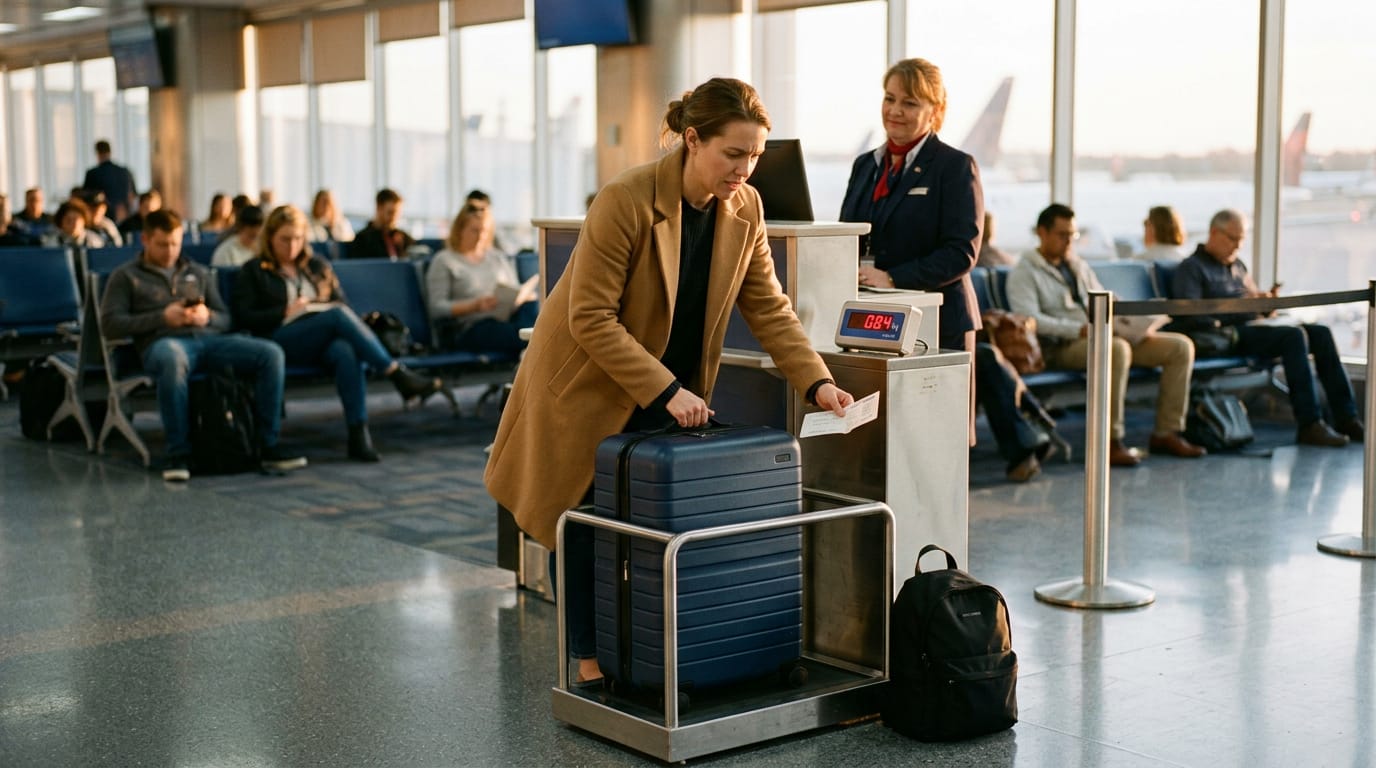
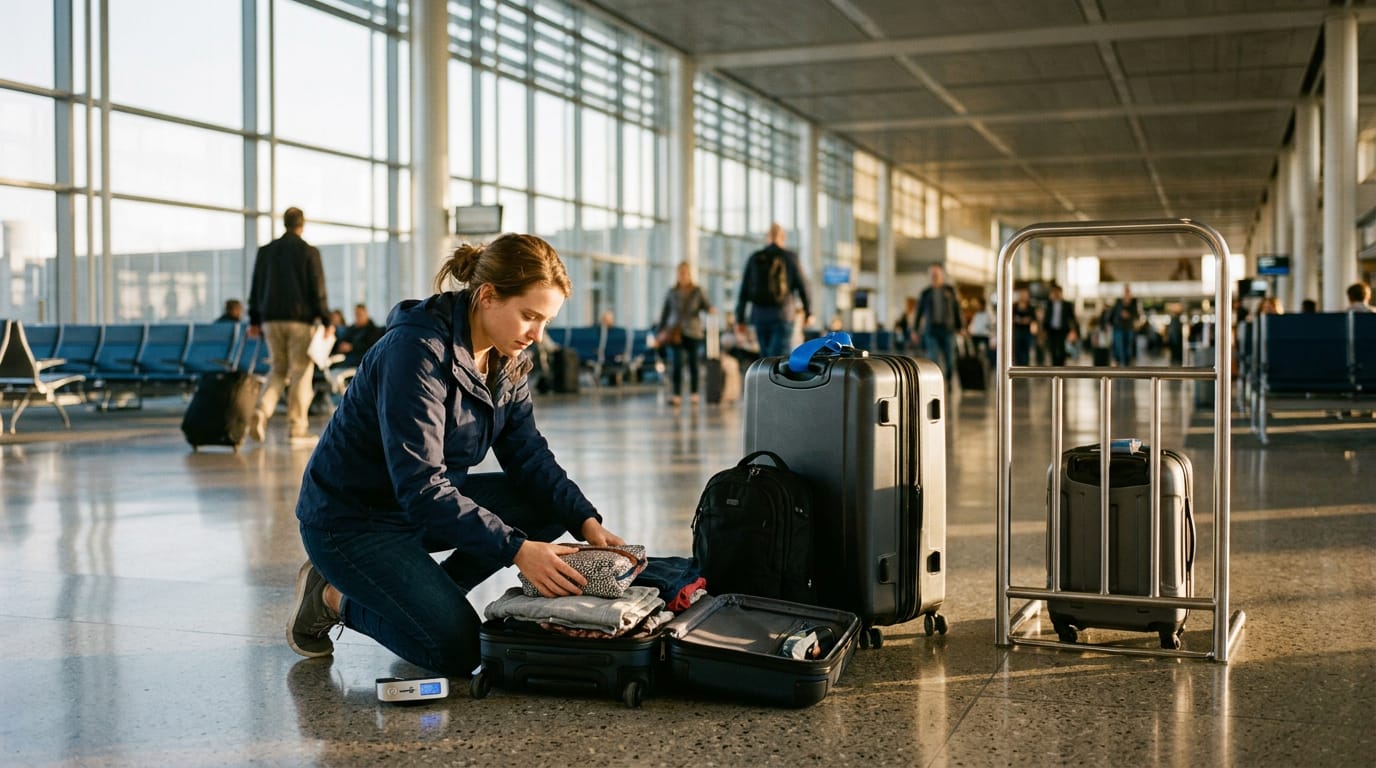
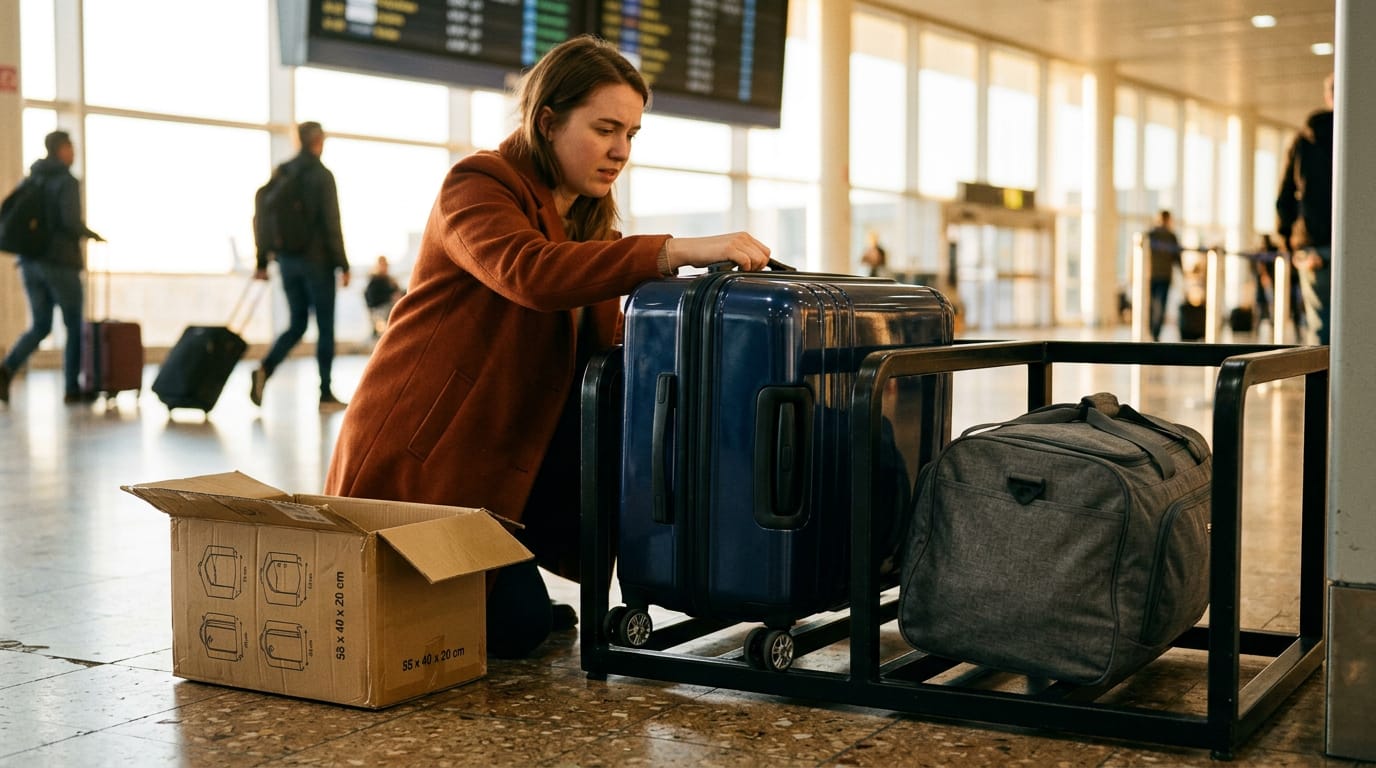
Measure the bag with its wheels and handles, not the shell alone, because Spirit’s figure includes both. Use a sizer before you pack. A sizer is a frame you test the bag in at home, so a case that’s too big gets caught before it reaches the gate.
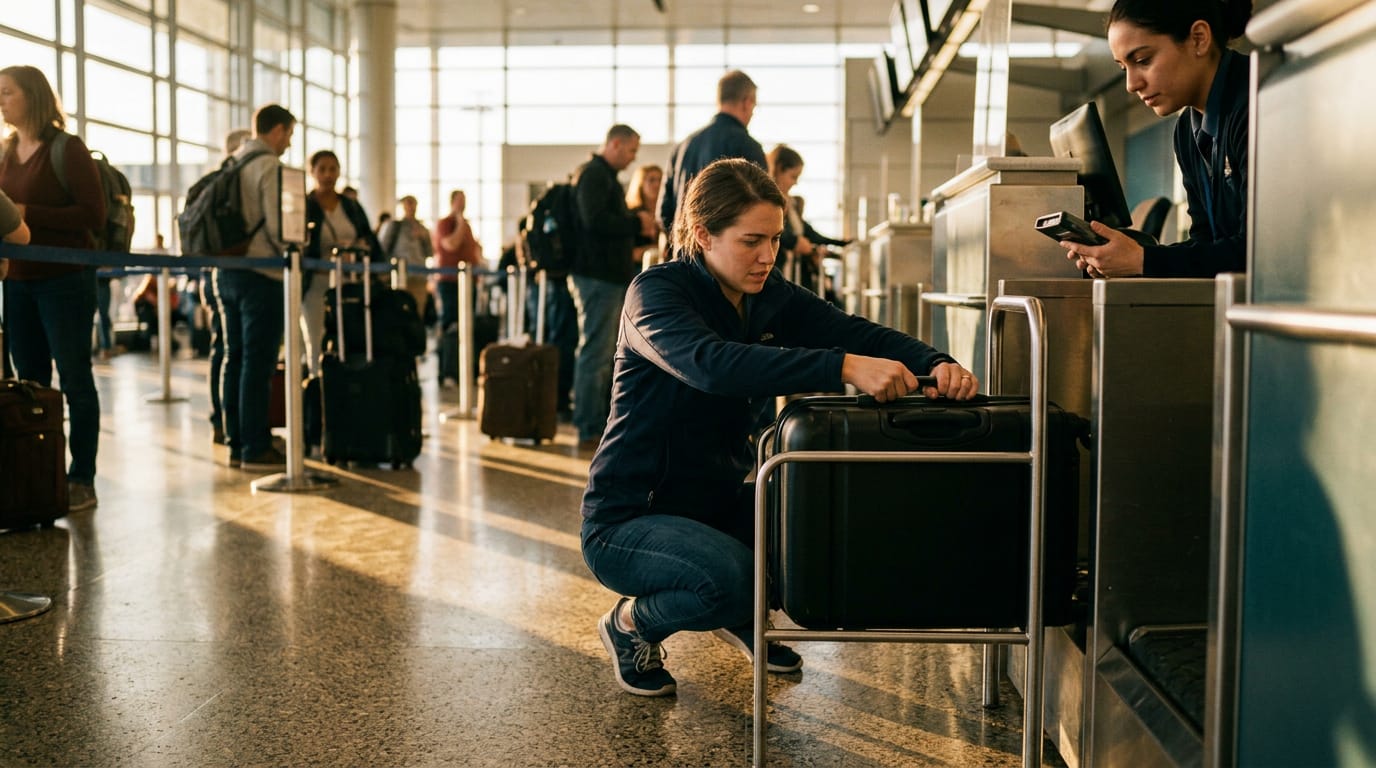
Take a reader who packs in a hurry, rolls up to the gate, and is told to check the bag. Gate checks vary by flight, so last trip’s outcome won’t predict this one. Weight limits are tied to fuel and the aircraft, so confirm the details for your flight.
Measure at home, and the gate holds no surprises.
How Spirit compares to easyJet and Ryanair
Spirit’s carry-on is a large box by volume, and its size matches easyJet’s. Ryanair’s limits are tighter, and a bag that’s fine on Spirit can fail them. Take a reader with one bag for a weekend that includes a Spirit flight and a Ryanair hop.
Measure against the strictest airline on your route, and that bag works on every leg.
What Carry-ons Cost and How to Save
On Spirit, your personal item rides free, but a carry-on is an add-on, and when you pay for it changes what you spend. Here’s how the costs break down and where you can keep them down.
Carry-ons cost extra on value fares
The personal item is free. A carry-on costs extra, and on a value fare it isn’t included at all. Consider a couple flying for a long weekend who each want a roller bag: that’s two carry-on fees on top of their fares.
Fees vary by route and date, so check your own trip rather than relying on a rule of thumb.
Pay less by booking early
Pay at booking and you pay the least; pay at the gate and you pay the most, with check-in falling in between. For the couple above, adding both carry-ons when they book keeps them from paying the highest price at the airport.
Before you commit, price both bags in Spirit’s baggage calculator so there are no surprises.
Save money with the Spirit Saver$ Club
The Spirit Saver$ Club is a membership that costs $69.95 a year. Members can earn reward points that go toward fees, and travel card credits offer another way to offset the cost.
For the couple, the answer depends on how often they fly: frequent trips can make the $69.95 worth it, while a single yearly flight probably won’t cover it.

Checked Bag Rules and Limits
A checked bag has to fit a set size and weight, and going over costs extra. If your bag is only a little too big, repacking at home is usually the easiest fix, so it’s worth knowing the numbers before you leave.
What if my checked bag is 63 inches?
A 63-inch bag is one inch over Spirit’s limit of 62 linear inches (158 cm). Linear inches are a bag’s length, width, and height added together, so a bag can reach 63 even when no single side looks oversized.
At roughly 160 cm, it’s over the metric figure too. One inch over is still over: the bag isn’t almost within the limit, it’s over it.
Consider a traveler packing for a week in Lyon who measures a suitcase the night before and gets 63 inches. Moving a pair of shoes and a heavy jacket into a second checked bag brings the first one under the line, and the oversize fee stays off the bill.
Spirit’s checked bag rules come down to four points:
- Size: 62 linear inches (158 cm).
- Weight: Spirit states a weight limit for checked bags, so weigh yours at home before you head out.
- Count: You can check up to five bags.
- Fees: Bags over the size or weight limit carry overweight or oversize fees.
Measure before you leave. One inch still counts.
Which Bags Actually Fit Spirit’s Limits
A bag can look right on a store page and still get stopped at the gate. Here’s how popular suitcases measure up, and the one we recommend.
How popular suitcases measure up
We compared popular models against Spirit’s size rules, and 10 of the 15 fit. The other five are where travelers get caught, usually over one measurement that’s easy to miss.
The biggest trap is the listed size, the number on the product page, which often leaves out the wheels.
Think of a traveler who buys a spinner that looks right on paper, then finds the wheels add height the listing never counted. The listing isn’t what gets measured.
Spinners can fit too, but only when you judge them by their full measurement, not the listed one.
Soft-sided bags give a little when you press them into a sizer, but hard shells hold their shape. A hard shell that’s even slightly over is over.
Before you buy, check:
- Measure the true outer dimensions. Include the wheels and handles.
- Note soft or hard. Knowing the shell tells you how much give to count on.
The Nomad Lane Bento Bag we recommend
If you’d rather skip the guesswork, the Nomad Lane Bento Bag is our pick. It fits 18 x 14 x 8 inches and has a padded laptop pocket, so your laptop travels protected without a second bag.
Think of a parent who packs the food kit in the personal item, so snacks for the flight are on hand without a separate bag to juggle at the gate.
Special Items Outside Your Allowance
Not everything you bring has to fit inside your carry-on or personal item. Some items are handled differently, and a few aren’t allowed on board at all. Liquids are one group with their own limit, covered by the 3-1-1 rule.
Medical aids, instruments and baby gear
Consider a parent flying with a toddler, a stroller and a diaper bag. Knowing which of those items count toward the allowance before you reach the airport keeps your carry-on free for the essentials.
The question isn’t just whether an item fits, but how Spirit handles it.
- Assistive devices and medication. Mobility aids and medication don’t always follow the normal rules. Confirm how Spirit treats your device before you fly, and keep your medication in your carry-on so it stays with you if a checked bag goes astray.
- Musical instruments and sports gear. A violin, guitar or set of golf clubs is bulky and awkward to store. Ask whether it counts toward your allowance or is handled separately, and whether a fee applies.
- Infant diaper bag, car seat and stroller. Ask whether your diaper bag counts as your personal item, and how Spirit handles a car seat or stroller at the gate.
- Prohibited items. Some things can’t fly no matter how small the bag is. Check Spirit’s prohibited items list before you pack, rather than finding out at security.
Check first. Pack second. It’s a few minutes of reading that saves a frantic repack at the counter.
What Spirit’s Shutdown Means for You
Spirit’s shutdown changes the plan for anyone holding a ticket or building a trip around one. Here’s what happened and what to check before you book anything else.
Spirit shut down on May 2, 2026
The shutdown took effect the day it was announced, May 2, 2026.
In a filing with the U.S. Securities and Exchange Commission (SEC), Spirit Aviation Holdings, Inc., the parent company of Spirit Airlines, said it had started an orderly wind-down (a planned closing of operations) “effective immediately.”
The announcement’s headline is blunt: “All Flights Have Been Cancelled.” If you hold a Spirit ticket, don’t count on that flight leaving.
There are no rebookings and no ongoing service, so Spirit won’t move you onto another flight. Being canceled and being rebooked are not the same thing, and with Spirit, only the first has happened.
Consider a reader who booked a Spirit flight for a long weekend away. That flight is off the schedule, and no one is going to find them a seat, so their first move is searching for a new flight on an airline that is still flying.
That way the weekend survives the shutdown.
Check first. Before you pay for a new ticket, confirm two things:
- Make sure the airline is flying your route on your dates.
- Read its carry-on and personal item rules, since each airline sets its own.
Getting Spirit’s carry-on rules right comes down to knowing your limits before you reach the airport. Measure your bag at home, check the fees for your trip, and choose luggage with a little room to spare.
Pick a shell and a shape that suit how you travel, and keep a plan ready for the bag that runs over. That small bit of preparation keeps the gate calm and your trip on track.
Pack for the sizer, not the hallway.
References
- sec.gov (2026)
- Spirit Airlines vs. Frontier Airlines: Comparing The 2 Ultra-Low-Cost Carriers’ Seat Pitch And Carry-On Bag Restrictions — simpleflying.com (2026)
- Spirit Airlines shut down: carry-on rules and what to know — kayak.com (2026)
Questions
Can I take a 22.5 inch carry-on bag?
No. Spirit’s standard carry-on limit is 22 x 18 x 10 inches, including wheels and handles, so a bag measuring 22.5 inches exceeds the limit and may be treated as checked baggage.
Is a backpack considered a personal item or carry-on?
A backpack can be either a personal item or a carry-on, depending on its size. On Spirit, it qualifies as a free personal item if it measures no more than 18 x 14 x 8 inches; a larger backpack counts as a carry-on.
Is a ladies purse allowed in a flight?
Yes. A purse is allowed as a personal item on Spirit if it fits within the 18 x 14 x 8 inch limit. It must fit under the seat in front of you.
What if my checked bag is 63 inches?
Spirit’s checked-bag limit is 62 linear inches, found by adding the bag’s length, width, and height. A 63-inch bag is over the limit and may incur an oversize fee; repack or use a smaller bag to bring it within the limit.