 Gear
Carry-On Liquid Limit: The 3-1-1 Rule Explained
The carry-on liquid limit follows the 3-1-1 rule, but sauces like chili crisp can still surprise you. Check exceptions and how to pack before security.

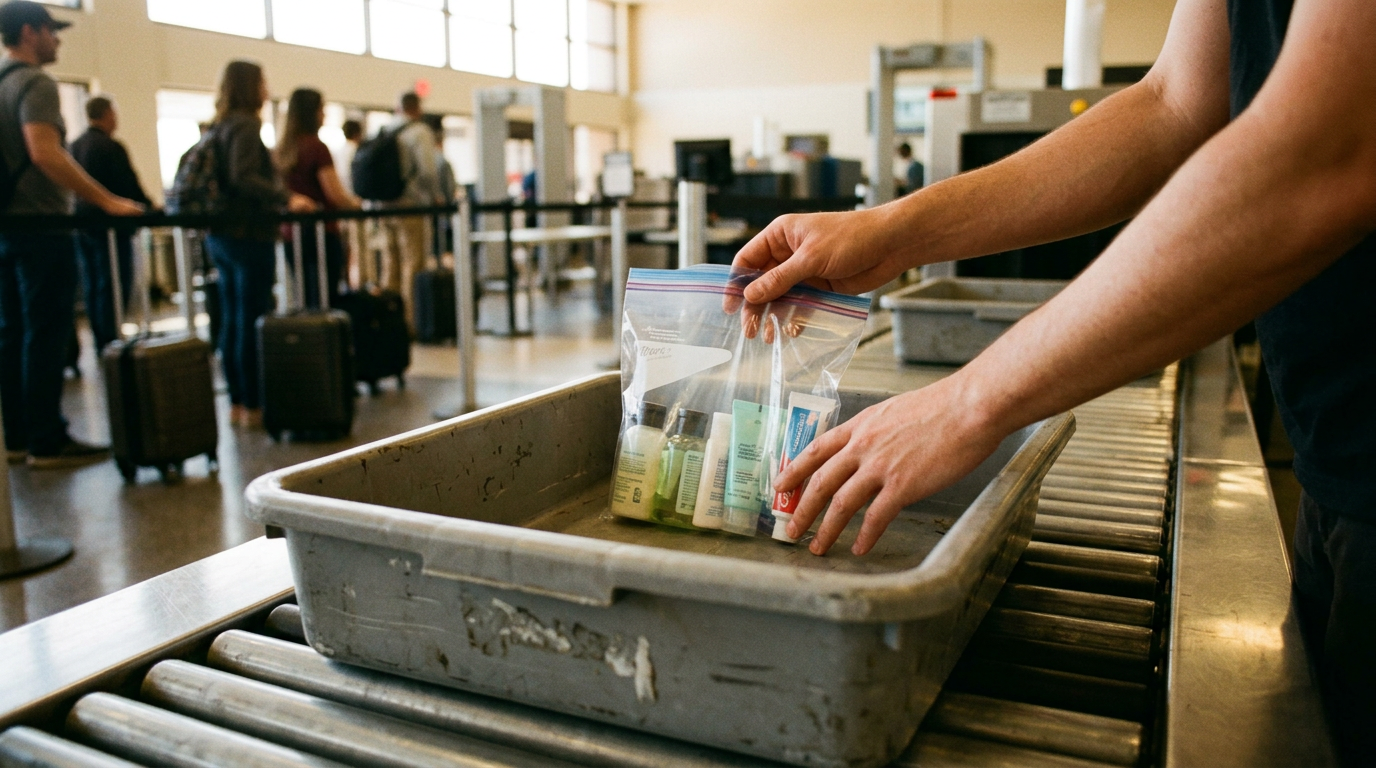
The short versionThe carry-on liquid limit is the rule for how much liquid, gel, and aerosol you can bring through airport security in your cabin bag. In the US, each container must hold 3.4 ounces or less, and all containers must fit in one quart-size bag per traveler; medical liquids, baby food, and some duty-free purchases have conditions or exceptions. Checkpoint officers make the final screening decision, so pack liquids where they are easy to inspect and put oversized toiletries or food souvenirs in checked luggage.
Picture the last morning of a trip. That jar of chili crisp from the market is on the bathroom counter, your carry-on is nearly zipped, and you’re wondering whether it’ll get through the checkpoint.
The answer comes down to the 3-1-1 rule, the core of the carry-on liquid limit. Once you know how it works, the exceptions and the odd everyday items make a lot more sense.
Here we cover the rule, its exceptions, checked-bag limits, and hazardous materials penalties, plus condiments, powders, sunscreen, and packing choices for sauces and souvenirs.
The Core Carry on Liquid Limit Rule
Most carry-on liquid questions come down to the 3-1-1 rule:
- 3.4 ounces per container
- one quart-size bag
- one bag per traveler
How big each liquid container can be
Every liquid, gel, and aerosol in your carry-on must be 3.4 oz (100 ml) or less. The limit applies to each container, not the total you pack.
A 3-ounce bottle of hot sauce is fine, but a 6-ounce bottle of olive oil can’t ride in your carry-on and has to go in checked luggage.
Can I take condiments on a plane? Yes. Sauces that pour or squeeze follow the same limit.
A home cook flying back from a market trip can pack a small bottle of fish sauce and a jar of chili oil, bringing the flavors home instead of leaving them in a bin at the checkpoint.
How much liquid fits in one bag
Everything goes in one quart-size zip-top bag, and each traveler gets one. The bag holds 1 liter in total, across up to 10 containers.
Powders aren’t on the list of liquids, gels, and aerosols, so the rule doesn’t cover them directly. Check the Transportation Security Administration (TSA) guidance for current powder rules.
Rules outside the US can differ, so check local rules if your trip starts abroad.
Can I bring sunscreen on a plane?
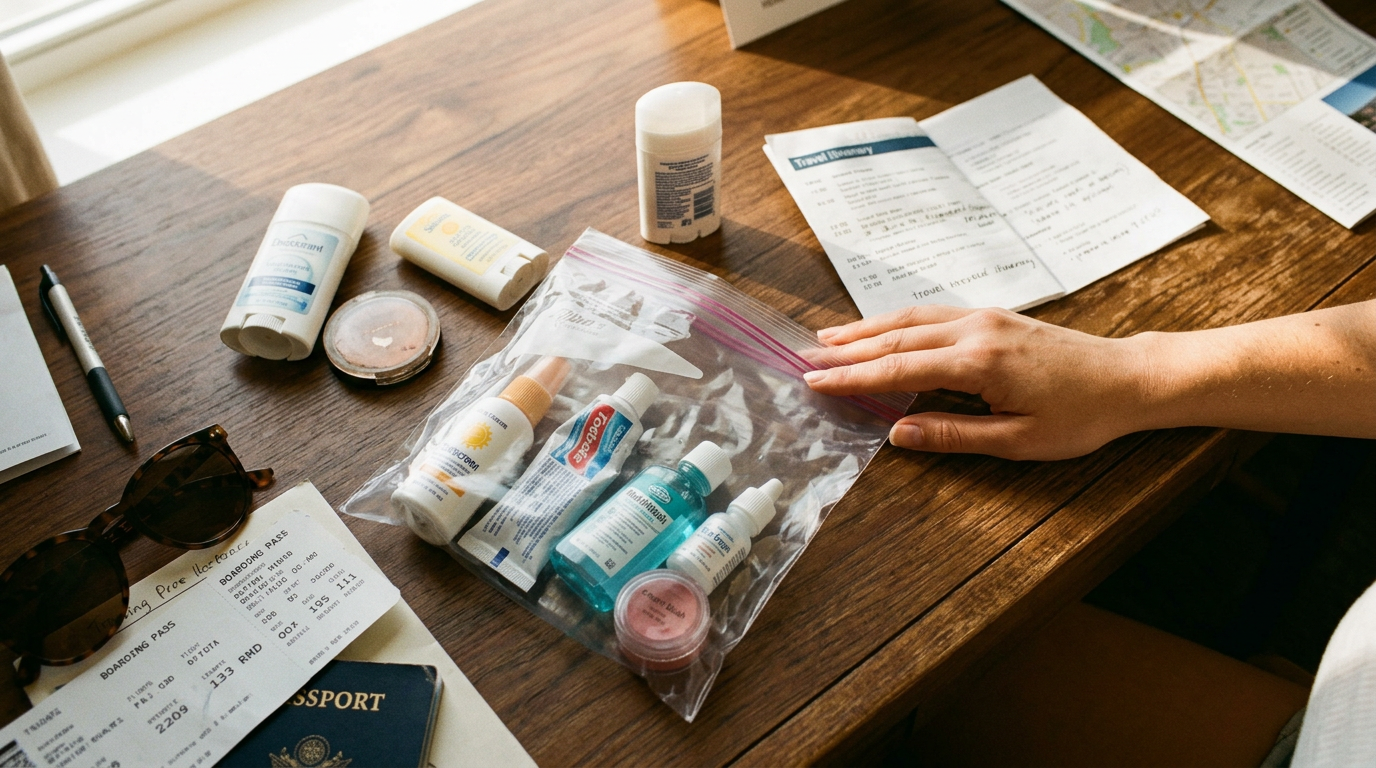
Yes. Sprays and lotions follow the 3.4 oz limit and go in your quart bag, while solid sticks sit outside the liquid rule. Here’s how the rest sorts out:
- Toothpaste, shampoo, and mouthwash: liquids or gels, so buy travel sizes.
- Deodorant, makeup, and moisturizer: creams and liquids count, but solid sticks don’t.
- Hairspray and dry shampoo: aerosols, so the same limit applies.
- Eye drops: liquids, so they follow the limit too.
- Cream blush and solid makeup: cream blush counts as a liquid for packing, so it goes in your bag, while solid makeup doesn’t.
Tips for packing and getting screened
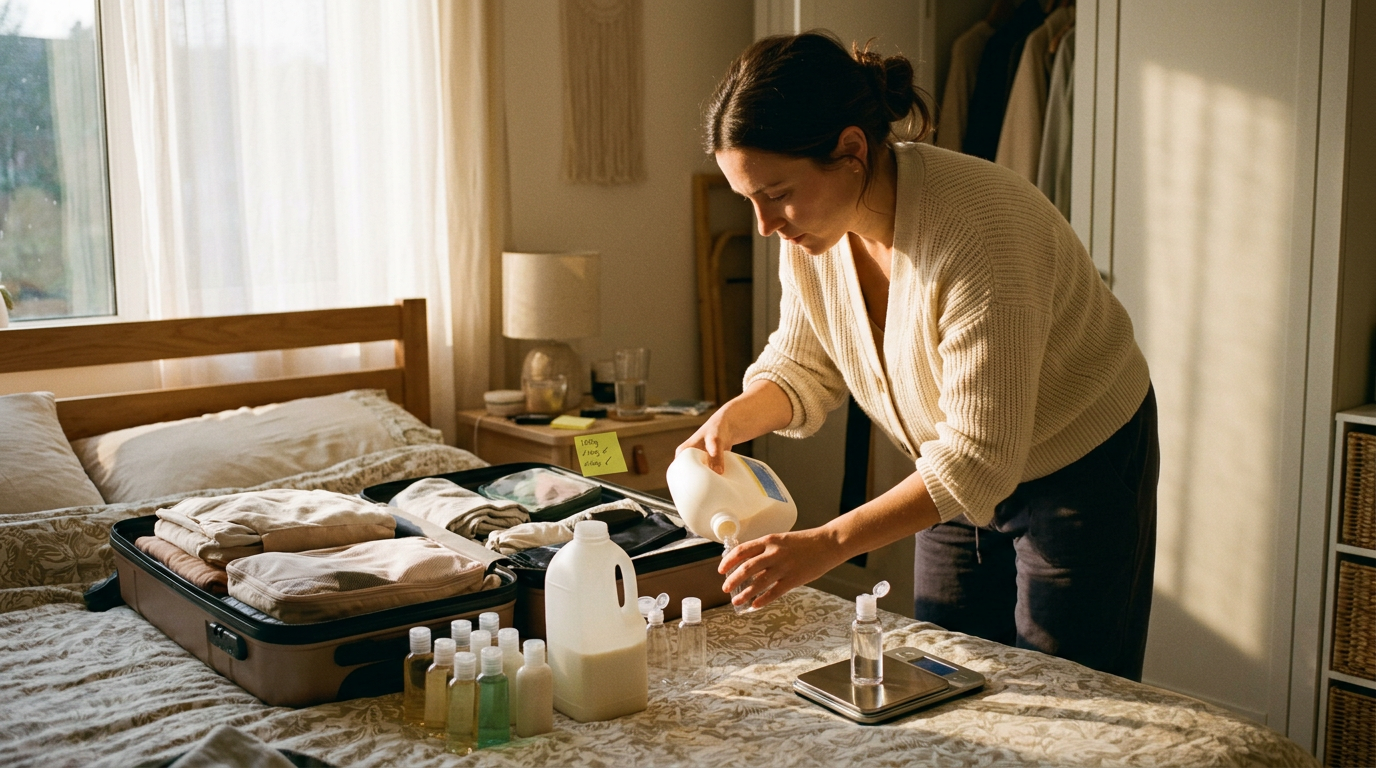
- Pack the liquids bag last. Keep it on top, since the checkpoint is no place to dig through your carry-on. Pack it last, pull it first.
- Remove the bag for X-ray. Take it out of your carry-on so it can go through on its own.
- Pool liquids when traveling together. Share one shampoo or sunscreen so you carry fewer containers.
- Leak-proof travel bottles are worth buying. One leak can ruin everything else in your bag.
- Solid toiletry swaps save space. A shampoo bar skips the container limit entirely.
Liquids That Get Special Exceptions
Some liquids can go past the 3-1-1 rule, which caps containers at 3.4 ounces, but each exception comes with conditions. Here’s what we’d have ready.
Medically needed liquids can exceed the limit
If you’re carrying a medically necessary liquid, you can bring more than 3.4 ounces. Think of a traveler with a two-week supply of prescription liquid. A readable label lets the officer verify it, and you’re on your way.
At the checkpoint:
- Declare the liquid to the Transportation Security Administration (TSA) officer.
- Keep medications clearly labeled.
- Expect possible inspection or verification.
Kids’ liquids like formula and juice
Formula, breast milk and juice can come in larger amounts than the usual limit, but they still have to be declared and removed from your bag for screening. Picture a parent boarding an early flight with a toddler and a day’s worth of formula.
Declaring it and pulling it out when asked gets the family through without a scramble at the bin.
Keep duty-free bags sealed and receipts handy
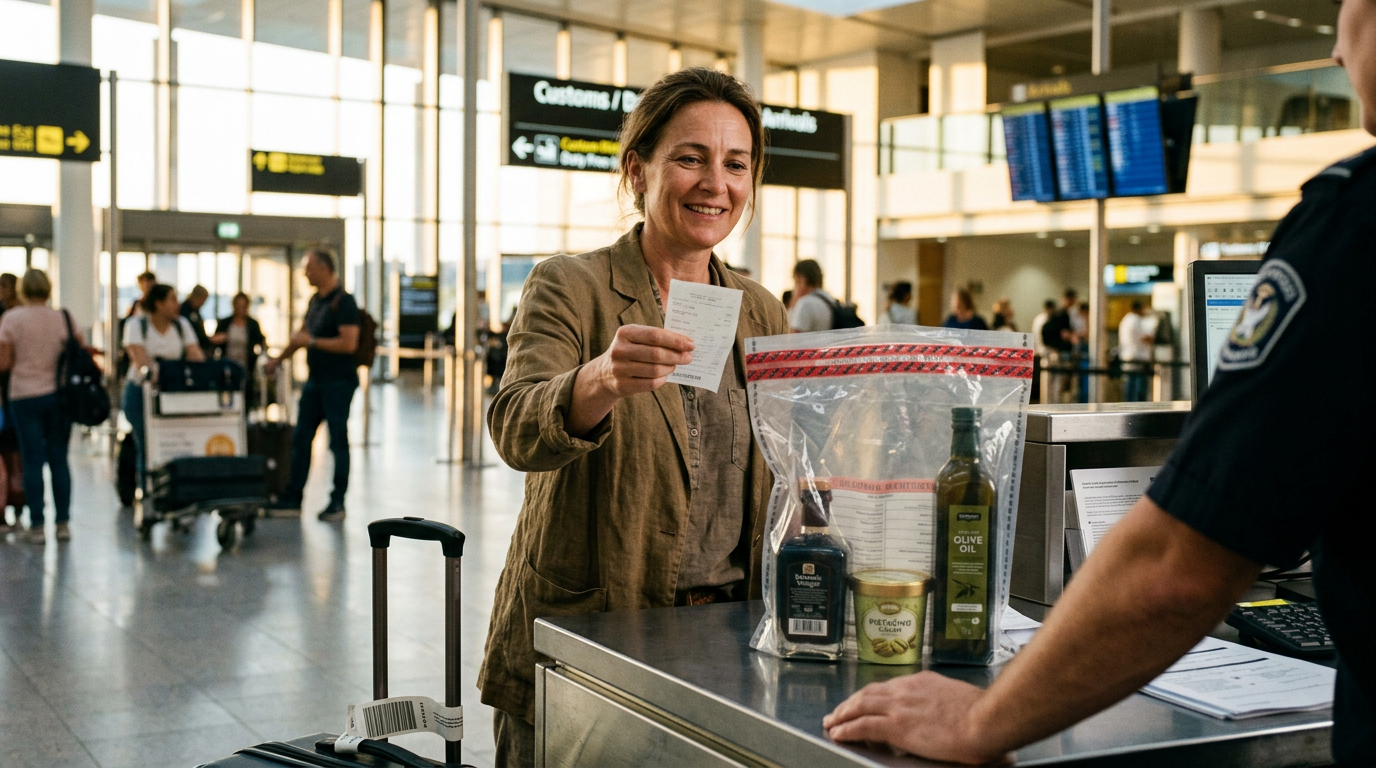
Duty-free purchases come with a few conditions. Keep them in a tamper-evident bag (one that shows whether it’s been opened), and keep the receipt within reach rather than buried in your carry-on.
Watch the 48-hour caution on inbound flights: if you bought duty-free within the last 48 hours, have the sealed bag and receipt ready for the officer.
Food souvenirs raise the same question. Picture a home cook flying back with a jar of balsamic, a tub of pistachio cream and a bottle of olive oil.
Sauces, oils and spreads count under the same rules, so check each jar’s size and move oversized ones to your checked bag.
Frozen items and ice packs at security
Frozen food is simpler than most liquids, but what counts is the state at the checkpoint, not when you packed it. Consider a traveler heading home with a block of frozen pastry from a market. If it’s frozen solid at the bins, it’s allowed.
Once it has thawed to slush, it’s a liquid and has to meet the 3-1-1 rule. Keep it solid, and it’s easy.
Medical ice packs are exempt, so they don’t have to meet the limit.
How Screening and Officer Decisions Work
Following the liquid rules gets your bag to the checkpoint, but screening and the officer on duty decide what happens next. Here’s how that works and how to make it go smoothly.
What happens at the checkpoint
Even a compliant liquid can still be screened. Consider a home cook flying back with a jar of homemade chili crisp. If her bag gets a closer look, the jar is right at the top, so the check takes seconds instead of holding up the line.
An alarm or signs of tampering can trigger extra scrutiny, so keep containers sealed and intact. Either way, the officer makes the final call on what goes through. It’s less about having the right bag and more about showing it clearly. Stay calm.
Telling officers about medical devices and electronics
If you’re wearing or carrying a medical device, tell the officer before screening starts.
- Attached devices. Mention any device attached to your body, and say where it sits.
- Lithium batteries. These belong in your carry-on, so keep them within reach and be ready to explain what they power.
- Powering up. Some devices may need to be switched on so the officer can check them.
Get ready for security with less stress
Most checkpoint stress comes from surprises, so handle them before you leave.
- Plan ahead and pack properly. Group your liquids in one clear bag you can pull out fast, and leave extra time for the line.
- Know the rules to reduce stress. Check the current rules before you go, so an officer’s question never catches you off guard.
A little prep at home means fewer surprises at the belt.
Limits for Checked Bags Under FAA Rules
Checked bags follow their own FAA limits on toiletries and medicine, and a few items never belong in them at all. Here’s what we’d want you to know before you zip the suitcase.
Total toiletry and medicine limits per person
The total toiletry and medicine limit for checked bags is 70 oz / 2 kg per person, according to the Federal Aviation Administration. That cap limits the total you pack, and the size of each bottle is a separate rule.
Think of a traveler packing 32 oz of sunscreen, 16 oz of shampoo, and 10 oz of face wash for a week away. The sunscreen bottle alone is over the FAA’s 18 oz / 500 ml limit per container, so it has to be split or left home.
Split it, and the whole kit still sits well under 70 oz.
There’s also a small quantities exception, so check the FAA guidance before you assume your small bottles qualify.
Protect aerosol nozzles from accidental release
An aerosol can needs its nozzle protected by a cap, which prevents accidental release while the bag is in transit. Think of a hiker who packs a can of insect repellent beside their boots. With the cap on, nothing presses the nozzle by accident.
At the trailhead, they just remove the cap and spray.
Items that must stay in your carry-on
These items must stay in your carry-on:
- Spare lithium batteries
- Cigarette lighters
- E-cigarettes, which can’t be checked
- Medical oxygen, which needs approval
Keep them in the cabin, not the suitcase.
Hazardous Materials Rules and the Penalties
Some carry-on items are more than an airline policy question. Under federal law they count as hazardous materials (hazmat for short), and the penalties are serious.
Here’s what’s at stake, which everyday items qualify, and when airlines ask you to confirm the rules.
Fines and prison time you could face
According to 49 U.S.C. 5124, a person who knowingly violates hazardous-materials laws may be imprisoned for up to five years. Penalties can reach $250,000 or more.
The law centers on knowing violations, so the simplest protection is checking your bag before you leave home.
Everyday items that count as hazardous
Hazardous doesn’t mean exotic. Many items on the list are ordinary hobby and household products:
- Flammable liquids and compressed gases: items that can catch fire or leak.
- Paints, lighter fluid, and fireworks: the project and party supplies people often toss in without a second thought.
- Temperature and pressure leak risks: containers that can leak as temperature and pressure change.
Consider a hobbyist packing a few spray-paint cans and a bottle of lighter fluid for a weekend project. Both look harmless on a shelf, but both count. A quick check at home keeps the trip uneventful.
Airline hazmat notices you must acknowledge
Airlines repeat the rules at several points:
- Notices at ticketing and boarding: you’ll see the notice when your ticket is issued and again as you board.
- Acknowledgment at purchase: you confirm you’ve read it when you buy your ticket.
- Acknowledgment at check-in: you confirm again when you check in.
Read the notice, don’t just click through.
Most liquid problems come down to planning, not luck. Know the 3-1-1 rule, check which items qualify for exceptions, and review the checked-bag and hazardous materials limits before you pack.
For sauces, spreads, and souvenirs, that means deciding what travels in your carry-on and what goes in your suitcase. That small choice saves a lot of stress at the checkpoint.
A few minutes of planning at home beats a surprise in a security bin.
References
Questions
What is the maximum size for a carry-on bag on Southwest Airlines?
Southwest Airlines allows carry-on bags up to 24 inches long, 16 inches wide, and 10 inches high, including handles and wheels. The bag must fit in the overhead bin; each passenger may also bring one personal item that fits under the seat.
What are the TSA rules for bringing powders on flights?
TSA generally does not restrict powders under the 3-1-1 liquids rule. Powders over 12 ounces (350 milliliters) may need to be placed separately for screening, and officers may inspect them; check current TSA guidance for your route.
How many 100ml bottles can you take on a plane?
You can bring multiple bottles as long as each is no larger than 100 milliliters (3.4 ounces) and all fit inside one quart-size bag. The bag typically holds up to about 10 travel-size containers, depending on their shape and how they fit.
How to pack toiletries for carry-on?
Put liquids, gels, creams, and aerosols in travel-size containers of 100 milliliters (3.4 ounces) or less, then place them together in one quart-size bag. Keep the bag near the top of your carry-on so you can remove it for screening, and use leak-proof containers to prevent spills.
Can I take condiments on a plane?
Yes. Condiments are allowed, but sauces, oils, and spreads count as liquids or gels. Carry-on containers must be 100 milliliters (3.4 ounces) or less and fit in your quart-size liquids bag; larger containers should go in checked luggage.
Does cream blush count as a liquid TSA?
Yes. Cream blush is treated as a liquid or cream for carry-on packing, so it must fit in your quart-size liquids bag. Solid makeup is not subject to the liquids rule.
Can I bring aerosols on a plane?
Yes. Aerosols are allowed in carry-on bags when each container is 100 milliliters (3.4 ounces) or less and fits in your quart-size liquids bag. Aerosol cans in checked bags must have their nozzles protected against accidental release, and hazardous aerosols may be prohibited.
Can I bring medicine on a plane?
Yes. Medically necessary liquid medications can exceed the usual 100-milliliter limit, but declare them to the TSA officer and keep them clearly labeled; they may be inspected. Other medicines can also be carried on, and keeping them in their original labeled packaging can make screening easier.