 Gear
Checked Bag Weight Limit Explained for Every Airline
Checked bag weight limit is usually 50 lb, but airline rules vary. See what overweight fees cost and how to keep your suitcase under the line.

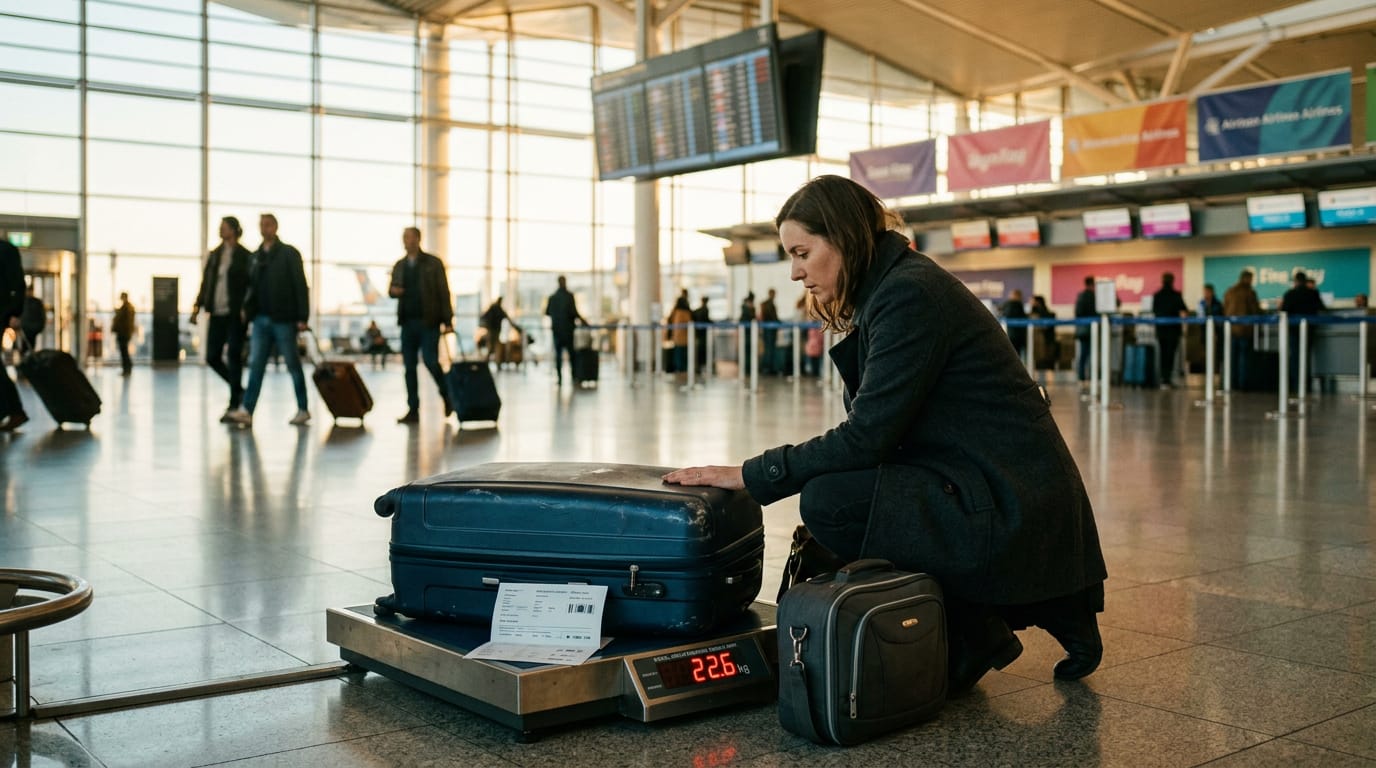
The short versionA checked bag weight limit is the maximum weight an airline allows for a suitcase before extra fees or other restrictions apply; 50 lb (23 kg) is the common cap for economy bags. Limits depend on the airline, route, fare, and whether the allowance applies to each bag or to all bags combined, so check every carrier’s current rules and weigh each packed bag at home. Staying below the applicable limit helps avoid surprise charges, refused bags, and difficult lifting.
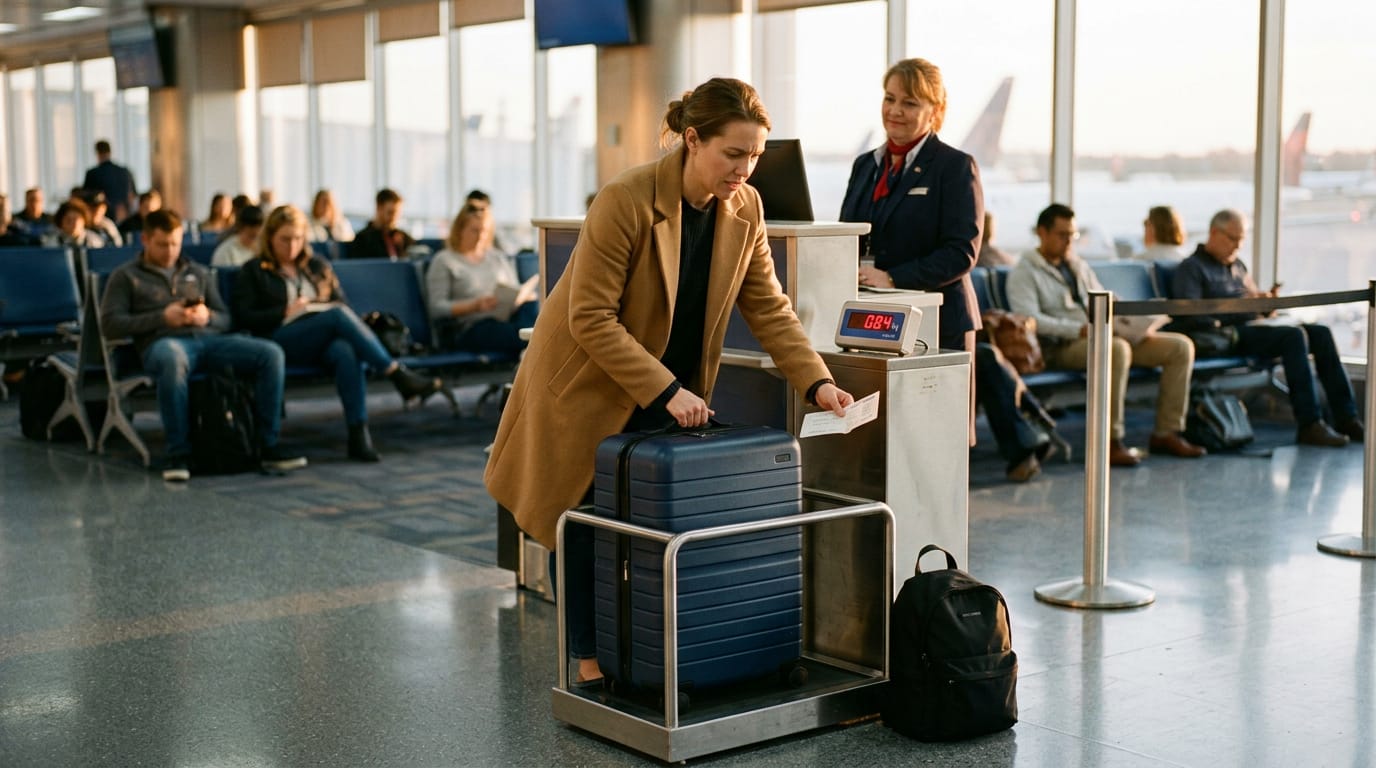
Picture the check-in counter: your bag is on the scale, and the agent’s screen shows a number you didn’t expect. A checked bag weight limit is the heaviest a bag can be before an airline charges extra, and the standard limit is 50 lb (23 kg).
That number is only a starting point, because each airline sets its own rules.
In this post, we’ll cover the standard limit, weight versus piece systems, airline differences, fees, carry-on rules, and the packing gear that keeps you under the line.
The Standard Checked Bag Weight Limit
Most checked bag rules start from one number. Here’s the baseline we’ll use.
Most economy bags cap at 50 lb
Most economy fares allow a checked bag of up to 50 lb, which is 23 kg. That’s the most common economy limit, and it’s a per-bag cap, so a second suitcase doesn’t raise the limit on the first.
Because 50 lb is about 22.7 kg, the 23 kg figure is rounded, leaving a little leeway at the scale. Weigh it at home.
When higher limits and size rules apply
Not every route uses 50 lb. Some allow 70 lb or 100 lb checked bags, so the allowance depends on your route. Heavier bags can also ship as cargo.
Size rules run alongside weight: the 62 linear inch cap, meaning length, width, and height added together, is the one to watch. Sports gear and special items can have their own exceptions.
How weight and piece systems differ
The bigger difference is how an airline counts your bags. Under a weight-based pooled allowance, you get one total for all your bags. Under a piece system, each bag is judged alone against a per-bag cap.
Gulf carriers use weight, while US carriers use pieces.
Say a family of four shares a 100 lb allowance. They can pack one heavy case and one light one, as long as the total stays under it. The question shifts from each bag to the total.
Can you carry two bags for 25 kg on IndiGo, or two bags at 25 kg each? That turns on whether the limit is pooled or per bag, so confirm IndiGo’s current allowance before you pack.
Carry-on weight is a separate rule
Your carry-on follows its own rules. You’ll sometimes see a 14 lb figure for carry-on bags, so check the cabin limit separately. Delta sets its own rules, so check the Delta carry-on bag rules before you pack.
Gulf carriers may also check a carry-on at the gate. Picture a photographer whose lenses ride in a carry-on until the gate agent asks for it to go in the hold. Keep fragile gear in a personal item so it stays with you.
What’s the maximum size for a personal item on United? United sets its own dimensions, and they can change, so check its current rule before you buy a backpack. Measure it at home.
Each Airline Sets Its Own Rules
No single checked bag limit covers every flight. Each airline sets its own, so the rules on your ticket are the ones that count. If you fly JetBlue, check the JetBlue bag policy for its carry-on, checked and fee rules.
Where to find current airline rules
Start with the airline’s excess baggage page, which lists size and weight limits and the cost of going over. Then check its website for your route. Two points matter most:
- Policies change often. Rules for 2026 vary by airline, so check each carrier’s current page for the exact limits.
- Fare class affects allowance. The ticket you buy can change how many bags you’re allowed, so read the rules for your booking, not the general policy.
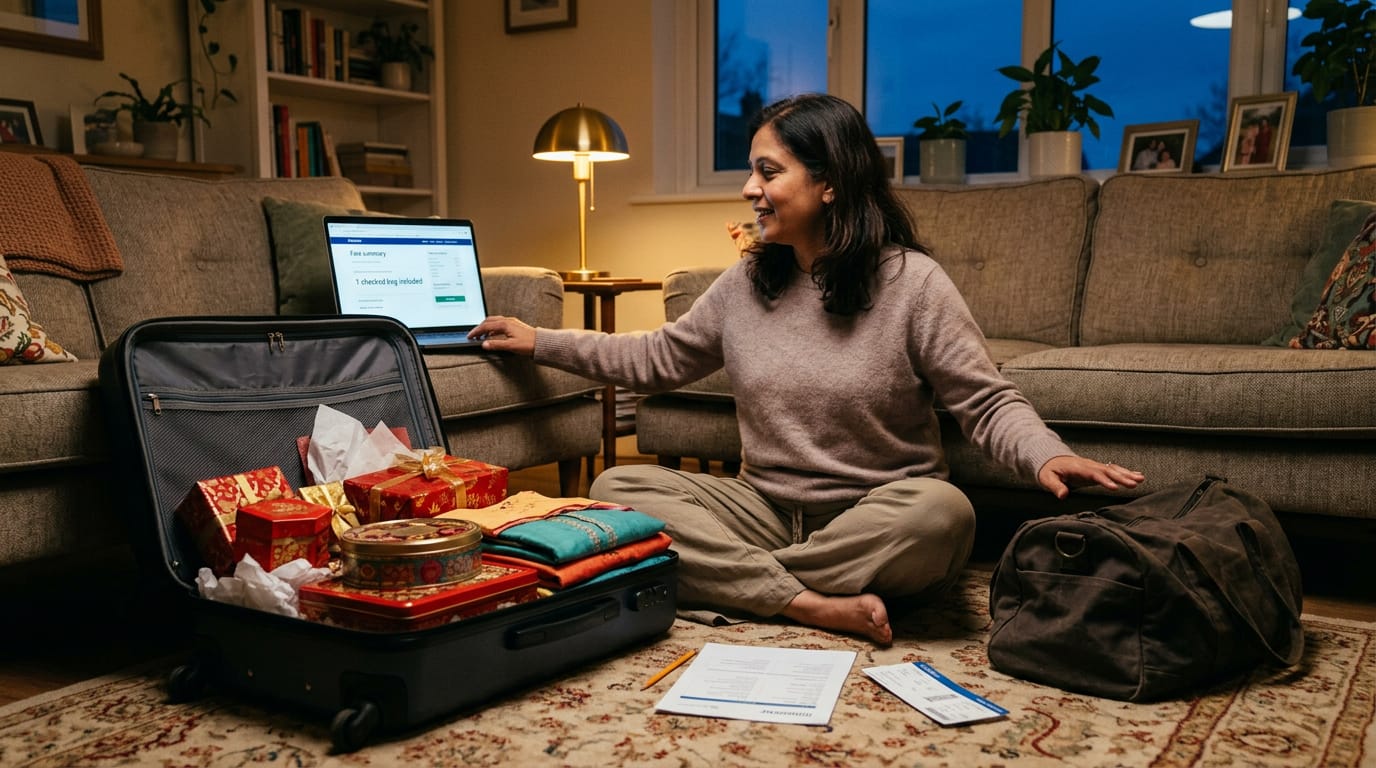
Think of a parent flying to India with a suitcase of gifts. They check the rules before buying, and learn their fare includes one bag, not two. Checking first avoids a surprise fee.
Airlines flying between the US and India
- Air India: a two-bag allowance, handy for families with several suitcases.
- United and Delta: a per-bag fee, so each extra suitcase adds to your bill.
- Emirates, Qatar, and Etihad: weight-based limits, so you’ll need to know how heavy each bag is.
Elite status can change the math, so check whether your tier adds bags or a higher weight limit.
How your route changes the allowance
On a long-haul trip, you’re more likely to pack heavy, so weight matters more than count. Gifts and family visits add to that. A bag that’s light on the way out can come home heavy.
Expect stricter limits on any domestic leg, so check that flight’s rules separately. Connecting flights on different airlines need the same check, so look at every carrier on your ticket. Check every leg.
What Overweight Bags Actually Cost You
An overweight bag costs more than the counter fee. Here’s how the charges work and where the real risks sit.
How much overweight fees typically cost
Overweight fees usually run $50 to $100 per bag, and some airlines charge $100 to $200. A study of budget travelers’ ancillary fees found that higher range at some carriers. Charges can follow a few models:
- Per-bag fees. A flat charge once you’re over the limit.
- Per-kilogram charges. You pay for each kilogram above the allowance.
- Weight bands. The bracket your bag lands in sets the price.
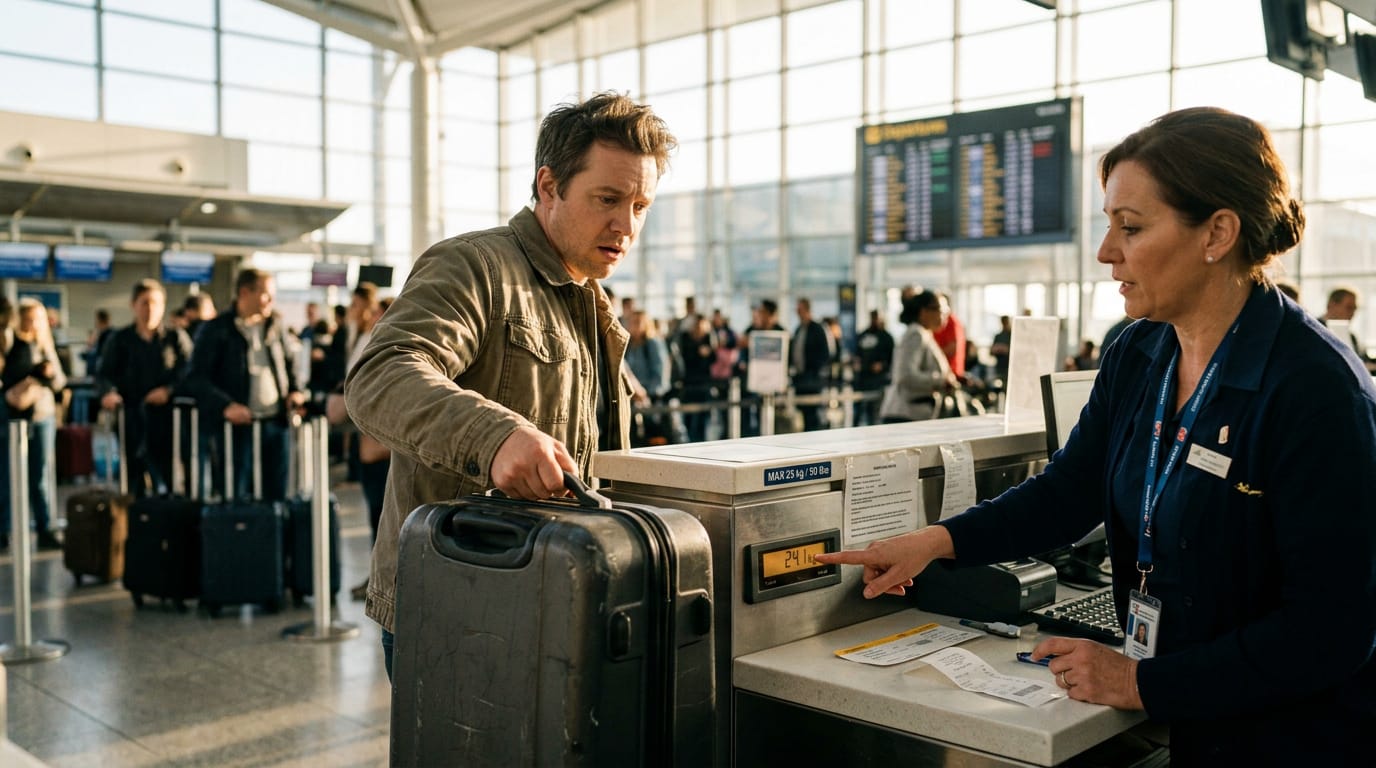
As a research essay on the airline industry notes, some airlines set a maximum weight and refuse anything above it, and bags over 70 lb can be turned away at the counter. Picture a traveler whose suitcase reads 54 lb on the home scale.
At the airport it lands in a higher band, and the $75 charge comes as a surprise. A fee is a cost you can plan for. A refused bag is the one you can’t.
How airlines profit from overweight fees
Baggage is big business. A consultancy’s estimate put baggage-fee revenue at USD 33.3 billion in 2023, up from USD 29 billion in 2022, or roughly $30 billion a year.
Overweight bags are common, and enforcement is tightening, so hoping nobody checks is a weaker plan than it used to be.
Random weigh-ins and the risks involved
Random weight checks mean a bag that passed last time can still get pulled. Self-check-in may mean your bag skips the scale at the counter, but random checks still happen.
A report from the Centers for Disease Control and Prevention on airport baggage handlers links manual baggage lifting to work-related musculoskeletal disorders (WMSDs).
Heavy bags raise injury risk for handlers, and a bag that’s hard to move can slow the line and cause delays. Handlers also have a lifting limit, which is one reason the weight rules exist.
Overpacked bags face a higher risk of damage or loss, so a lighter pack protects your gear.
Slightly over 50 lb may still pass
A bag that’s slightly over 50 lb (23 kg) usually passes, but that’s a hope, not a policy. You may still face an extra fee. Some airports and agents show more flexibility, but you can’t count on it.
Weigh the bag at home and aim under the line. It’s the only guarantee you’ll get.
Ways to Dodge Overweight Fees
Most overweight fees are avoidable, and the work happens before you reach the counter.
Weigh each bag before you leave
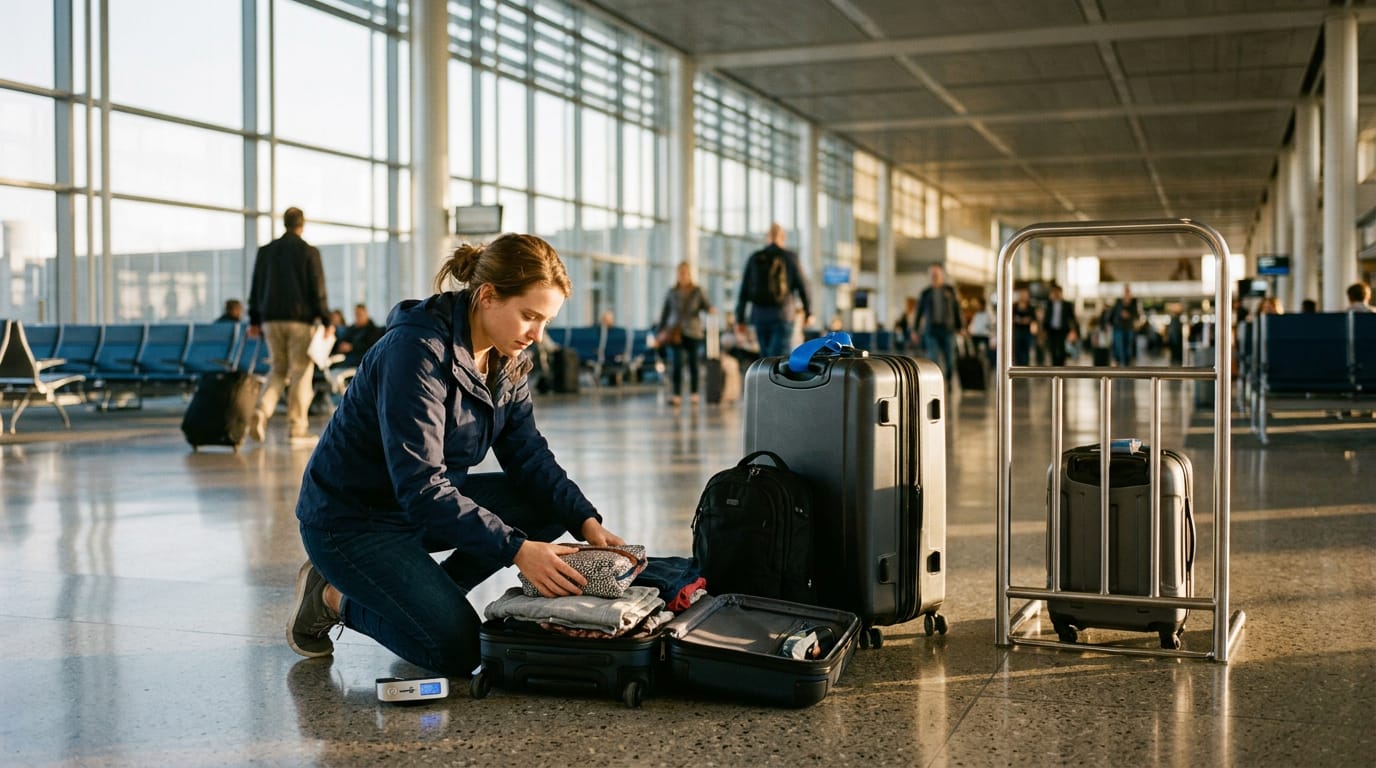
Guessing is how bags end up over the limit. Weigh each bag fully packed, on its own rather than as a pair.
- Home or travel scale: the best choice, since you can still repack.
- Airport kiosk: a last check before the queue.
- Pocket luggage scale: small enough to bring on every trip.
Consider a couple flying home from Lisbon with tiles in one suitcase and olive oil in the other. They assume the bags are even, then find on a pocket scale that one is far heavier. Ten minutes of shuffling fixes it.
Spread weight evenly across your bags
Spread the weight so no single suitcase tips past the limit. The goal is an even split, not one heavy bag and one light one.
Using two suitcases gives you more room to move. If one runs heavy, shift shoes or books to the other.
Balanced bags also tend to cost less, since each one can sit under its own limit. They’re easier to lift, too, which matters on stairs, curbs and train platforms.
Pack light and buy the rest there
Start with a short list of everyday essentials, and choose clothes that mix and match. Use travel-size toiletries and packing cubes so you can see what’s taking up room.
Think of a reader heading to a week in Lyon who planned to pack shampoo and coffee from home. They buy both after landing, which leaves room for the souvenirs they want to bring back. Buy it there, not here.
Simple ways to cut baggage costs
- Prepay extra baggage online. Adding it before you fly is often cheaper than paying at the counter.
- Wear your heaviest items. Heavy shoes and a bulky jacket on your body don’t count toward the suitcase.
- Use your carry-on wisely. Keep valuables and medications with you, within your airline’s carry-on rules.
- Check fare inclusions. Some fares include a checked bag, so confirm before you book.
- Choose lightweight luggage. The empty case counts toward the total, so a lighter shell leaves more room to pack.
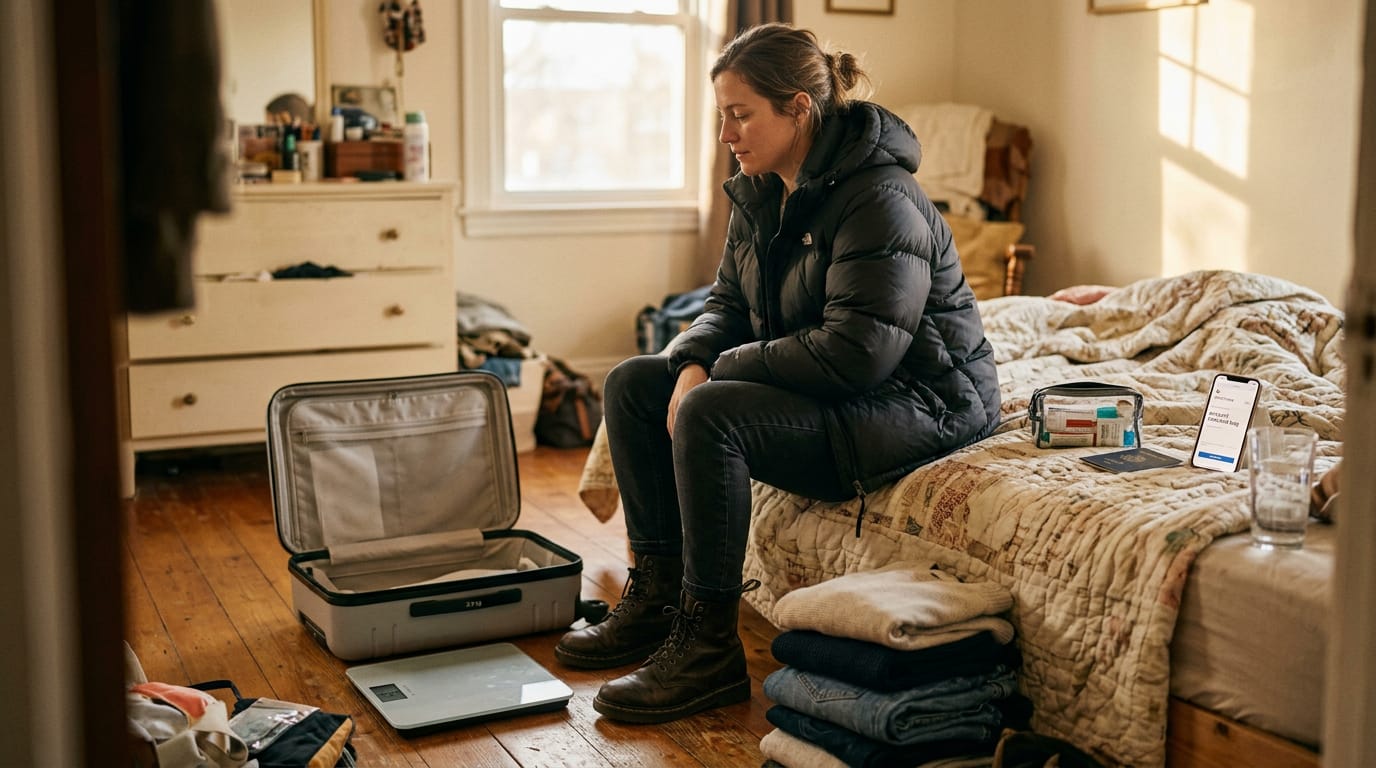
- Check the empty suitcase weight. Weigh the case alone so you know how much room you have.
Items that add the most weight
A few everyday items are heavier than they look.
- Books. Paper books are the classic culprit, so try an e-reader instead.
- Liquid toiletries. Buy shampoo and sunscreen at your destination or pack solid versions.
- Stone or ceramic souvenirs. A single bowl or carved stone can tip a bag over. Wrap it in clothes and carry it on, or ship it home.
- Electronics. Extra chargers and a second camera add up quickly. Pack only what you’ll use.
- Cookware and food souvenirs. Pots, pans, jars of oil and wheels of cheese weigh more than you’d expect.
Ask whether you’ll use each heavy item on the trip. Heavy things should earn their space.
What 50 Lbs Actually Feels Like
The 50 lb (23 kg) limit is just a number until you have to lift the bag. Knowing how it feels helps you pack smarter.
How 50 lbs compares when lifting
A bag near the limit weighs about as much as a full 5-gallon water jug. A suitcase is also harder to lift than a dumbbell of the same weight, because its load hangs off one side of your hand instead of sitting in your palm.
It’s less about how much the bag weighs and more about where that weight sits.
Think of a traveler who packs for a month, then hauls that bag onto a train, up three flights of stairs, and across a crowded station. Lifting it once is easy. Doing it four times in one day is where it starts to hurt.
Here’s what helps:
- Split the load. Move a few heavy items into a carry-on or tote if you can.
- Ask for help. A travel companion can grab the other handle, and it’s fine to ask for a hand at the counter or hotel desk.
Choosing a suitcase that holds up
A quality suitcase takes a few knocks, but a cheap shell can crack or split at the seams when it’s dropped, stacked, or hauled off a carousel.
Every pound of empty weight in the bag itself comes out of your 50 lb allowance, so a heavy shell leaves less room for clothes.
Heavy bags are hard to carry, so pick a lighter case with sturdy wheels and a handle that doesn’t wobble. You’ll want a bag you can move without thinking about it.
Checking a bag comes down to three things: knowing the 50 lb (23 kg) standard, reading your airline’s specific rules, and understanding what an overweight bag will cost you. Once you have those, the choices get simpler.
You can pack lighter, shift heavy items into your carry-on where the rules allow, and weigh your bag before you leave home.
A good scale and a lightweight suitcase do most of the heavy lifting. Weigh it at home, and the counter stops being a surprise.
References
- Reducing Musculoskeletal Disorders among Airport Baggage Screeners & Handlers | NIOSH — cdc.gov (2025)
- Sustainability of Air Carriers and Assurance of Services — doi.org (2003)
- (PDF) The future of ancillary service fees in air travel — researchgate.net (2012)
- Essays In the Airline Industry — scholarcommons.sc.edu (2013)
- Passengers irked as airlines profiteer over seats — indiaoutbound.info (2026)
Questions
What is the maximum amount of liquid I can bring through TSA security?
TSA’s 3-1-1 rule allows liquids, gels, aerosols, creams, and pastes in carry-on bags only in containers of 3.4 ounces (100 milliliters) or less. Those containers must fit in one clear, quart-size bag per passenger. Larger liquids generally need to go in checked baggage, with exceptions for items such as medications and infant nourishment.
What is the maximum size for a personal item on United airlines?
United’s personal item must fit under the seat in front of you and may measure up to 9 × 10 × 17 inches (22 × 25 × 43 cm), including handles and wheels. Check United’s current rules before flying, since policies can change and some aircraft or fares may have different restrictions.
What is Southwest airlines' carry-on baggage policy?
Southwest generally allows one carry-on bag and one personal item per passenger. The carry-on must be no larger than 24 × 16 × 10 inches, including handles and wheels, and the personal item must fit under the seat. Check your booking and Southwest’s current rules for any fare-specific or operational changes.
What are the carry-on bag size limits for American Airlines?
American Airlines’ carry-on limit is 22 × 14 × 9 inches, including handles and wheels. You can also bring one personal item that fits under the seat in front of you. Some smaller aircraft may require larger carry-ons to be gate-checked.
What are the new airline baggage rules for 2026?
There is no single set of new airline baggage rules for 2026. Allowances and fees vary by airline, route, and fare, so check the current baggage policy for every carrier on your itinerary and each flight leg before packing.
Why should you not tie a ribbon on your luggage?
A ribbon or other item tied to luggage can snag in baggage-handling equipment or interfere with automated sorting, which may delay the bag or require manual handling. Use a distinctive, secure luggage tag or a recognizable suitcase instead.
Can we carry 2 bags for 25 kg in IndiGo?
Not necessarily. IndiGo’s allowance depends on your route, fare, and whether its baggage system sets a pooled total or a limit for each bag; two bags weighing 25 kg each could exceed the allowance. Check the current allowance for your specific booking before packing.
Can I bring a purse and a backpack and a carry-on?
Usually, yes: many airlines allow one carry-on bag plus one personal item, such as a purse or backpack. If you bring both a purse and a backpack in addition to a carry-on, the airline may count one of them as your personal item and require the other to fit inside the carry-on. Check the airline’s current size and item-count rules.
Sources
- Passengers irked as airlines profiteer over seats, indiaoutbound.info,
- Sustainability of Air Carriers and Assurance of Services, doi.org,
- (PDF) The future of ancillary service fees in air travel - an exploratory investigation of budget air travellers, researchgate.net,
- Essays In the Airline Industry, scholarcommons.sc.edu,
- Reducing Musculoskeletal Disorders among Airport Baggage Screeners & Handlers | NIOSH | CDC, cdc.gov,