 Travel Tips
Travel Packing Tips for Every Kind of Trip
Travel packing tips help you choose only what fits your real trip, with practical ways to plan clothes, organize bags, and pack light for laundry.

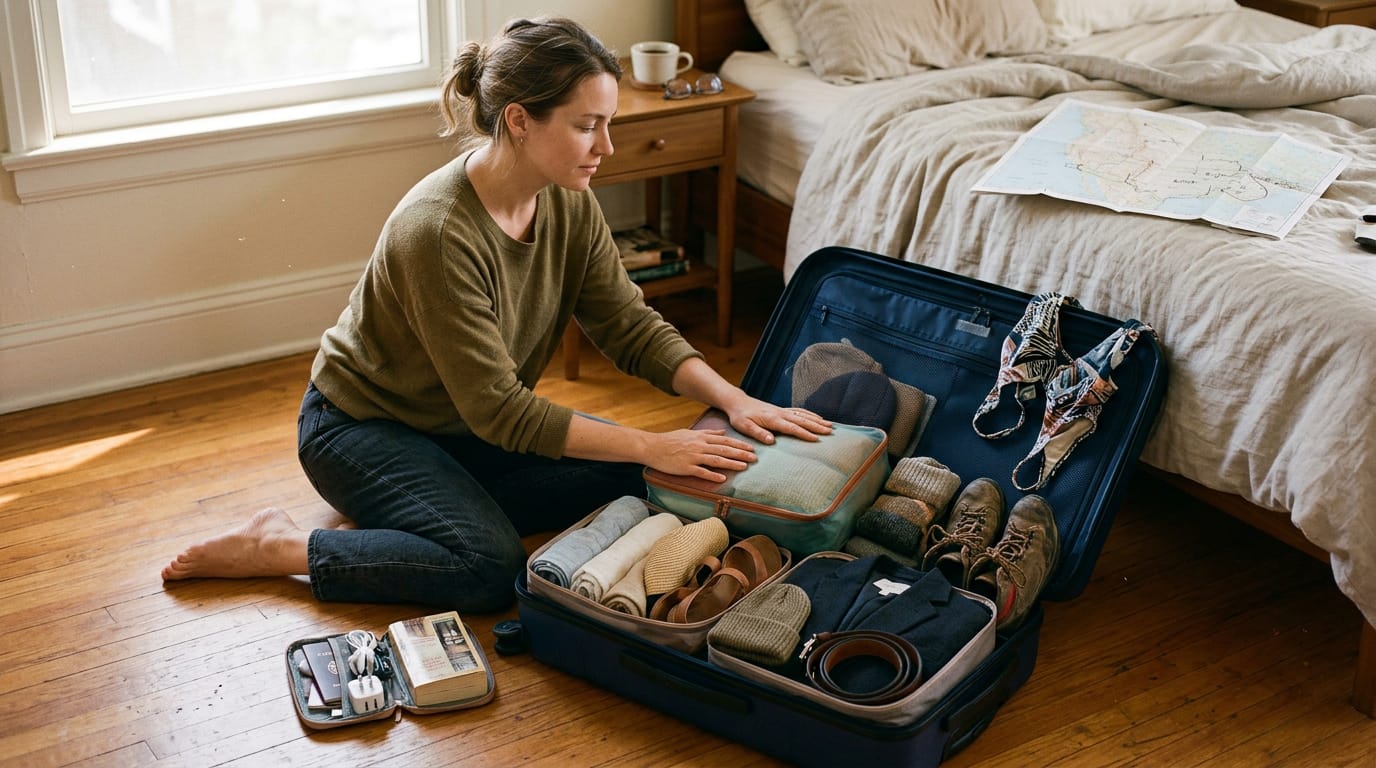
The short versionTravel packing tips are practical ways to choose, organize, and carry what you need for a specific trip without overfilling your bags. Plan ahead, check documents and travel requirements, build mix-and-match outfits, choose versatile shoes, organize essentials, and use laundry to pack less; bring only useful tech and check airline rules. Packing for the trip you are actually taking saves space and stress while leaving room for unexpected needs or souvenirs.
Packing for a trip works a lot like planning a market morning. You don’t need the whole stall, just the few things you’ll use, in the right bag.
The short answer is to plan around the trip you’re really taking. In this post, we’ll cover planning, clothes, bags, laundry, documents and tech, plus the common mistakes that catch most travelers out.
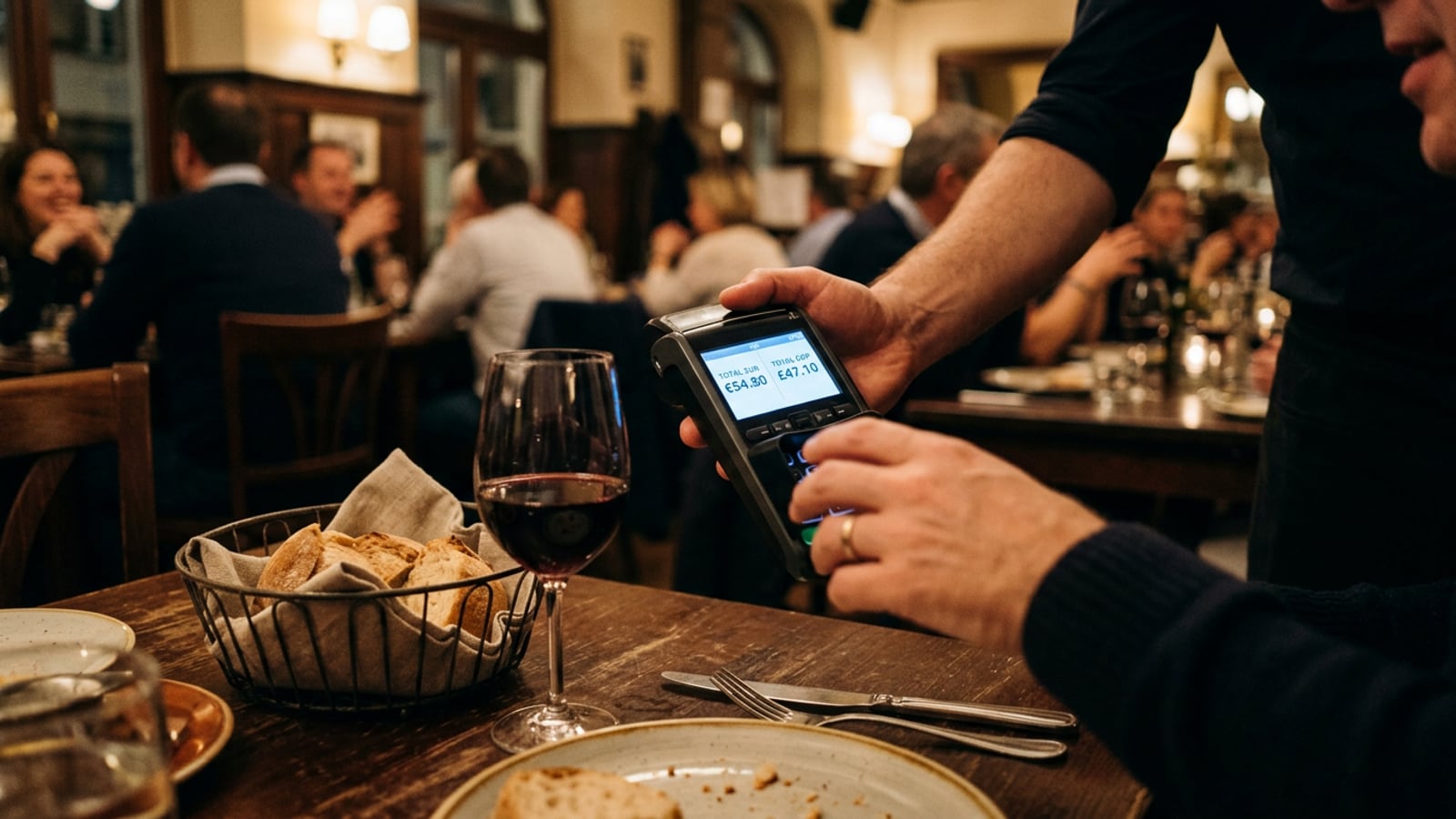
If your trip revolves around meals, we’ll add a food-led layer too, since a dinner booking or a market lunch changes what you pack.
Travel Packing Tips Before You Leave
Packing is less about what you fit and more about when you sort it out. Here’s what to handle weeks before you leave.
Get your documents and entry rules sorted
- Passport validity. The U.S. Embassy in the Dominican Republic notes that some destinations require your passport to be valid for six months beyond your planned stay or entry date. Check it now.
- Visas and authorizations. Some countries need a visa, while others require an electronic travel authorization (ETA), like the U.S. Electronic System for Travel Authorization (ESTA). Look up each country on your route.
- Boarding passes and itinerary. Save digital copies and carry a printed set in your carry-on.
- Government advisories. Check your government’s travel advisories for each destination.
Protect your trip and your health
- Trip interruption and cancellation cover. Think of a couple with non-refundable flights who get sick the week before departure. That’s what this cover is for.
- Declare preexisting conditions. Tell your insurer so your cover matches your situation.
- Doctor and dentist checkup. Book both before you leave, so small problems don’t become trip problems.
- Vaccinations ahead of time. Ask your doctor about vaccinations for each destination, and book them early.
- Medications and first aid. Keep prescriptions in your carry-on, not your checked bag, along with a basic first-aid kit.
Save on currency and discount cards
- Order currency in advance. A solo traveler landing late at night already has cash for the taxi.
- Student and youth cards. Bring yours if you qualify, and ask whether it unlocks reductions on the attractions and transit you plan to use.
- Hostelling membership. If you’ll stay in hostels, check whether a membership suits your route.
- Senior discounts. Ask about senior rates before you pay at ticket counters.
Plan Your Packing and Wardrobe
Packing goes wrong long before you zip the bag, so the fixes start weeks out.
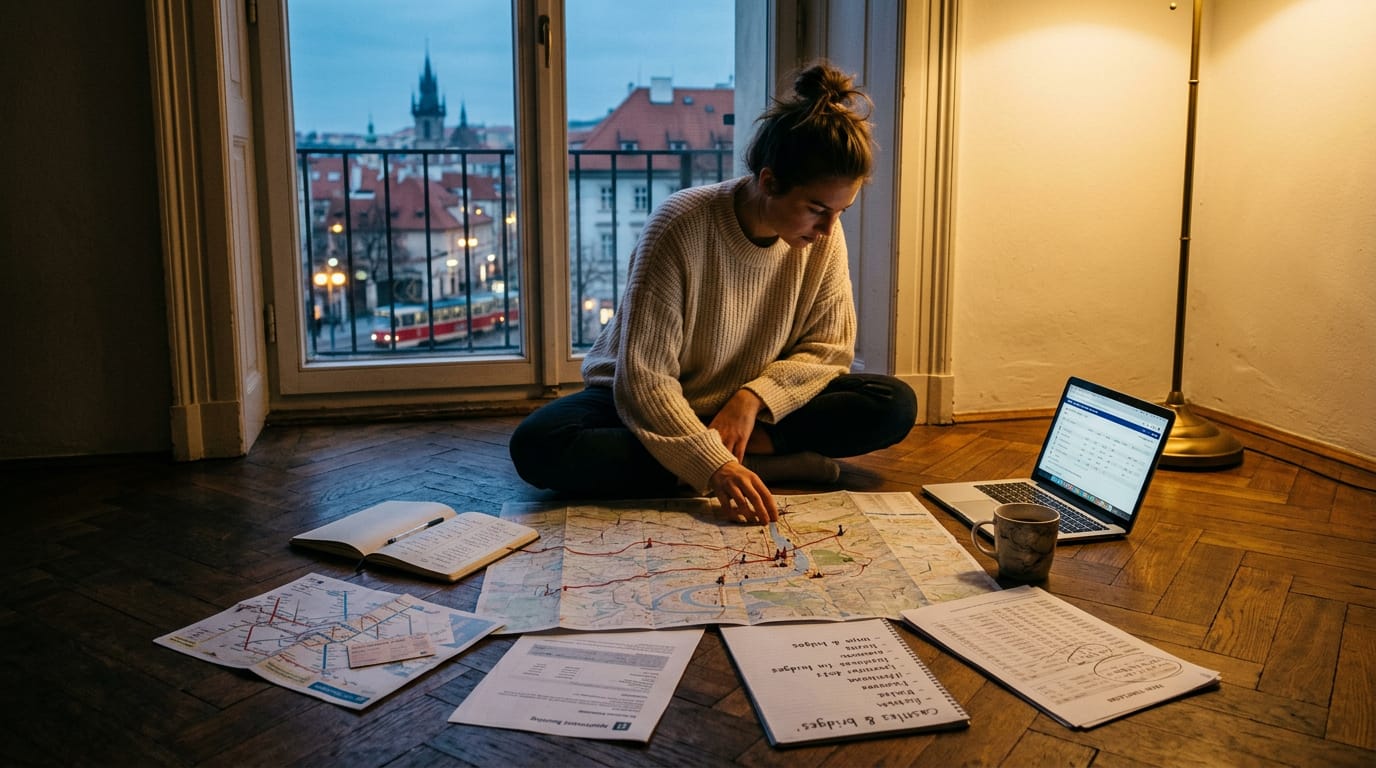
Begin your packing list weeks ahead
Start your packing list weeks ahead, not the night before. Treat it as a personal contract: every item has to earn its place. Think about your destination and traveler type, since a food-led week and a hiking trip need different things.
Before you leave, check the list against these five biggest packing mistakes:
- Packing without a written list.
- Bringing pieces that don’t work with anything else.
- Skipping the try-on until the last minute.
- Leaving stains and missing items unfixed.
- Packing so full nothing fits on the way home.

How many outfits should I pack for a 7 day trip?
Start by counting the days in your seven-day trip, then plan an outfit for each. Think about what you’ll wear, not what you might need. Keep a limited color palette, built mostly on neutrals with one or two accent colors for nights out.
Every item should go together, and each should work in three outfits. Plan your outfits on paper in advance.
Consider a reader with a week in Lyon, built around market lunches. They pack neutral trousers, a few tops in one accent color and a layer that goes with everything, so the bag stays small and every lunch still looks intentional.
The 5-4-3-2-1 rule is a countdown for trimming your bag: five, four, three, two, then one. Test your plan against it and cut whatever doesn’t make the cut.
Try everything on and pack early
Try everything on together, not piece by piece. A top that looks fine alone can clash with the trousers it’s meant to go with, and that’s easier to fix at home.
Pack a few days ahead, not the last night, so you have time to fix stains and buy missing items. Early beats frantic.
Pack less and leave room for souvenirs
Plan to remove 10-20% of your items and leave behind the pieces you love least. Once you’re home, reflect on unworn items: which stayed folded, and why? That tells you what to leave out next time.
Then leave room for souvenirs, like olive oil or ceramics. Empty space is part of the plan.
Pick the Right Clothes, Shoes and Accessories
Clothes and shoes take up most of a bag, so they’re where a light trip is won or lost. Pack pieces that work together so everything you bring gets worn.
Keep shoes to three versatile pairs
Limit yourself to three pairs of multipurpose shoes that can handle a museum, a market and a nice dinner. Wear the bulkiest pair on the plane, and pack the other two in fabric shoe bags to keep them from marking your clothes.
Comfort matters most on food-led days. Consider a reader spending a long weekend in Lyon, moving from a morning bakery to a standing lunch counter and back to the hotel after dinner.
Choose shoes for how far you’ll walk rather than how they look in a photo. Comfort wins.
Layer up with scarves and light jackets
A scarf is one of the most versatile things you can pack: a light layer on a cool evening, a wrap over a sleeveless top, and a way to cover your shoulders at temples.
Wear your jacket on the plane to save bag space, or pack a lightweight packable puffer jacket that folds into its own pocket.
Consider a couple whose evenings turn cooler than their afternoons: one puffer and a scarf cover them without much weight. Layers beat bulk.
Keep jewelry simple for travel
Simplify your jewelry. Pack one or two necklaces and two pairs of earrings, one for days and one for evenings. For example, a host heading to a Sunday lunch and a late dinner needs only that small set to look put together.
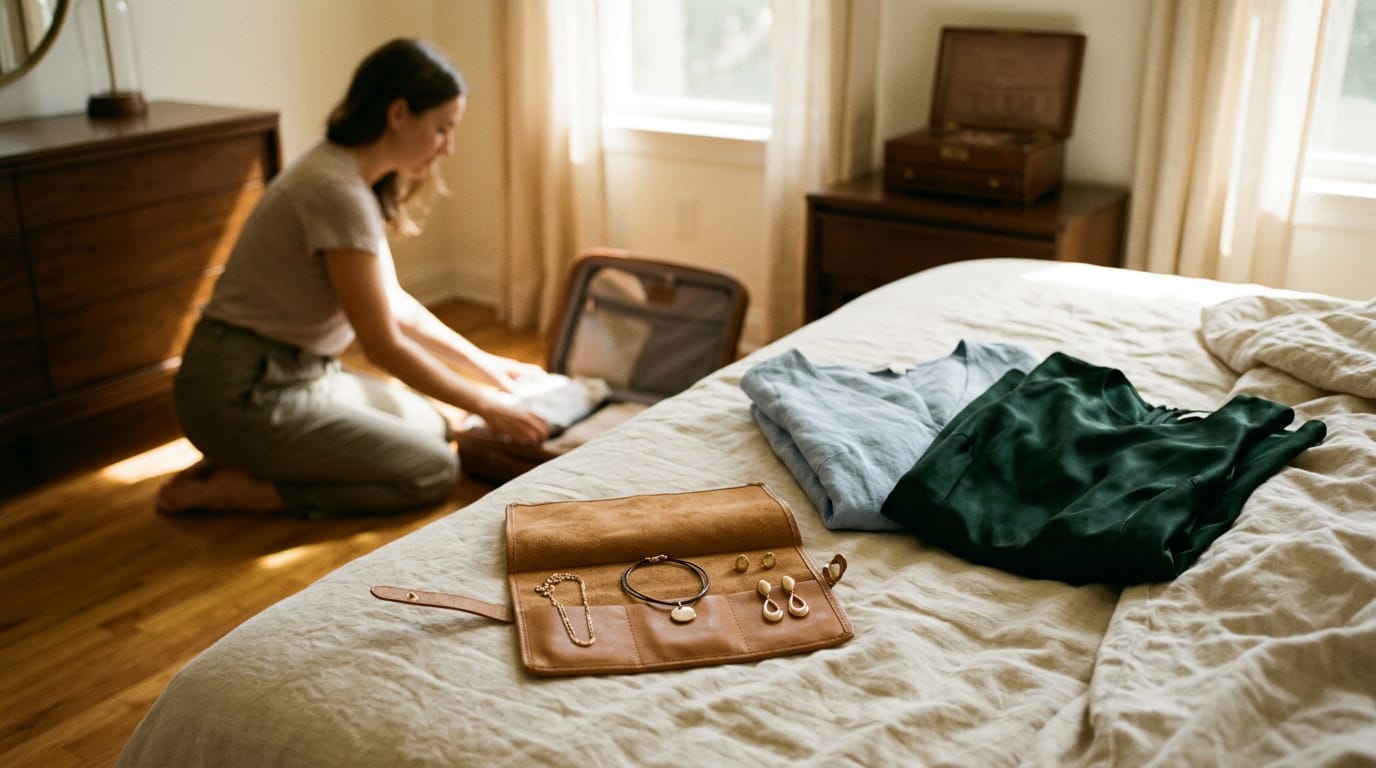
What should a woman pack for a holiday?
Start with three core groups:
- Tops, bottoms and dresses: Mix and match so each piece works with at least two others. A dress can stand in for a full outfit on a night out.
- Sleepwear, a swimsuit and a sun hat: The hat earns its space on long midday walks between sights and lunch.
- Toiletries and personal care: Pack everyday essentials in small, leakproof containers.
Tailor the list to where you’re going and how long you’ll stay. A week of food markets needs different pieces than a beach stay or a business trip. Check the forecast, then pack for that trip, not a generic one.
Keep Your Bags Organized on the Move
Packing is only half the job, and here’s how we’d handle the rest.
Use packing cubes like portable drawers
Think of packing cubes as portable drawers. Each holds one category, so you lift out what you need instead of digging through the bag. They shine on multi-stop trips, where a new room every few days means unpacking fast.
Sort clothes by type, with tops in one cube and bottoms in another. Use smaller cubes for cords, chargers, and underwear so they don’t scatter.
For example, a food-loving traveler moving between cities keeps market finds in a zip-top pouch in its own cube, away from clean shirts. Each new room is a quick look, not a full search.
Pick a suitcase that’s light and durable
Look at how the bag is built before you buy. The frame, shell, zippers, and wheels decide how well it handles weight. Choose one that’s light when empty but tough when full, not just big. If the bag you choose is a backpack, what to bring on a backpacking trip covers the rest of the kit.
Darker colors resist scuffs. A carry-on roller paired with a backpack also splits the load between two bags.
Fit everything into one carry-on bag
A three-item carry-on approach uses three bags, each with one job:
- Carry-on roller: clothes and shoes.
- Backpack with luggage sleeve: the sleeve slides over the roller handle, so the pack rides along instead of pulling on your shoulders.
- Small fanny pack: passport, phone, and wallet within reach.
The goal is single-bag packing: everything fits in one carry-on, with no carousel wait. Pack for where you’re going, not everything you might need.
Airline size and weight limits vary by carrier, so check yours before you buy. Learn them now, not at the gate.
Pack Light and Plan for Laundry
Packing light is less about how much you own and more about how often you can wash it. Here’s how we’d plan for laundry on the road.
Wash clothes by hand while traveling
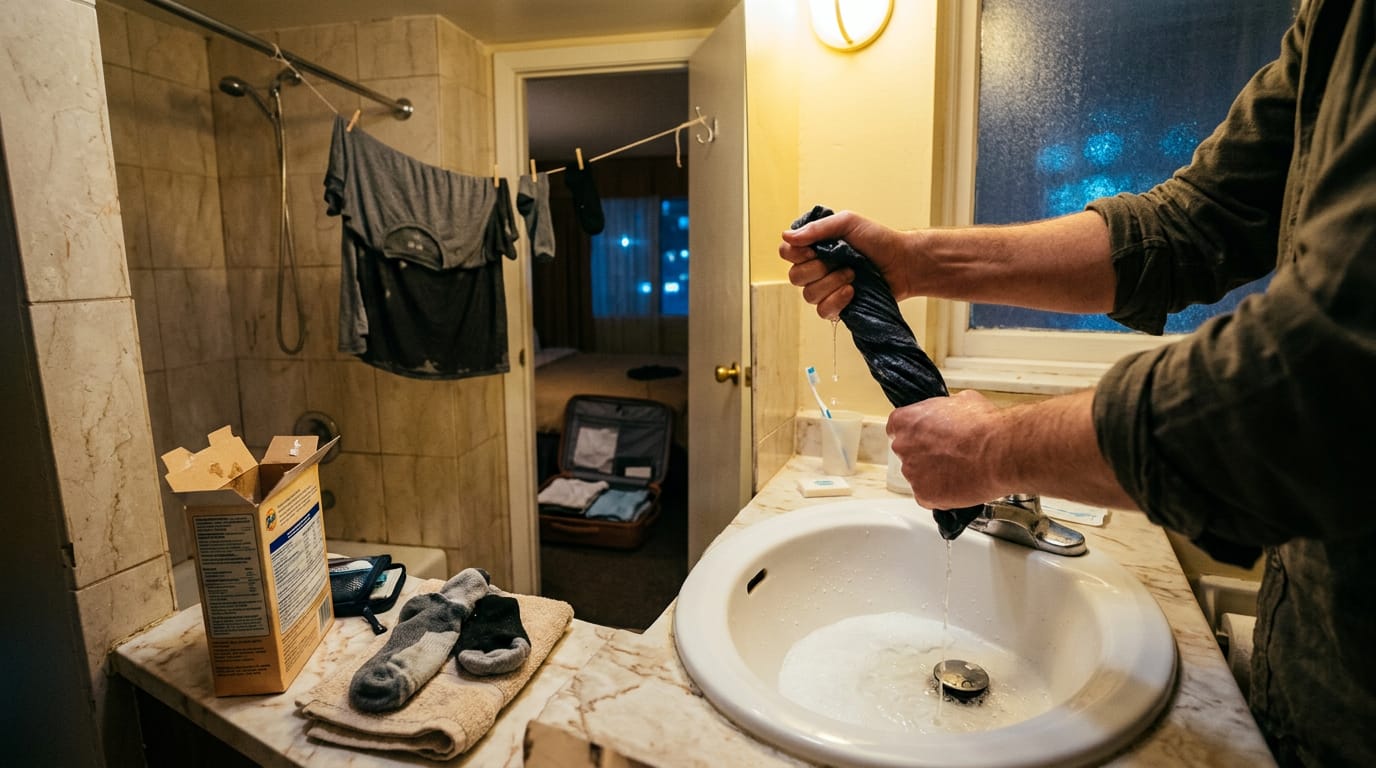
Skip the hotel laundry service and wash small loads yourself. Bring powder detergent, since liquid can leak in your bag, plus a travel clothesline and a sink stopper so the basin holds water. Rinse, wring, and hang everything overnight.
Think of a traveler on a ten-day carry-on trip. Each evening they wash a shirt and a few pairs of socks, and by the weekend they’re rotating three tops instead of ten. Pack less, wash more.
For bulky items like jeans or towels, find a local laundromat near your hotel and drop off a load before a day of sightseeing. Because you’re washing as you go, you’ll need fewer underwear than you’d expect.
Pack liquids safely in a clear pouch
Liquids and gels are the most likely to leak, so avoid them where you can. Buy shampoo or sunscreen at your destination when it’s practical.
When you do pack them, decant into silicone travel-size bottles. They’re squeezable and easy to refill, so you carry only what you need.
Put everything in a clear, spacious pouch so it’s easy to see at a glance. Keep that pouch in its own bag rather than with your clothes, so a leak stays contained.
Picture a traveler whose lotion cap cracks mid-flight: the toiletries get soaked, but the shirts stay dry.
Check the prohibited items list for your airline and the customs rules for your destination before you pack, because what’s allowed changes from one country to the next.
Gadgets and Extra Gear Worth Packing
Pack gadgets that keep you connected and skip the rest.
Stay charged and connected while away
- USB-C (Universal Serial Bus Type-C) charger and cables: Pack a spare cable so a lost one doesn’t strand you.
- eSIM or roaming plan: An eSIM (embedded SIM) needs no physical card. If your phone can’t use one, check your carrier’s roaming plan.
- Power bank airline rules: Airlines limit where power banks can ride and how big they can be. A 2026 guide to airline power bank rules notes that China Airlines keeps them out of overhead bins.
- Item trackers like AirTags: Tuck one in your bag in case it goes astray.
- Media downloaded in advance: Save shows and playlists before a long flight.
Think of a reader heading to Lyon for market lunches, who checks power bank rules so their map app stays charged.
Choose the right plug adapter
Plug types differ by country, so check your route first. A country-specific plug fits one set of sockets. An adapter changes only the shape so your plug fits, while a converter changes the voltage. Check the manufacturer’s listing for your device.
If it accepts your destination’s voltage, an adapter is all you need. Look before you buy.
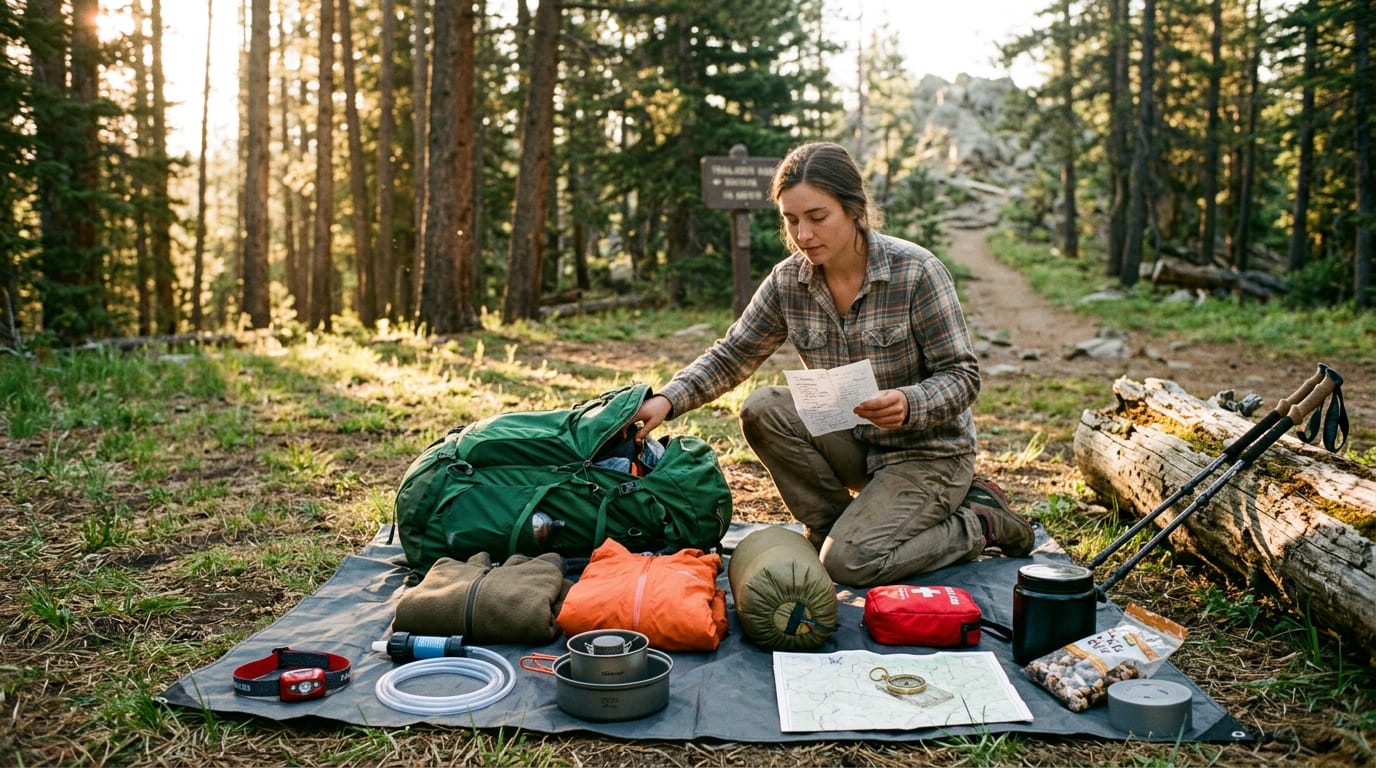
Optional gear for your specific trip
Pack for your trip, not every trip.
- Money belt and combination lock: A money belt keeps cash out of sight, and a combination lock secures bags and lockers.
- Flashlight and sewing kit: A flashlight lights dark stairwells, and a sewing kit fixes a torn strap.
- Water-purifying bottle: A water-purifying bottle filters tap water so you can refill instead of buying bottles.
- Sleep sack or sleeping bag: It’s only worth the space for hostels, camping or overnight transit.
- Waterproof bag: It keeps phones and documents dry in sudden rain.
Good packing comes down to a few steady habits: plan around the trip you’re taking, choose clothes that mix and match, keep bags and documents in order, and bring only the gadgets you’ll really use.
Count outfits by the days you’re away, and lean on laundry instead of a bigger suitcase.
For trips built around meals, that discipline leaves room for the market haul and the dinner you didn’t see coming. Pack light, and save room for the meal nobody planned.
References
- Check your U.S. passport before making travel plans — do.usembassy.gov (2025)
- Airline power bank rules in 2026: what’s banned and what’s allowed — qz.com
Questions
What is the 5 4 3 2 1 rule for packing?
The 5-4-3-2-1 rule is a countdown for trimming what you pack: use five, four, three, two, then one as a test for cutting items from your plan. Treat it as a prompt to bring only pieces that suit your trip and work with the rest of your wardrobe.
What are the 5 biggest packing mistakes to avoid?
The five biggest packing mistakes are packing without a written list, bringing clothes that don’t work together, waiting until the last minute to try everything on, leaving stains or missing items unfixed, and filling your bag so completely that nothing fits on the way home. Planning outfits and packing a few days early can help you avoid them.
How many outfits should I pack for a 7 day trip?
Plan one outfit for each day of a seven-day trip, then make the pieces mix and match so they can be worn in different combinations. Use a limited color palette and consider laundry rather than packing extra clothes for every possibility.
What should a woman pack for a holiday?
Pack mix-and-match tops, bottoms, and dresses, along with sleepwear, a swimsuit, and a sun hat. Add everyday toiletries in small, leakproof containers, and tailor the rest to the destination, trip length, and forecast.