 Travel Tips
Jet Lag Remedies Explained: Causes, Timing, and Recovery
Jet lag remedies work best when timed. See how light, meals, sleep, and supplements before and after a flight can help reset your body clock.


The short versionJet lag is temporary fatigue, disrupted sleep, and other symptoms that occur when your body clock remains on home time after crossing time zones. Remedies work by shifting that clock with carefully timed sleep, daylight, meals, and caffeine, starting before departure when possible; short naps and a comfortable sleep setup can help while you adjust. In practice, follow local time after landing and treat supplements or sleep medicines cautiously, rather than relying on them as the main fix.
Ever stepped off a long flight at breakfast time in a new city, your body insisting it’s the middle of the night?
That’s jet lag: the fatigue and broken sleep that hit when your body clock, the internal rhythm that tells you when to feel sleepy and alert, is still running on home time after crossing several time zones.
The good news is that much of the fix is timing. Choosing when to seek light, eat, and sleep can nudge your clock toward local time faster than waiting it out.
Here’s what’s ahead, from the causes and pre-flight prep to the flight, the reset after landing, and the supplements and sleep medicines worth weighing.
Jet Lag Remedies Start with Its Causes
Every remedy below nudges your body clock back into step, so let’s start with what’s going wrong.
What happens when your body clock slips
Your internal clock runs on a roughly 24-hour cycle, called your circadian rhythm. Cross time zones and it stays on home time while the local day carries on. That mismatch is circadian dysrhythmia, and your body hasn’t caught up yet.
Your body reads time cues like light, meals and temperature to decide when to sleep. Think of a reader who lands in Rome at 8 a.m. after an overnight flight.
Their body may still think it’s the middle of the night, so daylight and breakfast at local time pull it toward Rome time.
Jet lag is a temporary sleep disorder, and it clears as your clock catches up.
Why does flying make you tired?
Flying wears you down because it disrupts sleep just as your clock falls out of step. Jet lag can bring:
- Sleep problems
- Fatigue
- Poor concentration
- Headaches and irritability
- Appetite loss and aches
- Nausea
Can jet lag cause nausea? Yes, and like the other symptoms, it passes as your clock catches up.
Why eastbound flights take longer to adjust
According to the Mayo Clinic, recovery usually takes about a day for each time zone crossed, so the number of zones matters.
Flying east is generally harder than flying west: a new study of 1.5 million nights of sleep data, reported by ScienceDaily, found jet lag is more severe after eastward travel, especially on shorter trips of up to three time zones.
Age matters too, and the Mayo Clinic notes that older adults may need longer to recover.
So which flight has the worst jet lag? The research points to a pattern: eastbound trips, especially those of up to three time zones, hit hardest.
Getting Ready Before You Fly
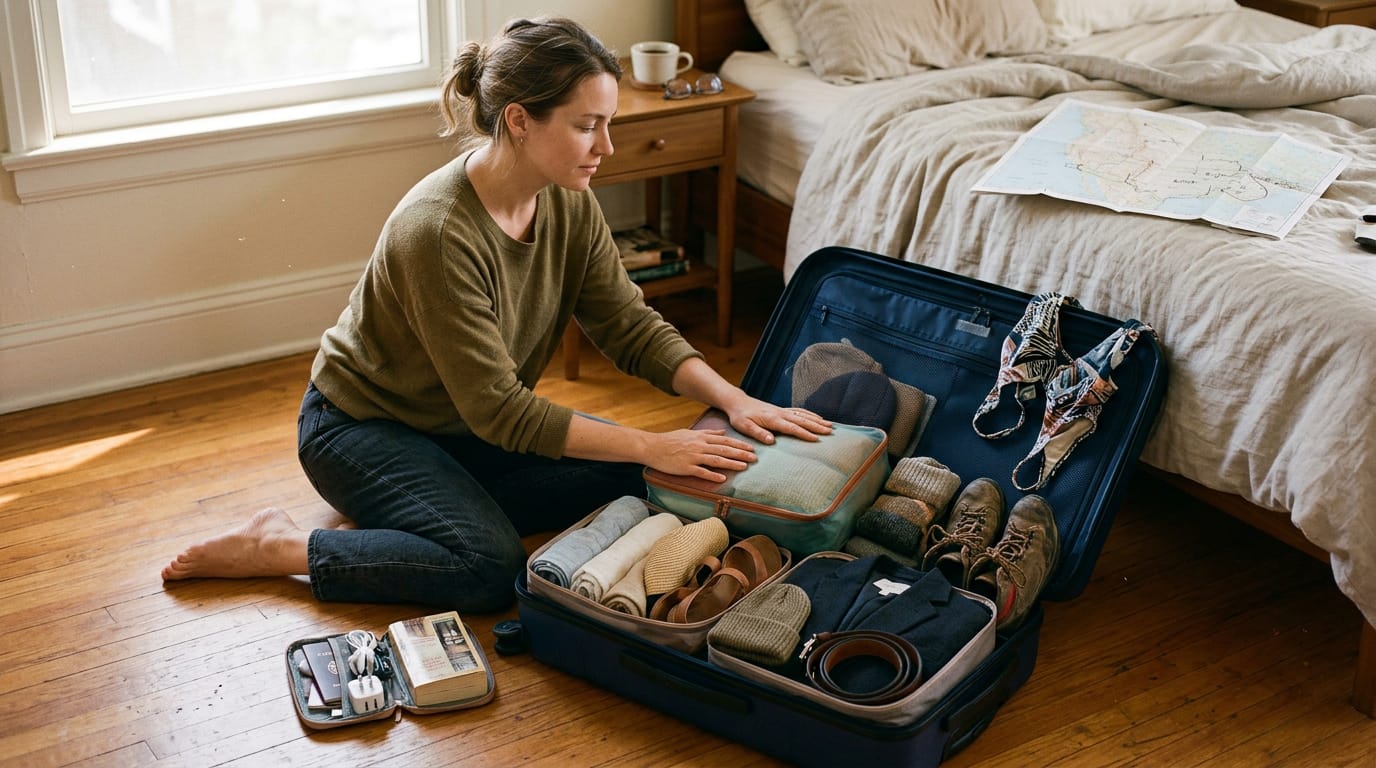
Most of the work on jet lag happens before you board. Start moving your schedule a few days out, then let a few apps and gadgets handle the planning.
Move your sleep schedule before departure
Your body keeps home time, the clock of the place you left, until it gets new cues.
- Adjust bedtime days ahead. Move your bedtime a little each day toward your destination’s schedule, rather than all at once.
- Earlier eastward, later westward. Go to bed earlier when you’re flying east and later when you’re flying west.
- Adjust light and caffeine intake. Seek bright light and time your coffee for the new morning, then cut both off as the new night arrives.
- Avoid sleep debt. Skipping sleep before a flight leaves you running on empty before the trip even starts. Get your rest first. It’s the cheapest head start you’ll get.
On a short trip, stay on home time. Think of a reader heading to Lyon for three days of meetings. They keep their usual sleep schedule and simply eat at local mealtimes, so the trip goes to meetings and good dinners instead of recovery.
Helpful apps and gadgets to plan with
- Timeshifter and StopJetLag apps. Use them to map out a day-by-day shift before you leave, so you’re not working out the plan while exhausted.
- Lumos smart sleep mask. Wear it on the plane or at your first local bedtime, when your body may still think it’s home time.
- Best flight times. Pick a departure that lets you sleep near your new bedtime, not one that leaves you wide awake at the wrong hour.
- Land during daytime. Aim to touch down in daylight rather than in the middle of the night, so you can get outside, eat a real meal, and make it to a normal bedtime.
Staying Comfortable in the Air
How do you survive a 12-hour flight in economy? Here’s how we’d plan it: set your clock, eat lightly, and build a seat you can actually sleep in.
Set your schedule to destination time
Change your watch to destination time as soon as you board, then plan sleep and meals around that clock. Consider a traveler boarding in the evening who wants to land ready for breakfast.
They nap only when it’s night at the destination, eat on the local schedule, and pack snacks so an off-hour meal doesn’t throw them. Aim to act on local time from the first hour, not just hope to adjust after landing.
Drinks, food, and moving around on board
Stay hydrated with water, and avoid the alcohol, caffeine, and sugary drinks the cart keeps offering. Eat lightly so a heavy meal doesn’t weigh on you while you’re trying to sleep. Walk the aisle every few hours when it’s safe. Keep moving.
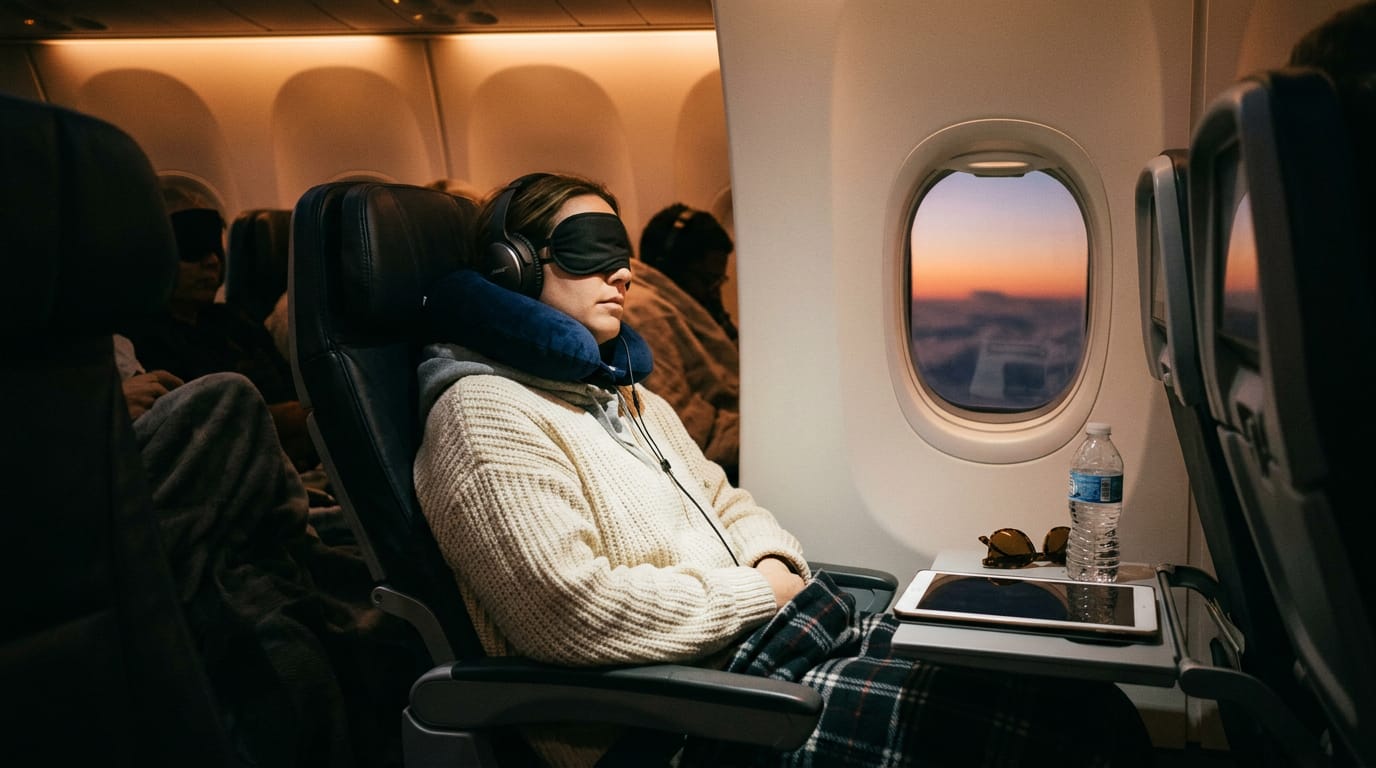
Make your seat cozy enough to sleep
Economy seats are tight, so build your own sleep setup:
- Eye mask and earplugs. Block out light and noise.
- Noise-canceling headphones. Quiet the engine hum.
- Travel pillow. Support your neck for real rest.
- Cool, comfortable clothing. Dress in layers.
- Relaxing entertainment. Pick a slow show, not a thriller.
- Sunglasses before sleeping. Wear them before you rest if the cabin is bright.
Resetting Your Clock After You Land
Your body clock, the internal rhythm that sets when you feel sleepy and alert, runs on local cues. Light, meals, caffeine and naps are the signals you control, and they help you readjust after returning home too.
Use daylight to shift your clock
Get outside in daylight as soon as you can, because light is the strongest signal your body gets. When you fly east, seek morning sun, which pushes your clock earlier, and avoid evening light, which pushes it back.
Align with local time by setting your watch and plans to the new zone as you land. Let light do the work.
When to eat and drink caffeine
Food is a clock signal too, so think about when you eat, not just what you eat.
A 2024 experiment from the University of Surrey and the University of Aberdeen found that metabolism recovers from jet lag faster than the brain, and a study of meal timing found that skipping an evening meal may help the body adjust to a new time zone.
- Breakfast at local time. Eat when the locals eat, even if you’re not hungry.
- Morning caffeine boost. A morning coffee on local time helps you feel alert.
- Caffeine cutoff before bed. Stop caffeine several hours before your local bedtime.
- Plan first dinner at local time. Book for the local dinner hour.
Think of a couple who land at breakfast time: they eat at a café near their hotel, switch to tea after lunch, and by their second evening they’re yawning at the right hour.
Naps that help during energy dips
Keep arrival-day plans light so you have room to rest.
- Short 20-30 minute naps. Wake up clear-headed, not groggy.
- Light exercise. A short walk can ease the dip before you lie down.
- Strategic nap timing. Nap in early afternoon, not late evening.
Supplements and Sleep Medicines to Weigh
Many travelers reach for a pill before boarding, so here’s what to weigh first.
Using melatonin the right way
Melatonin helps regulate your sleep-wake cycle, and research on melatonin and sleep links its ability to shift your body clock to managing jet lag. It works best after flying east, when you need to fall asleep earlier.
For example, a reader flying east to Lisbon takes it before their new bedtime, not their old one, so they wake up ready for a morning walk.
Melatonin comes as tablets, sprays, and blends. A label shows what the bottle should contain, but a study of melatonin products found the actual content ranged from 83% below to 478% above the labeled amount. Check with your provider first.

Prescription and over-the-counter sleep drugs
Antihistamine sleep aids are easy to buy, but they’re a blunt tool for a body clock problem.
Mayo Clinic warns that zolpidem, a prescription sleep medicine, can cause grogginess and impairment, and that this effect may last a few days after you stop taking it.
Newer dual orexin receptor antagonists (DORAs) block the brain’s wake signals, but expert opinion on them is mixed, so they’re a conversation for your doctor, not a default.
Other supplements travelers often try
Ginger is a common pick for motion sickness, which can make a bumpy flight harder. Psyllium, a fiber supplement, is often tried for gut issues, and probiotics are a popular add-on.
Keep taking your usual supplements, and ask your provider about timing across time zones. Tan accelerators are pills sold for a head start on a beach tan, but they aren’t a jet lag remedy, so don’t let one stand in for sleep.
Sleeping Well in a New Place
A rough first night somewhere new is normal, and small choices can make the rest easier.
How worry and routines shape your sleep
Worrying about jet lag keeps you watching the clock. Aim for restful, not perfect, sleep, and keep the room cool, dark and quiet. Routines help too. The same steps each night cue your body to wind down.
Part of that is the placebo effect: the ritual feels settling and helps you drift off.
Why your first night away feels off
According to research on brain wakefulness in novel environments, people stay more alert during sleep in unfamiliar places than in familiar ones. This is the first-night effect, which is why a new bed can feel light and broken.
- Return to the same hotel. A familiar room is easier to settle into.
- Bring home items. A pillow, shirt or small object gives your senses something known.
- Familiar mask, lavender spray, photos. A traveler in Lisbon who sprays her usual lavender mist and wears her own eye mask finds the first night less strange.
What to pack for better sleep
Pack these where you can reach them on night one:
- Eye mask and earplugs. They block light and noise.
- Travel pillow and pillowcase. Your own pillowcase makes a hotel pillow feel more like yours.
- Curtain clips. Pinch shut the gap where the curtains don’t meet.
- Light-blocking stickers. Cover standby lights on the TV and clock.
- Journal and pen. Write down tomorrow’s worries so they stop looping.
- White noise, humidifier, air filter. White noise masks hallway sounds, and a humidifier or air filter helps dry, stuffy rooms.
We’d start with the mask and earplugs, then add what your trip needs.
Jet lag is mostly a timing problem, and timing is something you can plan.
Shift your sleep and meals before you fly, use light and food to guide your clock after landing, and weigh supplements and sleep medicines carefully rather than relying on them alone.
Whether it’s a long economy flight, a short city break, or a first day that needs daylight and an early dinner, the same principles fit. Pick the steps that suit your trip and start early.
Give your body clock a head start, and you’ll spend your first afternoon exploring instead of yawning.
References
- Melatonin and sleep: Exploring its role in regulating the circadian rhythm and sleep-wake cycle — pmc.ncbi.nlm.nih.gov (2026)
- Neurotensin in the extended amygdala maintains wakefulness in novel environments — pmc.ncbi.nlm.nih.gov (2026)
- Melatonin Natural Health Products and Supplements: Presence of Serotonin and Significant Variability of Melatonin Content — pmc.ncbi.nlm.nih.gov
- Jet lag disorder — mayoclinic.org (2026)
- How to Beat Jet Lag — wired.com (2025)
- Beyond jet lag: New study unveils extent of travel-related sleep disruption from 1.5 million nights of data — sciencedaily.com
- Zolpidem (oral route) - Side effects & dosage — mayoclinic.org
Questions
What are the symptoms of jet lag?
Jet lag can cause sleep problems, fatigue, poor concentration, headaches, irritability, appetite loss, aches, and nausea. These symptoms happen when your body clock is out of sync with local time and usually ease as it adjusts.
How to survive a 12 hour flight in economy?
Set your watch to destination time when you board and plan sleep and meals around the local schedule. Drink water, avoid alcohol and excess caffeine, eat lightly, and walk the aisle every few hours when safe. For rest, use an eye mask, earplugs or noise-canceling headphones, a travel pillow, and comfortable layers.
How to beat jet lag going east?
Shift your bedtime earlier by a small amount each day before departure. After landing, seek morning sunlight and avoid evening light, which can push your body clock later. Eat and drink caffeine on local time, stop caffeine several hours before bed, and keep naps short and early in the afternoon.
Why does flying make you tired?
Flying can disrupt sleep while your body clock is adjusting to a new time zone. The mismatch between your internal clock and local time can cause fatigue, poor concentration, and other jet lag symptoms.
What flight has the worst jet lag?
There is no single worst flight for everyone, but eastbound flights generally cause more severe jet lag than westbound flights. Research points especially to eastbound trips crossing up to three time zones as particularly disruptive.
Can jet lag cause nausea?
Yes. Nausea can be a symptom of jet lag, alongside fatigue, sleep problems, headaches, and appetite changes. It usually passes as your body clock catches up with local time.
Can melatonin help with jet lag?
Melatonin may help shift your body clock and can be useful for jet lag, especially after eastbound travel when you need to fall asleep earlier. Take it in relation to your destination’s bedtime, and check with a healthcare provider first because supplement contents can vary from their labels.
Sources
- Beyond jet lag: New study unveils extent of travel-related sleep disruption from 1.5 million nights of data | ScienceDaily, sciencedaily.com
- Jet lag disorder - Symptoms and causes, mayoclinic.org,
- Melatonin and sleep: Exploring its role in regulating the circadian rhythm and sleep-wake cycle, pmc.ncbi.nlm.nih.gov,
- Melatonin Natural Health Products and Supplements: Presence of Serotonin and Significant Variability of Melatonin Content - PMC, pmc.ncbi.nlm.nih.gov
- Zolpidem (oral route) - Side effects & dosage - Mayo Clinic, mayoclinic.org
- How to Beat Jet Lag | WIRED, wired.com,
- Neurotensin in the extended amygdala maintains wakefulness in novel environments, pmc.ncbi.nlm.nih.gov,