 Trip Planning
Cape Verde Flights Explained: Routes, Booking and Baggage
Cape Verde flights shape your trip: compare island links and airport arrivals, then see whether seven days allows visits to more than one island.


The short versionCape Verde flights include international services to the islands and short domestic flights that connect many of the inhabited islands, while Santo Antão and Brava require a ferry. Choose your arrival island and check routes, schedules, baggage limits, and connections before booking; reserve early when possible and leave extra time between flights. For a week, focusing on one or two islands helps control costs and travel time while leaving more room to enjoy each place.
Planning a trip to Cape Verde works like planning a Sunday lunch: you choose the table before the menu. The island you land on decides which markets, bakeries, and dinners are within easy reach.
Your flights shape the whole trip. An inter-island flight is simply a flight between two of the islands, and it’s how you see more than one place in a single trip.
In this post, we’ll cover international routes, inter-island hops, booking, baggage, and whether a week is enough.
Cape Verde Flights Between the Islands
Flying is often the quickest way between islands, and the airline and airport you choose decide how much fits in a trip. Here’s how the network works, from the airlines to the islands that need a boat.
Which airlines fly between islands
Bestfly is the main operator, with around 72 flights a week, and CVsky also runs domestic flights. Santiago is the central hub, so many inter-island trips route through it. Fogo and Maio are reached via Praia, so from another island you’ll connect there.
Each island has its own direct routes, so check yours first. If there’s no direct link, you’ll change planes, so build in extra time.
Where the airports and airstrips are
According to Cape Verde’s Infrastructure, the country has four international airports, on Sal, Praia, Boa Vista and São Vicente, plus three smaller regional airstrips.
The International Finance Corporation (IFC) is backing upgrades to the four international and three domestic airports. For runway sizes and airport codes, check your airline’s booking page before you fly.
How long each island hop takes
Most inter-island hops take roughly 20 to 60 minutes in the air. The longest route is São Vicente to Santiago, while Santiago to Maio is the fastest.
A short flight still needs check-in and a walk to the gate, so budget for the whole journey, not just the flight. For exact times on each leg, check the timetable.
How often planes fly each route
Key routes run daily, but smaller islands may see only a few flights a week, so plan lunch around the schedule. Schedules may change, so confirm your flight a few days before you travel.
Think of a couple with one free day who want a long lunch on Maio. They take the fastest Santiago-to-Maio flight, then book the return before reserving the table, so lunch never runs into departure time.
A longer loop could run Praia to Maio, back through Praia, then on to Fogo for dinner.
Islands you can only reach by sea
Santo Antão and Brava are sea-only, with no regular air links. According to a study on deploying a community information platform in Santo Antão, the island is reached only by ferry from Mindelo on São Vicente.
Brava works the same way, so plan around ferry and boat times.
Seven of the nine inhabited islands are connected, which leaves these two as the ones that need a boat.
For example, a traveller who wants a day on Santo Antão can fly into São Vicente, take the ferry from Mindelo, and explore the island without a second flight. Treat the ferry as the main link, not a backup.

How Do You Get to Cape Verde?
The short answer is a flight, and from Italy it’s more direct than many people expect.
If you’re coming from the United Kingdom, the rest of Europe, or the United States, the same booking checks below still apply, so you’ll know what to look at before you pay.
Fly nonstop from Italy in six hours
Flights from Italy take about six hours, and you won’t have a layover in another country. The route serves Sal and Boa Vista, and the flight makes one stop on an island rather than abroad.
The question isn’t whether you’ll get there but how much of your trip you’ll spend getting there.
Think of a couple planning a week of long lunches on Sal. One departure, one arrival, and no connection to chase means more meals on the island and fewer in transit. The time difference is small, so you won’t lose much of your first day to jet lag.
Italian cities you can fly from
You can fly from four Italian cities:
- Milan Malpensa
- Bergamo
- Verona
- Rome Fiumicino
Pick the one closest to home, since the trip to the airport counts toward your day.
Baggage, fares and online check-in
Every fare includes a checked bag, and a carry-on comes with it too. Special sports equipment has its own baggage rules, so check them before you pack. Take a surfer with a board bag.
If they confirm the rules at booking, the board won’t become a surprise at the check-in desk.
Online check-in is free, so you can do it from home before you leave for the airport. Book through the airline’s own website.
Timetables and passport rules to check
Travelers from the United States should check the schedules for flights to Cape Verde before anything else. When you search, filter by airline and aircraft so you only see the flights that suit you.
According to the NextSpring guide to entering Cape Verde as a visitor, your passport needs to stay valid for at least three months beyond your visit. Check it before you book, not at the gate.
Also check your government’s official travel advice, since entry rules can change.
Is Cape Verde Expensive to Visit?
Whether Cape Verde feels expensive mostly comes down to how you fly and when you book. Here’s what to expect before you lock in your dates and dinner reservations.
Book early before seats sell out
Book early, because seats are limited and can sell out. The high season (June through October) is when this matters most. It’s less about whether a seat exists and more about when you buy it.
Earlier booking is often cheaper, but same-day purchase is still possible if seats remain.
Think of two friends planning a week on Sal in July. If they book months ahead, they choose from open seats and a lower fare rather than hunting for what’s left.

Places to buy your tickets
You have several places to buy, and each one is worth a look:
- Airline websites: Book straight with the airline.
- Local travel agencies: Useful if you’d rather have someone else handle the details.
- Airports: You can also buy directly at the airport.
- Skyscanner: Compare prices across airlines in one search.
- Monthly daily price view: See the fare for each day of a month at a glance, so you can spot the cheapest dates.
What a typical fare costs
Fares vary a lot by route, so compare before you commit. A Sal-Boa Vista flight can start from around 66 euros, while other routes run about 108 to 115 euros. So is Cape Verde expensive to visit?
Your route makes the biggest difference, and the Sal-Boa Vista hop is the lowest fare listed here.
To keep costs down, book early, check the monthly daily view for cheaper dates, and compare fares on Skyscanner before you pay.
Planning your island hopping route
Island hopping gives you variety in a single trip, but it’s easy to overdo it. Choose two or three islands for your first visit. Each extra stop means another flight to book, so a short list keeps your budget and schedule manageable.
Think of a first-time visitor with one week who picks two islands. They book one inter-island hop, then settle in, with more time for long lunches on each island. Fewer islands, more meals.
What to Expect at the Airport
Airports here are small, and the process is simpler than you might expect. Here’s how a typical trip runs.
When to arrive and check in
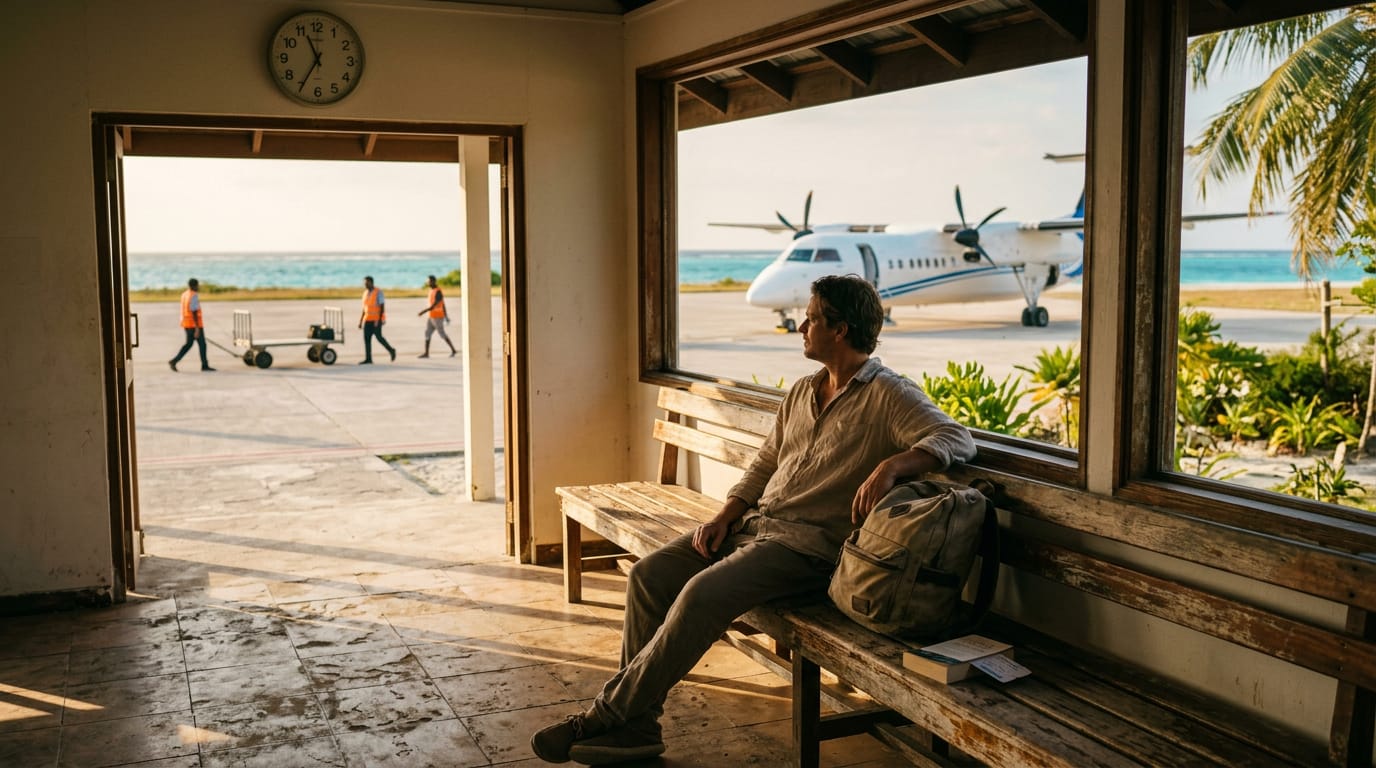
Arrive about one hour before departure. Small airports mean short queues and quick check-in. Think of a couple with a lunch booked on the other island. They arrive early, clear check-in in minutes, and still have time to sit down before boarding.
How much luggage you can bring
Luggage rules come down to four checks:
- Included luggage. Check whether your ticket already includes a checked bag before you pay for extra.
- Standard and Plus limits. The standard allowance is 23 kg, rising to 30 kg on a Plus fare.
- Hand luggage size and weight. Confirm the limits before you pack.
- Excess charges. Anything over your allowance carries a surcharge, so weigh your bag before you leave home.
A bag can look small and still be over the limit, so weigh it rather than guessing by eye.
How dependable and safe the flights are
The fleet is small and modern, which suits short inter-island hops. Smaller aircraft can feel bumpier in windy weather, so if motion makes you queasy, pack something for it. A delay on the first leg can push back the rest of your day.
Avoid tight international connections. If you’re connecting onto a long-haul flight, give yourself a longer gap, not a tighter one. One late inter-island flight can easily cost you the connection. Leave the slack in.
International flights follow international security standards, so the screening is familiar.
Tips for a smoother trip
- Check times for changes. Schedules can shift, so confirm your flight the day before you travel.
- Keep documents accessible. Keep your tickets and travel documents in your hand luggage, not your checked bag.
- Dress for comfort. Wear comfortable clothing and keep water handy.
- Plan airport transfers. Book your ride before you land so you aren’t sorting it out at the curb.
- Eating options at small airports. They can be limited, so eat first or pack a snack.
Sort these few things and the airport becomes the easy part of your day.
Is 7 Days Enough in Cape Verde?
Yes, seven days is enough, as long as you settle on one or two islands rather than chasing the whole archipelago. Here’s how to pick your base, what the weather’s like, and what’s worth fitting in.
Which Cape Verde island is nicest?
There isn’t one winner, just the island that suits your week. Sal is the lively choice, built around its beaches, while Boa Vista is the wilder option, with its dunes. Both are the main tourist islands, so they’re the easiest to plan around.
Think of a couple who want beach days and a bit of buzz after dark: Sal fits. A traveler who’d rather spend the week among the dunes will prefer Boa Vista.
Weather, wind and the rainy season
You can count on year-round sunshine. August is the high season, but it’s also when the rainy season arrives and runs into September, so check the forecast before you pack. Sun is the easy part.
The trade winds blow steadily, which makes kite and windsurfing a natural fit. Picture a windsurfer building their days around the water: the steady wind means they can plan each session with confidence.
Top sights and things to do
Fit these into your week:
- Santa Maria beach
- Pedra de Lume salt pans
- Viana Desert
- Turtles and whales
- Morna music, the local sound worth seeking out
- Hiking on Santo Antão
- Local dishes, worth planning a meal around
For example, a hiker with one spare day might save it for Santo Antão, then plan dinner around the local dishes as their reward.
Your flights set the shape of the trip. The routes you book decide which islands you reach, and the inter-island hops decide how many of them you can taste in a week. Book with the meals you want in mind, and the rest of the plan tends to follow.
Sort out bookings, baggage limits, and airport timing early, and the travel days stop being the stressful part. Fly with your appetite leading, and every island you land on will feel like the right stop.
References
- Deployment of a community information platform in Santo Antão island — dl.acm.org
- IFC Backs Second Phase of Major Airports Upgrade in Cabo Verde, Supporting Tourism and Jobs — ifc.org (2026)
- Entering Cape Verde as a visitor — nextspring.org (2026)
- Cape Verde’s Infrastructure — doi.org (2010)
Questions
How do you get to Cape Verde?
Cape Verde is reached by air, with international airports on Sal, Boa Vista, Praia and São Vicente. Direct flights from Italy take about six hours and serve Sal and Boa Vista; from other countries, check available routes and schedules before booking.
Is 7 days enough in Cape Verde?
Yes. Seven days is enough if you focus on one or two islands rather than trying to see the whole archipelago. Island hopping adds flight time and expense, so keeping the itinerary short leaves more time to explore.
Which is the nicest Cape Verde island?
There is no single nicest island; it depends on what you want. Sal suits travelers looking for lively beach holidays, while Boa Vista is a better fit for dunes and a wilder feel. Both are major tourist islands and relatively easy to plan around.
Is Cape Verde expensive to visit?
Cape Verde's cost depends largely on your route and booking timing. For example, a Sal to Boa Vista flight can start at around €66, while other inter-island routes may cost about €108 to €115. Booking early and comparing dates and fares can help keep costs down.