 Trip Planning
How to plan a food trip: a day-by-day method
Draw a grid of meals by day, fix one booked meal a day, check closing days, cluster the rest by neighbourhood, then fit the sights and trains round it.
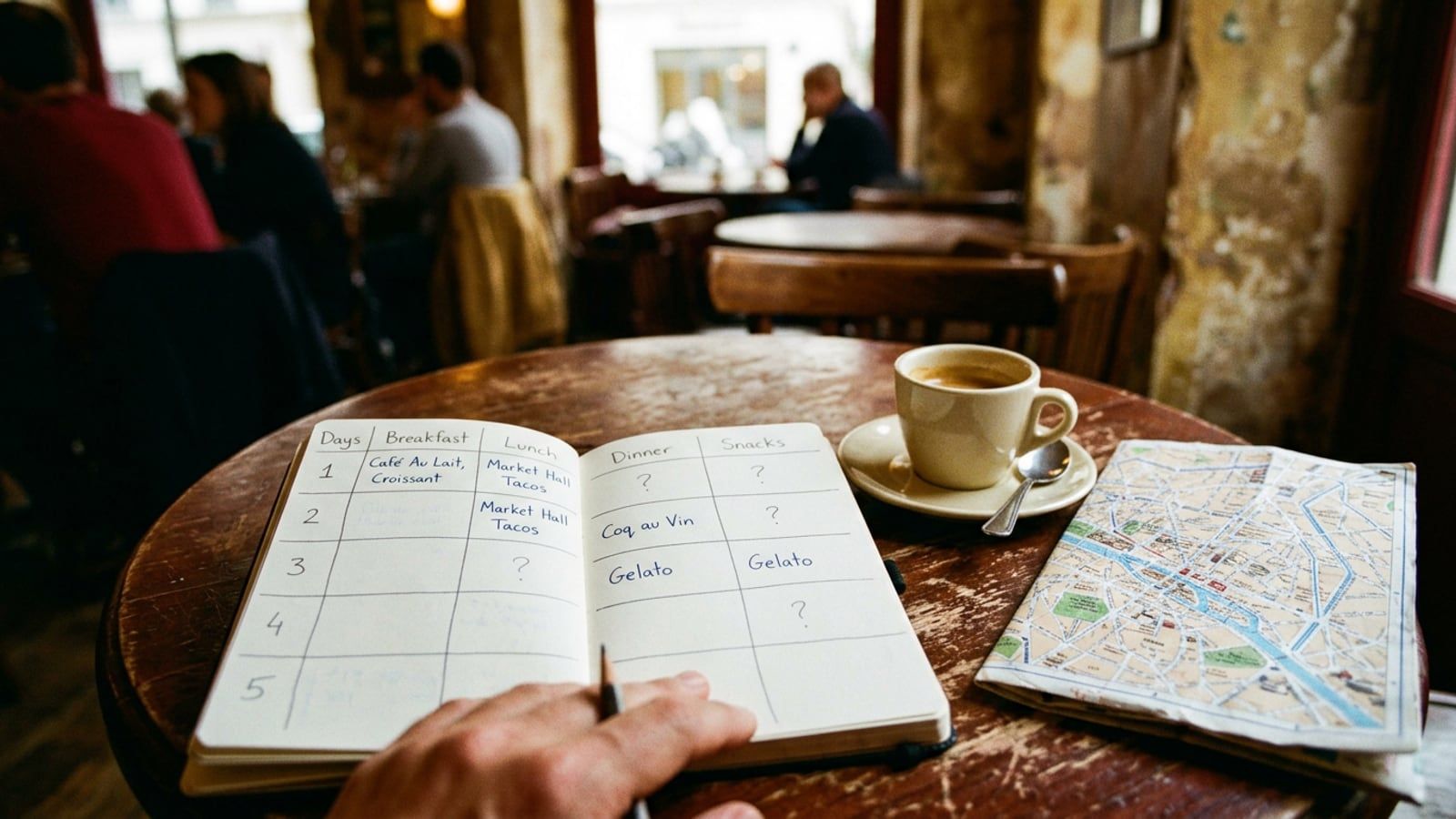
The short versionPlan a food trip on a grid of days and meals: book one anchor meal a day, check closing days, market days and holidays, then fill the other squares with places in the same neighbourhood. Fit the sights, tours and trains into the gaps, pace big meals with small ones, and keep a reserve list of walk-ins for the squares that empty.
Plan a food trip on a grid: days down the page, meals across it. Put one booked anchor meal in each day, check every place’s closing days and the city’s market days and holidays, then fill the other squares with places in the same neighbourhood as the anchor, leaving gaps between them. The sights, the tours and the trains go in last, into the spaces between meals. The method starts once the city is chosen; if it isn’t yet, choosing a weekend-break city for the food comes first.
Draw the grid: days down, meals across
Take a sheet of paper or a spreadsheet and give each day a row and each meal a column: breakfast, lunch, dinner and the last drink. Write the city’s usual lunch and dinner hours at the top, on local time, because they decide where every square sits in the day.
Then write your arrival and departure times on the first and last rows and cross out the meals the travel takes. A Friday-evening arrival and a Sunday-afternoon train leave eight squares, not twelve:
| Day | Breakfast | Lunch | Dinner | Last drink |
|---|---|---|---|---|
| Friday (arrive 17:00) | — | — | Near the hotel | A short walk from dinner |
| Saturday | A counter near the hotel | Left open | Anchor, booked | A short walk from dinner |
| Sunday (train 16:00) | A counter near the hotel | Anchor, booked near the station | — | — |
The grid is the plan. Everything that follows fills a square, moves one or leaves one empty on purpose.
Fix one anchor meal a day
The anchor is the one meal you would rearrange the day for: the tasting menu, the long lunch, the counter that is the reason for the trip. Choose one per day and no more, and write it in first.
- Lunch or dinner. Make it lunch where lunch is the main meal or where the restaurant serves a shorter menu at midday, and keep dinner light. Make it dinner where the place only opens in the evening.
- Not on the arrival day, if you can help it. A late train or a delayed flight shouldn’t cost you the meal of the trip. On the last day, anchor lunch near the station rather than dinner.
- The hardest table on the day with the most slack, usually a middle day, so a change of plan can move it.
Book the anchors as soon as you have dates and their bookings open. The restaurant’s own website usually says when that is: a set number of days ahead, a fixed day each month, or by phone. Book the tables first and the travel second. If an anchor shows no availability, getting a table at a fully booked restaurant has the moves, in the order to try them. If it takes walk-ins only, the anchor is a time: when the doors open, with the queue written into the square.
Check closing days, market days and holidays
Before you fill another square, check three things against your dates. The weekend-break guide covers closing days at more length, so in short:
- Each place’s closing days, on its own website. Many restaurants close one or two days a week, often Sunday or Monday, and some close for weeks in summer.
- Market days. Markets keep their own days and hours. The City of Paris lists its food markets day by day on its markets page: many open-air markets trade from 07:00 to 13:30, and under Monday it says fermés, closed. A city’s own website or tourism office usually publishes the same.
- Public holidays, on the country’s official calendar. They aren’t the UK’s: the Dutch government’s list of public holidays for 2026 includes King’s Day on Monday 27 April and Ascension Day on Thursday 14 May. On a holiday some places close, and the ones that open fill early.
Cross out each closed day under the place’s name on the grid, so you never move a meal on to the day it shuts.
Cluster the places by neighbourhood
Put every place you are considering on one map list, with a note of its closing days and whether it books. In Google Maps a list can be private, or shared with the people you travel with, and you can invite them to edit it. Seen on a map, the places fall into clusters, and the clusters become the days.
- Give each day one or two neighbourhoods, and cross town once a day at most.
- Let the anchor set the neighbourhood for its half of the day, and fill the other meals near it.
- Put breakfast near the hotel and lunch near the morning’s sight.
- Sleep near the best cluster of dinners: a short walk back after a late meal beats a taxi. Where to Stay covers choosing the neighbourhood and the room.
Download the city’s map before you leave. Google’s help page on offline maps says walking and public transport directions aren’t available offline, and that downloaded maps must be updated before they expire. Organic Maps, on our Kit page, gives walking directions on maps you download in advance.
Fit the sights, tours and trains round the meals
The sights, the tours and the travel go in last, in the spaces the meals leave.
- Sights fit the morning before lunch or the gap between lunch and dinner. Book a timed ticket for the first slot of the day, and check the museum’s own closing day, which may not match the restaurants’.
- A food tour suits the first day, when it can stand in for lunch and teach you the menu for the rest of the trip. Don’t put one on an anchor day. Are food tours worth it? helps you choose one.
- Trains and flights should arrive before a meal and leave after the last one you care about. On the last day, choose lunch near the station.
Pace it: big meals, small meals and gaps
Plan for room to be hungry. A grid with every square full of big meals reads well and eats badly.
- One big meal a day. If lunch is the anchor, dinner is a few plates at a bar; if dinner is, lunch is the menu of the day or a plate at the market.
- Small breakfasts. Coffee and a pastry standing at a counter, on most days.
- Gaps of a few hours between meals, filled with walking, a sight or a rest at the hotel.
- One empty square on a full day, for the place you walk past in the morning and want to go back to.
Keep a reserve list
The reserve list is the trip’s insurance: places that need no booking, sorted by neighbourhood, with their opening days beside each. Keep it on the same map, in a second list.
- Two or three walk-in places in each neighbourhood on the grid: a counter, a bakery, a bar with food.
- A place open on the city’s usual closing days.
- A place near the hotel that serves late, for the night the train runs late.
- A stand-in for each anchor, in case a booking falls through.
Tip: In the week before you go, check the opening days of everything on the grid and the reserve list again on each place’s own website. Hours change between the evening you plan and the morning you arrive.
An example day, filled in
A Saturday in a city that lunches from 13:00 and dines from 20:00, with the hotel in the old centre and dinner as the day’s anchor:
| Time | Square | What |
|---|---|---|
| 08:30 | Breakfast | Coffee and a pastry standing at the counter of a café two streets from the hotel |
| 10:00 | Morning | The market hall: walk the stalls, buy fruit for later, a small plate at a counter |
| 13:30 | Lunch | The menu of the day at a neighbourhood restaurant, two courses, walk in |
| 15:30 | Afternoon | The museum, booked for a timed entry, then a rest at the hotel |
| 20:30 | Dinner | The anchor, booked the day its tables were released |
| 22:30 | Last drink | A bar a short walk from dinner, on the way back to the hotel |
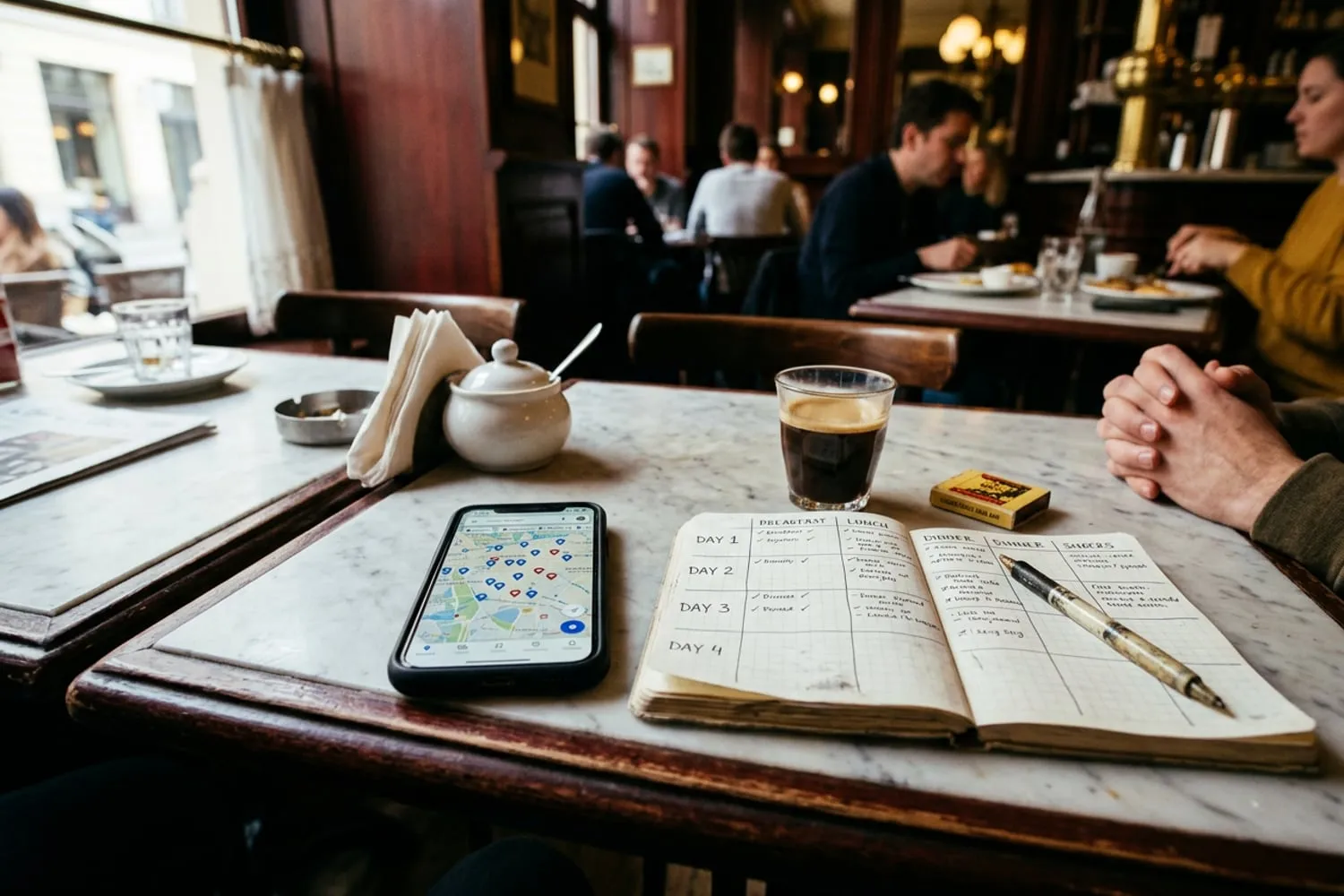
Every square is in one neighbourhood or the next, there is one booking, and nothing big is eaten twice in a day. To see the same kind of day with real places in it, City Tables has a free Lisbon day: breakfast to the last drink within a walk, with what to book and a map link for every stop. More on turning a city into a trip is in Trip Planning.
Questions
How many restaurants should you book on a food trip?
One a day is usually enough: the anchor meal, booked as soon as its bookings open. Add a second only for a place that takes bookings and nothing else on the day you need it. Leave the rest of the grid to counters, markets and the walk-ins on your reserve list, so the trip can bend when you are not hungry or the weather turns.
How far ahead should you plan a food trip?
Start as soon as you have dates, because the anchor tables decide everything else and the hardest ones open their bookings on a set day or a set number of days ahead. The grid itself takes an evening. Check every opening day again in the week before you go, since hours change.
How do you avoid eating too much on a food trip?
Make one meal a day the big one and keep the others small: coffee and a pastry at a counter, a plate or two at the market. Leave a few hours between big meals and walk between places rather than taking taxis. Order in rounds and share dishes, so you can stop when you have had enough.
What is the best way to save restaurants on a map for a trip?
Put every place on one list in a maps app, with a note of its closing days and whether it takes bookings, so you can see how they cluster by neighbourhood. Google Maps lets you keep a list private or share it with the people you travel with, and Organic Maps keeps bookmarks on maps you download for offline use. Download the city before you leave.
Sources
- Save places with lists, Google Maps Help
- Download areas and navigate offline in Google Maps, Google Maps Help
- Les marchés de Paris, Ville de Paris
- Which days are official public holidays in the Netherlands?, Government of the Netherlands