 Recipes
Hobo Dinner Recipes: Foil Packet Meals, Explained
Hobo dinner recipes: build foil packets, cook them over coals, on a grill, or indoors. Get practical swaps, make-ahead tips, and leftover advice.
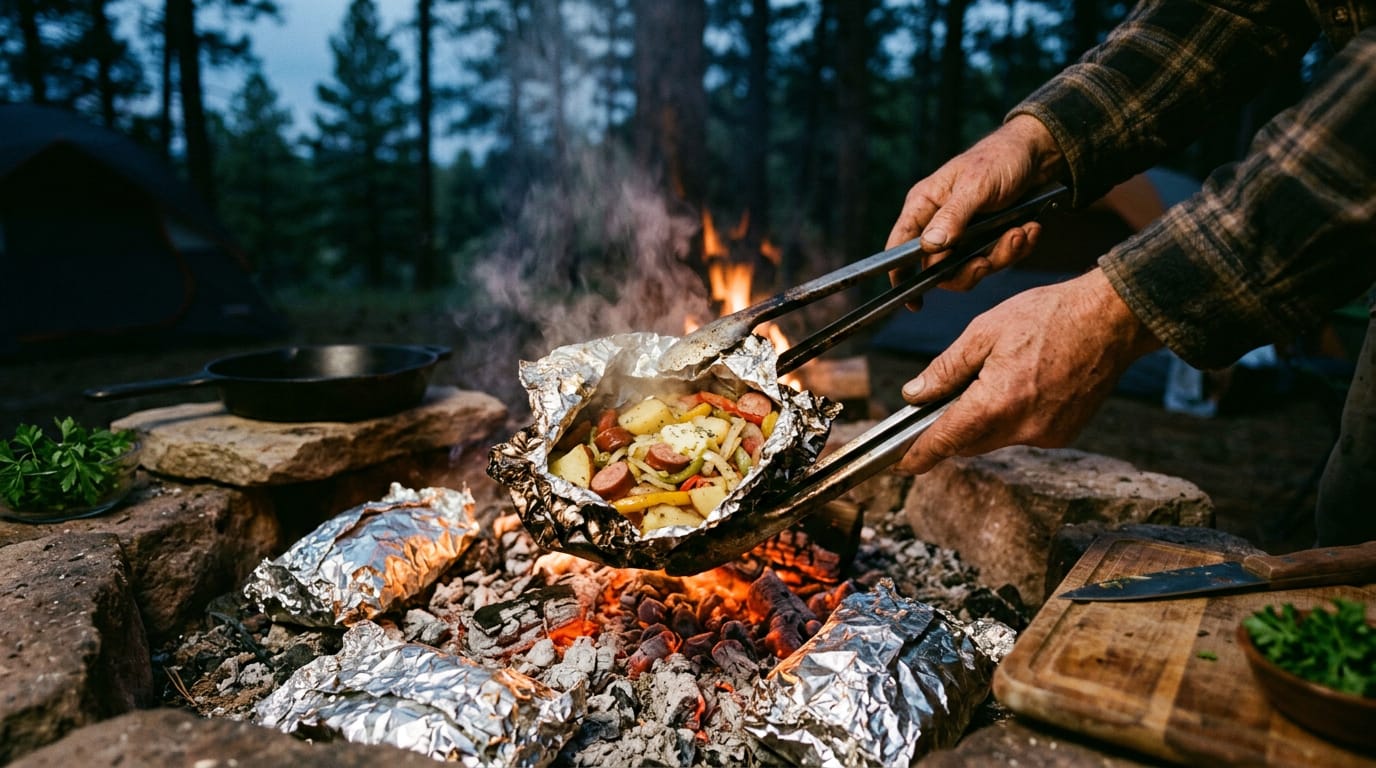
The short versionHobo dinner recipes are meals made by cooking meat, vegetables, and seasonings together in sealed foil packets, over a campfire, on a grill, or in an oven. Build packets with evenly cut ingredients, seal them firmly, and adjust fillings, sauces, and cooking time to suit your ingredients and heat source. The simple, customizable method makes hearty individual meals with little cleanup, whether you’re camping or cooking at home.
Picture the end of a long day at camp: the fire is down to good coals and everyone is hungry at once. A hobo dinner solves that.
It’s a foil packet of meat, vegetables, and seasoning, cooked right in the coals or on a grill until the juices pool and the vegetables turn tender.
We’ve gathered every method, filling, and fix for the dish in one clear place. You’ll find the packets, the steps, the swaps, and travel-minded notes for cooking away from home, so you can make it on a campsite, a backyard grill, or in a rental kitchen.
What Hobo Dinner Recipes Are
A hobo dinner is a simple meal cooked in sealed foil, and it’s one of the easiest ways to feed a group outdoors. Here’s why it’s so popular and what you’ll see it called.
Why people love this foil-pack meal
A hobo dinner is a foil-pack meal of meat and potatoes, often split into individual packets. According to a Tennessee 4-H recipe, the packets use lean ground beef and tender vegetables and can make individual or group meals.
Consider a family of five at a campsite, each person unwrapping their own packet as the fire settles. Less cleanup, more time by the fire.
It keeps coming back for a few reasons:
- Foil-pack meat and potatoes. Everything cooks together in one sealed bundle.
- Individual packets per person. Each diner gets an individual portion rather than a shared platter.
- Comfort food and a crowd-pleaser. It’s hearty and familiar, and hard to get wrong.
- A summer and fall meal. It suits warm cookouts and cooler evenings around the fire.
Other names and common twists
You’ll also hear this called a hobo packet. Beyond the classic beef version, you’ll find a cabbage version, a chicken hobo dinner, and a sausage hobo dinner.
Online, there are many variations, so treat the classic as a starting point rather than a rulebook. Our sources don’t say where the name came from, so we won’t guess.
What Goes into the Packets
Every hobo dinner is built from a short list, and each item has a job inside the foil packet. Here’s what goes in and how to adjust it for the people at your table.
The base items, from beef to butter
The packet is built from four core items:
- Ground beef patties: the centerpiece of the packet.
- Russet potatoes, onion, and carrots: the vegetables that cook down alongside the beef.
- Cream of mushroom soup: adds moisture and richness.
- Butter: melts over everything else.
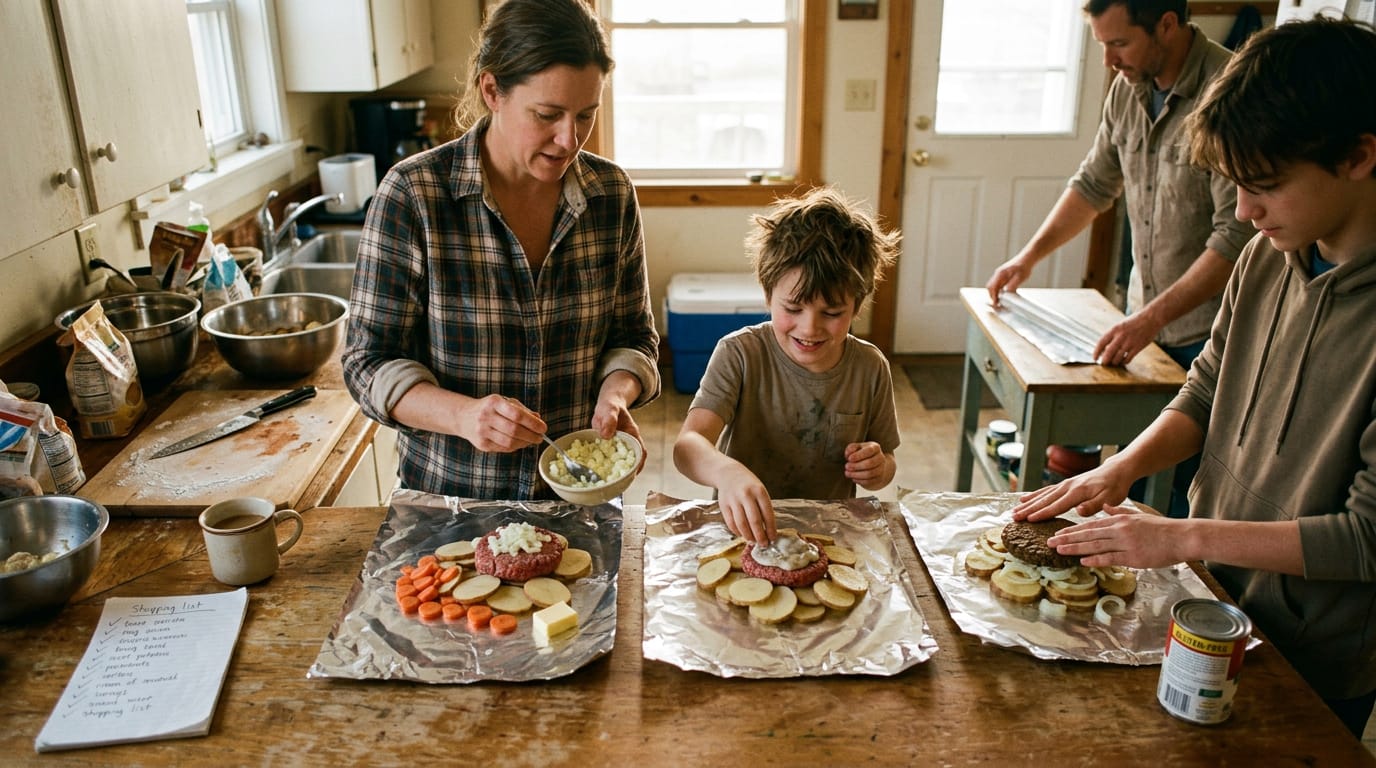
Consider a family planning a weekend at the campsite. One shopping list, written at home, covers every packet, and each person builds their own: the parent who wants extra onion adds it, and the kid who skips the carrots simply leaves them out.
Nobody has to re-pack at the picnic table.
For a vegetarian packet, swap the beef for a plant-based patty. For a gluten-free packet, read the label on the soup and choose one marked gluten-free.
Spices, sugar, and optional parsley
- Salt, pepper, and garlic powder season the beef and potatoes.
- Onion powder and chili powder add depth and a little warmth.
Use a pinch of chili powder rather than a spoonful, so the packet works for everyone at the table.
Brown sugar is the ingredient that surprises people. A spoonful balances the savory flavors and adds a gentle sweetness to the carrots.
Fresh parsley is optional. Sprinkle it on once the packet comes off the heat for color and a bright finish, or skip it entirely.
Putting the Packets Together Step by Step
Assembly is where a hobo dinner holds together or falls apart. Work in a set order and you’ll get even cooking across every packet.
Shape, layer, and seal each packet
Mix the ground beef with your seasonings and shape it into even patties. Cube the potatoes, carrots, and onions into similar-sized pieces so they finish together.
Lay out a sheet of heavy-duty foil big enough to fold over the food. Its extra strength keeps the packet from splitting when you lift it off the heat.
Layer the vegetables, then a pat of butter, the patty, and the soup. Fold the foil over and seal the edges firmly, not loosely. Seal each packet while it sits on a baking sheet so you can carry the whole tray at once.
Think of a parent feeding four kids at a campsite: one tray carries every packet to the fire in a single trip, with nothing spilled or dropped.
Knowing when the meal is cooked
Doneness comes down to three checks:
- Internal temperature. FoodSafety.gov gives 160°F as the safe internal temperature for ground beef patties. Check it with a food thermometer.
- Tender vegetables. Pierce a potato cube with a fork. It should slide in easily.
- Thoroughly cooked meat. Keep the packet on the heat until the patty is cooked all the way through. Safe beats fast.
For soggy packets, don’t overdo the soup. Use less soup than you think. For burnt bottoms, keep the heat moderate and open one packet early to check it.
Three Ways to Cook It
A hobo dinner can be cooked three main ways, and each one has its own order, timing, and small swap. If you’re cooking indoors, an air fryer is another option.
Baking them in the oven
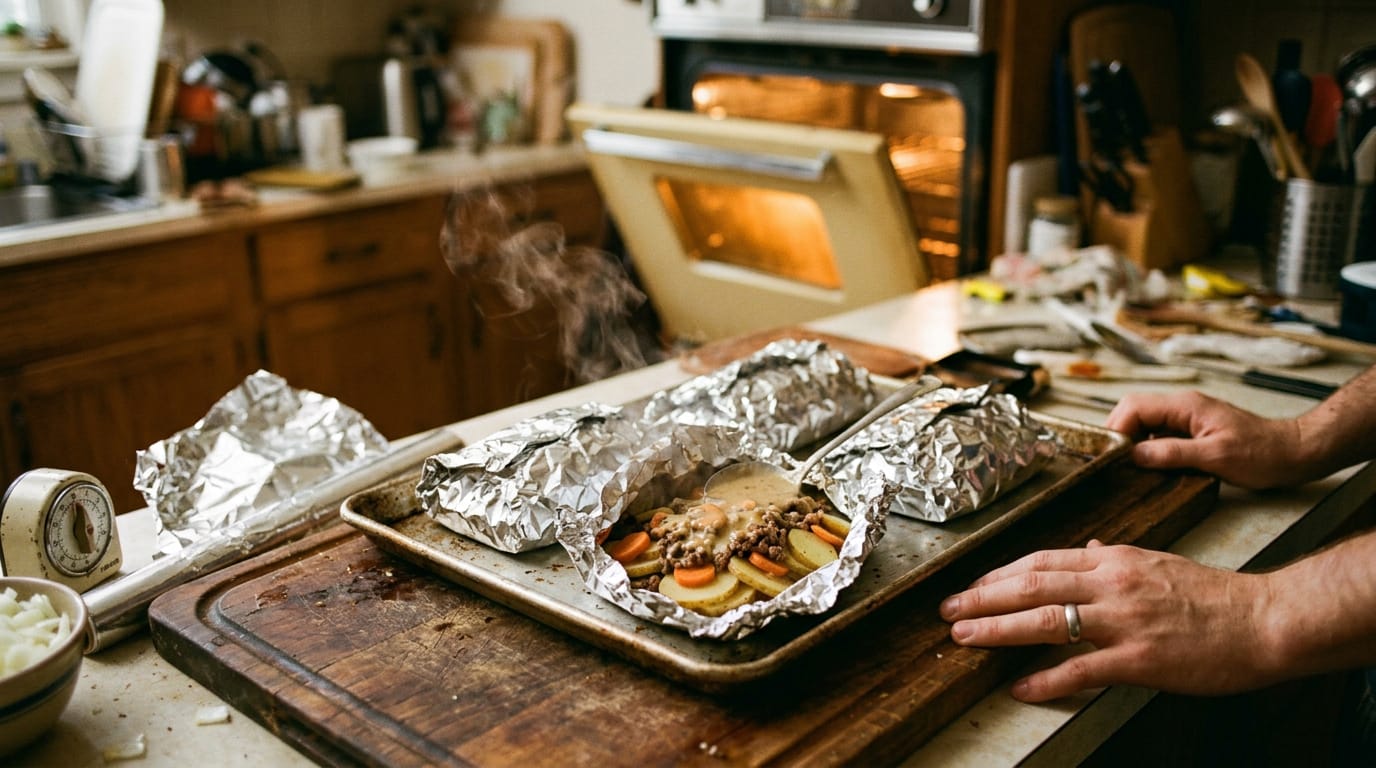
Preheat your oven to 350°F. Layer the vegetables in first, then the meat, then the soup on top. Bake for 30 to 40 minutes. This is the method we prefer, and it’s the best place to start if you’re new to hobo dinners.
Grilling over medium heat
Set the grill to medium heat and cook the packets for 25 to 30 minutes. Swap the soup for Worcestershire sauce, and check that the meat and potatoes are fully done before you open the foil.
Cooking over an open campfire
Cook the packets over an open flame for about 30 minutes. Put the meat in first, then the vegetables, the reverse of the oven. Consider a parent at a campsite on a Friday night, with hungry kids asking when dinner’s ready.
Start the packets early, and everyone eats together with no pot to scrub afterward. Don’t rush it. Want a change? Try the chicken version.
Before you leave, run through a camping packing checklist so the foil doesn’t get left in the kitchen drawer.
Handy Swaps and Useful Tips
A few swaps go a long way when your cooler doesn’t match the recipe, including regional options like sausage and local vegetables.
Beef, turkey, or ready-made patties
Ground beef is the classic choice, but ground turkey makes a leaner swap. Premade patties save prep time, and frozen patties need more time over the heat than fresh ones. If you make your own, you can freeze homemade patties until you pack the cooler.
Consider a family headed out for a weekend of camping who grabs frozen patties on the way out of town. They drop them into the foil still frozen, add a few extra minutes, and skip the second grocery run.
How big to cut the vegetables
Cut size matches the cooking method. Bigger chunks need more time, while thinner slices need less. Larger pieces suit the oven and frozen patties, and thinner cuts suit the grill and fresh patties.
Swap in whatever vegetables are local to your destination and cut them to match.
Using Worcestershire or barbecue sauce instead
Worcestershire sauce brings a tangy, savory note, and barbecue sauce adds sweetness. Either one can replace cream of mushroom soup, so you can leave the can at home. That’s one less thing to pack.
Picture a couple who forgot the soup at home. They splash barbecue sauce over the vegetables in the packet, and dinner still tastes like a proper meal.
Keeping Leftovers and Prepping Ahead
Knowing how long food keeps takes the guesswork out of leftovers, and prepping ahead makes the next dinner quicker.
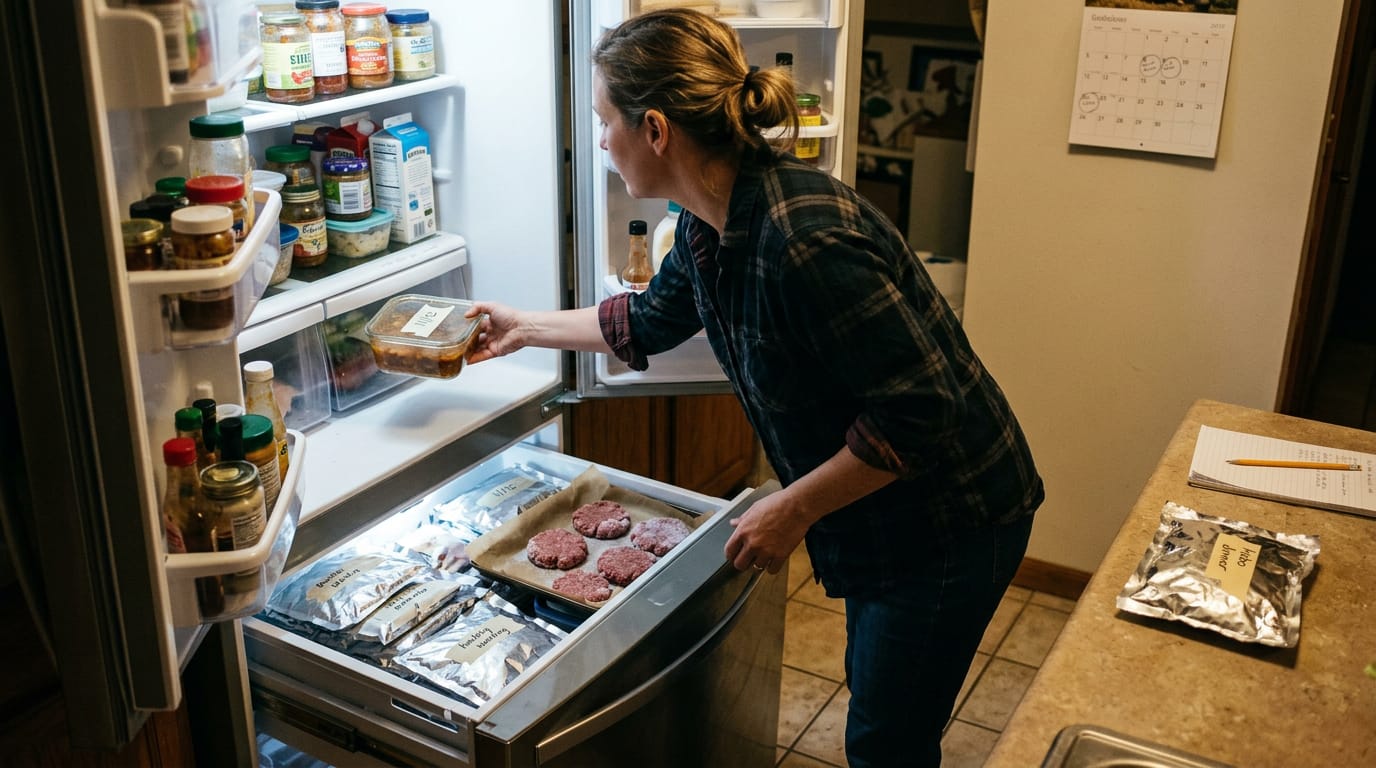
How long leftovers and patties keep
Start with the fridge. According to a WDAM report on USDA food safety tips, leftovers can be kept in the refrigerator for three to four days.
Cooked hobo dinner keeps in the freezer for two to three months. A FOX 2 Detroit report on USDA guidance for prepared meals gives a longer window of three to four months, so plan around the shorter range.
Raw patties have their own timeline. Freezer Inventory Tracker lists raw ground beef patties at three to four months in the freezer, so patties shaped this weekend can wait for a trip several weeks out.
Prepping ahead for a quicker night
Prep is about saving time at the campsite, not skipping the cooking. Think of a family of four heading to a lakeside campground for a Friday night. The night before, one parent chops the vegetables and stores them in containers.
Early the next day, the kids build the assembled packets on foil, each with a patty and a portion of veggies.
Frozen patties make this easier still, since the meat is already shaped and waiting. Pack the finished packets in a cooler for the drive, and the only job left at the site is cooking.
Your Friday night starts at the fire, not the cutting board.
The Recipe Card and Similar Dishes
Before you buy anything, you’ll want the basics: how long it takes, how many it feeds, and what it adds up to nutritionally. Then we’ll look at other ground beef dishes that use the same kind of ingredients.
Times, servings, and nutrition facts
The card lists a prep time of 10 minutes and a cook time of 30 minutes. Forty minutes, start to finish.
It’s written for four servings, not one. If you’re cooking for two, halve the quantities rather than guessing.
Think of a camp cook feeding four tired hikers at dusk: ten minutes of prep while the coals get going, and the pan is empty before the stars are out.
Ingredient quantities are listed for that full batch, so measure them out before you head to the campsite.
Nutrition per serving depends on the exact beef and add-ins you choose, so check the labels on your own packages instead of relying on a single number.
Other ground beef dishes to try
If you want to stretch the same ground beef into something new, these are worth a look:
- Hamburger casserole and hash. Baked or skillet versions that turn the same beef into a heartier meal.
- Soups and stews. A good way to make ground beef go further on a cold night.
- Meatloaf and sloppy joes. Two familiar favorites that are easy to scale up when you’re feeding a crowd.
- Campfire potatoes. A side, or a simple meal in its own right, cooked alongside the beef in the same fire.
Whether you’re cooking over a campfire or a grill, a great hobo dinner comes down to a few simple choices: a filling you like, a tight seal, and a little patience with the heat. Get those right and the packet does most of the work.
Take these basics with you wherever you go. The same packet adapts to a lake site, a backyard, or a rental kitchen, so dinner can travel as easily as you do.
Wrap it up, set it on the coals, and let dinner cook itself.
References
- Cook to a Safe Minimum Internal Temperature — foodsafety.gov
- 4h.tennessee.edu
- How Long Is Ground Beef Good in the Freezer? — freezer-inventory-tracker.com (2026)
- What to do with all those leftovers?: USDA provides food safety tips — wdam.com
- Meal preppers take note: USDA says leftover food only safe for 3 to 4 days after cooking — fox2detroit.com
Sources
- Cook to a Safe Minimum Internal Temperature | FoodSafety.gov, foodsafety.gov
- What to do with all those leftovers?: USDA provides food safety tips, wdam.com
- Meal preppers take note: USDA says leftover food only safe for 3 to 4 days after cooking | FOX 2 Detroit, fox2detroit.com
- How Long Is Ground Beef Good in the Freezer?, freezer-inventory-tracker.com,
- 4h.tennessee.edu, 4h.tennessee.edu