 Recipes
Pastel de nata recipe: Portuguese custard tarts at home
Pastéis de nata in a home oven: shop-bought puff pastry rolled into a spiral, a sugar-syrup custard, and the hottest shelf for dark spots. Makes 12.

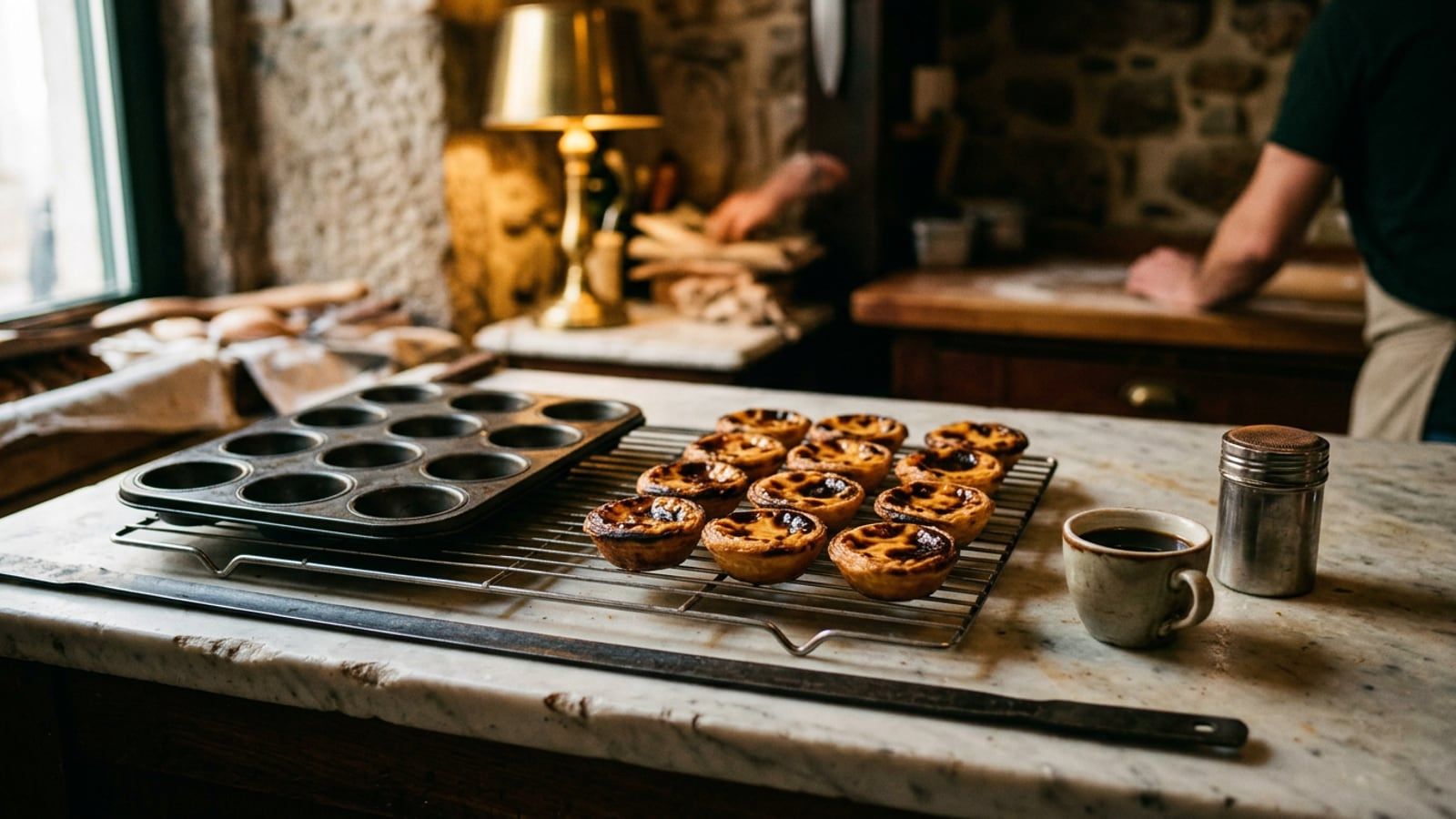
The short versionRoll shop-bought all-butter puff pastry into a tight log, cut 12 discs and press them thin into a muffin tin, then fill them with a thin custard of milk, flour, egg yolks and a lemon-and-cinnamon sugar syrup. Bake on a hot tray at the top of the oven at its highest setting, about 250°C, until the pastry is deep gold and the custard is set with dark patches.
The quickest way to good pastéis de nata (Portuguese custard tarts; one is a pastel) at home is a sheet of shop-bought all-butter puff pastry rolled into a tight log, cut into 12 discs and pressed thin into a muffin tin. Fill the cases with a thin custard of milk, flour, egg yolks and a sugar syrup scented with lemon and cinnamon, and bake them on a hot tray at the top of an oven turned as high as it goes, about 250°C, until the pastry is deep gold and the custard has set with dark, scorched patches. It makes 12 and takes about an hour and a half, most of it chilling the pastry and heating the oven.
What makes a pastel de nata
Three things, and the method is built round each of them:
- The pastry. Many thin layers wound into a spiral, so the case shatters at the edge and the spiral shows on the base.
- The custard. A thin, pourable custard thickened with a little flour and sweetened with a syrup rather than plain sugar, so it sets in the oven rather than in the pan. Lemon peel and cinnamon flavour it.
- The top. Dark, almost burnt patches where the sugar has caught in fierce heat.
The tarts come from Belém, on the river west of Lisbon’s centre. As Visit Lisboa tells it, when Portugal’s convents and monasteries were closed in 1834, someone from the Jerónimos Monastery began selling sweet pastries in the shop of the sugar refinery next door. From 1837 they were baked in the refinery’s buildings to the monastery’s recipe, which the bakery there still keeps to itself, and they became known as pastéis de Belém. This is not that recipe. It follows the method that cookery writers publish for home kitchens, cross-checked between them: the sugar syrup taken to 104°C, a milk custard thickened with a little flour, and the hottest oven you have.
Ingredients and kit
For the pastry
- 1 sheet (320 g) ready-rolled all-butter puff pastry, chilled
- A little soft butter, for the tin
For the custard
- 250 g caster sugar
- 150 ml water
- 1 cinnamon stick
- 2 wide strips of lemon peel, pared with a vegetable peeler, no white pith
- 300 ml whole milk
- 30 g plain flour
- A pinch of salt
- 6 large egg yolks
- ½ tsp vanilla extract (optional)
- Ground cinnamon and icing sugar, to serve (optional)
Swaps
- Standard puff pastry. The ready-rolled sheet made with vegetable fat works the same way; the all-butter one tastes richer.
- No cinnamon stick. Leave it out of the syrup and dust ground cinnamon over the baked tarts instead.
- Granulated sugar does the job of caster, since it dissolves in the syrup.
- Plain flour, as written. Some recipes thicken the custard with cornflour instead, but the quantities and timings here are for plain flour.
Freeze the six spare egg whites for meringues or an omelette.
Kit
- A 12-hole muffin tin, non-stick if you have one. Portuguese bakeries use small individual metal tins; a muffin tin does the same job.
- A heavy baking tray that fits under the tin
- Two saucepans, a whisk, a fine sieve and a jug
- A sugar thermometer, if you have one
- A wire rack
Roll the pastry into a spiral
- Butter the muffin holes lightly.
- Unroll the pastry on its paper with a short side towards you. Roll it up away from you as tightly as you can, peeling off the paper as you go, into a firm log. Rolling from the short side gives more turns in the spiral.
- Wrap the log and chill it for at least 30 minutes, until it is firm enough to cut cleanly.
- Trim the ragged ends. Cut the log in half, each half in half again, then each quarter into three, for 12 equal discs.
- Stand a disc in each hole, spiral side up. Dip your thumb in cold water, press the centre of the disc down to the base, then push the pastry outwards and up the sides, turning the tin as you go, until it stands just above the rim. Aim for a thin base, about 2 mm, and even sides.
- Chill the lined tin while you make the custard.
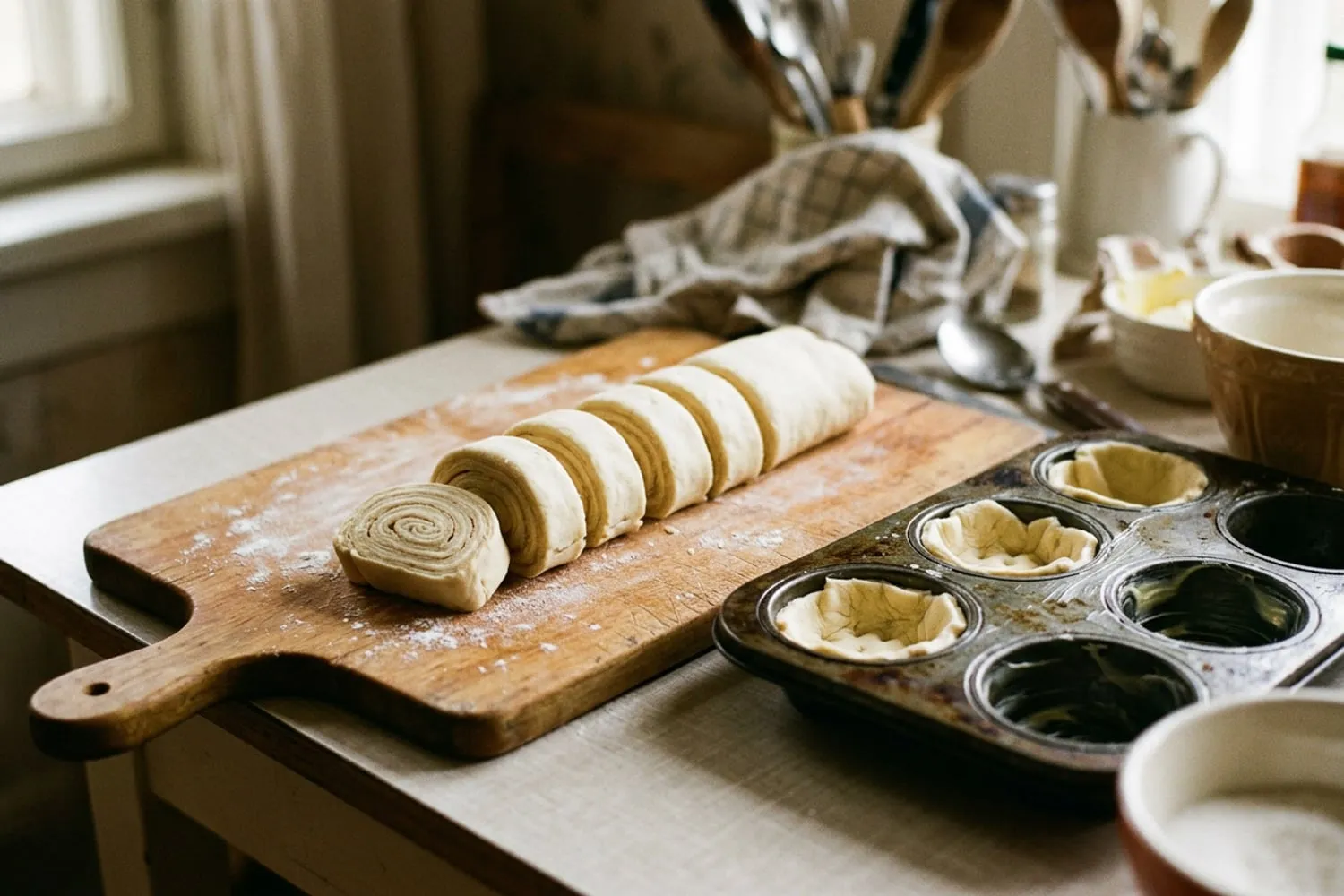
Tip: Keep your thumb wet and the pastry cold. Warm pastry sticks to your thumb and tears; if it starts to, put the tin back in the fridge for ten minutes and carry on.
Make the custard
- The syrup. Put the sugar, water, cinnamon stick and lemon peel in a small pan over a low heat and stir until the sugar has dissolved. Then stop stirring, turn up the heat and boil until the syrup reaches 104°C on a sugar thermometer, about 3 minutes. It should still be clear. Take it off the heat.
- The milk. In a second pan, whisk the flour and salt with 50 ml of the milk until smooth, then whisk in the rest. Cook over a medium heat, whisking all the time, until it comes to the boil and thickens a little, 2 to 3 minutes.
- Combine. Lift the cinnamon and lemon peel out of the syrup and pour the syrup into the milk in a thin stream, whisking as you go.
- Cool, then add the yolks. Leave it for about 10 minutes, until warm rather than hot, then whisk in the egg yolks and the vanilla. Added to a hot mixture, the yolks scramble.
- Strain. Pour it through a fine sieve into a jug. It will be thin, about as thick as single cream, and that is how it should be.
You can make the custard up to a day ahead. Cover it, keep it in the fridge and whisk it again before you pour.
Bake at the top of the hottest oven
- Put the baking tray on the top shelf, with room above it for the custard to rise, and heat the oven to its highest setting: on most home ovens that is 240 to 250°C (220 to 230°C fan), gas mark 9. Give it a full 30 minutes, so the tray and the walls of the oven are as hot as they will get.
- Fill each pastry case about three-quarters full. You may have a little custard left over; a fuller case spills over the edge and sticks the tart to the tin.
- Set the tin on the hot tray and bake for 12 to 18 minutes, depending on how hot your oven runs. Start looking at 12.
- They are done when the pastry is deep golden brown and crisp at the edge, and the custard has puffed up, set and caught in dark brown to black patches. It sinks back as it cools.
- Leave them in the tin for 5 to 10 minutes, then lift them out with a blunt knife onto a wire rack.
A home oven can’t match a Lisbon bakery’s. Bakery ovens run far hotter than any kitchen’s (America’s Test Kitchen puts them at over 300°C), which scorches the top in minutes without overcooking the custard below. At 250°C you get smaller patches and a slightly softer base. A minute under a hot grill at the end makes up some of the difference; see the table below.
Serve, store and reheat
Pastéis de nata are best warm, half an hour or so out of the oven, with a dusting of ground cinnamon and icing sugar if you like. In Lisbon they are eaten at the counter with a bica, the city’s word for an espresso. At home, the Bialetti moka pot on our Kit page makes a small strong coffee on the hob while the tarts cool.
Eat them within a few hours. Put any left over in the fridge once they have cooled: the Food Standards Agency’s guidance is to refrigerate cooked food within one to two hours and to eat leftovers within 48 hours. To bring back the crisp pastry, put them on a tray in an oven heated to 180°C (160°C fan) for 5 to 7 minutes. A microwave leaves the pastry soft.
If you are going to Lisbon, our guide to where to eat in Lisbon takes breakfast neighbourhood by neighbourhood, Belém included. City Tables plans every breakfast of a trip, down to the bakeries worth crossing a neighbourhood for before they sell out. For more dishes to bring home, see Recipes.
If they go wrong
| What happened | Why | Next time |
|---|---|---|
| No dark patches | The oven, the tray or the shelf wasn’t hot enough | Heat the oven at its highest for a full 30 minutes, bake on the top shelf, or finish under a hot grill for a minute or two, watching all the time |
| Pale, soft base | The pastry was pressed too thick, or the tin sat on a cold shelf | Press the base to about 2 mm and bake on the preheated tray |
| Custard spilled over | The cases were too full | Fill them three-quarters full |
| Grainy or scrambled custard | The yolks went into a hot mixture, or the tarts baked too long | Cool the milk and syrup until warm before adding the yolks, strain, and take the tarts out once the custard has set |
| Runny custard once cool | Underbaked | Bake until the custard has puffed and set before you take the tin out |
| Sides slid down the tin | The pastry was warm when it went in | Chill the lined tin before filling, and push the pastry just above the rim |
| Pastry edges burnt before the top coloured | The tin sat too close to the top element | Move the tray down one shelf and leave the tarts in a few minutes longer |
Questions
Can you make pastéis de nata with shop-bought puff pastry?
Yes, and most recipes written for home kitchens do. Rolled into a tight log and cut into discs, the sheet gives the spiral of layers that Lisbon bakeries get from their own dough. Choose all-butter pastry for the flavour, keep it cold, and press the base thin so it crisps.
Why don’t my custard tarts have dark spots on top?
The spots are the sugar in the custard caramelising and scorching in strong top heat, and a home oven is far cooler than a bakery oven. Heat yours to its highest setting for a full 30 minutes, bake on a preheated tray on the top shelf, and leave the tarts in until the pastry is deep gold. If the custard has set but is still pale, a minute or two under a hot grill, watched all the time, adds the patches.
Can you make pastéis de nata the day before?
They are at their best within a few hours of baking, so the better plan is to make the custard and line the tin the day before, keep both covered in the fridge, and bake on the day. Tarts baked the day before should go in the fridge once they have cooled. Five to seven minutes in an oven at 180°C crisps the pastry again.
What is the difference between a pastel de nata and a pastel de Belém?
Pastel de Belém is the name of the tarts made and sold by the Pastéis de Belém bakery in Lisbon, which, as Visit Lisboa tells it, has baked them since 1837 to a recipe from the neighbouring Jerónimos Monastery that it keeps to itself. Pastel de nata is the name for the same style of tart everywhere else, in bakeries across Portugal and abroad and in home kitchens. This recipe makes pastéis de nata.
Sources
- Pasteis de nata (Portuguese custard tarts), GoodtoKnow
- Pastéis de Nata (Portuguese Custard Tarts), America’s Test Kitchen
- Europe on a plate: Portugal, European External Action Service
- Pastéis de Belém, Visit Lisboa