 Destinations
Traditional Costa Rican Food Explained, Meal by Meal
Traditional Costa Rican food follows a satisfying daily rhythm, from gallo pinto at breakfast to casados at lunch and street-cart snacks after dark.

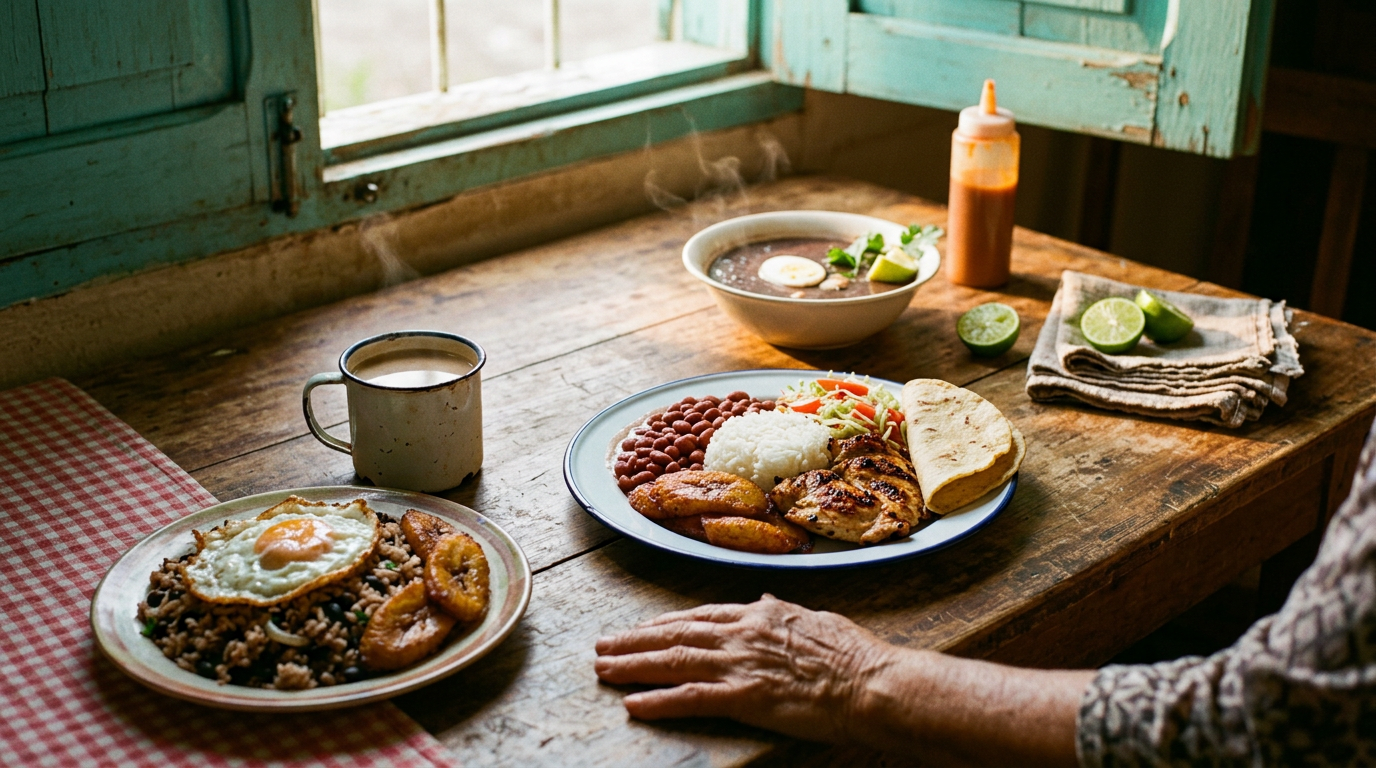
The short versionTraditional Costa Rican food is everyday cooking built around rice, beans, meat, vegetables, corn, plantains, and fresh tropical fruit, with mild flavors shaped by Indigenous, Spanish, and Afro-Caribbean influences. Gallo pinto is a breakfast staple, casado is a common lunch plate, and snacks, stews, coconut-rich regional dishes, and festive foods add variety. Try sodas and local markets, ask what is fresh, and choose sauces to adjust the flavor and heat.
Picture a Tuesday in Costa Rica that starts with a plate of rice and beans, moves to a lunch counter where the plate is already waiting, and ends with a snack from a street cart. It’s a rhythm you can borrow for your own day.
Traditional Costa Rican food is simple, filling, and built around a few staples you’ll see everywhere.
This guide covers the classics, from gallo pinto and the casado to regional and festive dishes, along with what to order, where to find it, and what to expect to spend.
What Sets Traditional Costa Rican Food Apart
Traditional Costa Rican food runs on a short list of ingredients and a gentle hand with seasoning. Here’s where that comes from, and why we keep seeing the same plates from one meal to the next.
Where its mild flavors come from
Costa Rican cooking blends Indigenous, Spanish, and Afro-Caribbean influences into food that is simple, wholesome, and built on fresh ingredients rather than complicated techniques.
Flavor comes from freshness rather than heat, which is why it’s less spicy than many other Latin cuisines. If you’re expecting the fire of a chili-heavy plate, you’ll be surprised. Fresh beats fancy here.
Staples that show up on most plates
Most plates are built from a few staples:
- rice
- beans
- meat
- flours
with plenty of vegetables and tropical fruits alongside. Corn and plantains turn up across the menu too. Coffee and bananas are best known as exports, but they’re part of the same food story. If you only learn two dishes, start here:
- Gallo pinto: rice and beans cooked together, the dish that sums up the basics.
- Casado: a set plate of rice, beans, meat, and vegetables.
Why menus look alike across the country
Costa Rica is a small country, so the same basic menu travels far. You’ll see it at sodas (small local eateries), beach bars, and full restaurants, and the plates overlap heavily.
Many menus also list American and European options alongside the traditional ones.
Think of a traveler who orders a casado at a soda on Tuesday, then the same plate at a beach bar on Friday. They know what to expect now, so they can spend their Friday budget on the one dish they haven’t tried yet.
Why many tourists find it plain
Many visitors find the food unexciting at first, mostly because rice and beans show up on almost every plate. That repetition can feel like a menu with one trick.
But there’s more variety beyond the basics, and the regional and festive dishes covered later in this article are where the menu opens up. Simple isn’t the same as dull.
What a Typical Breakfast Looks Like
What’s on your plate when you sit down for breakfast? Two dishes do most of the work, and both are easy to order once you know what to expect.
Start the day with gallo pinto
Gallo pinto is the national dish, and it’s the one to try first. Rice and beans are cooked together rather than served side by side, seasoned with onion, pepper, and cilantro.
It comes with eggs, cheese, and plantain, so one plate makes a full start to the day. Order it once and you’ll see why.
The name means “spotted rooster,” and recipes shift by region and by family. Think of a traveler who orders gallo pinto at two different counters on their first morning.
It’s the same plate with a different kitchen behind it, and a quick way to taste how one dish changes from place to place.
Huevos rancheros and bacon or steak sides
Huevos rancheros are fried eggs with tomato sauce, a simple plate that pairs well with the rice and beans. The sides are bacon, steak, or sausage, so you can add protein if you’re hungry.
Bacon rarely comes out crispy, so if that’s how you like it, say so when you order. Crispy bacon is something you have to ask for, not something you can count on.
What Do Locals Eat for Lunch and Dinner?
Most of what locals eat at midday is simple, filling, and easy to order once you know the names. The same short list of plates carries into the evening, so these dishes also answer what people eat for dinner.
Most locals order a casado at lunch
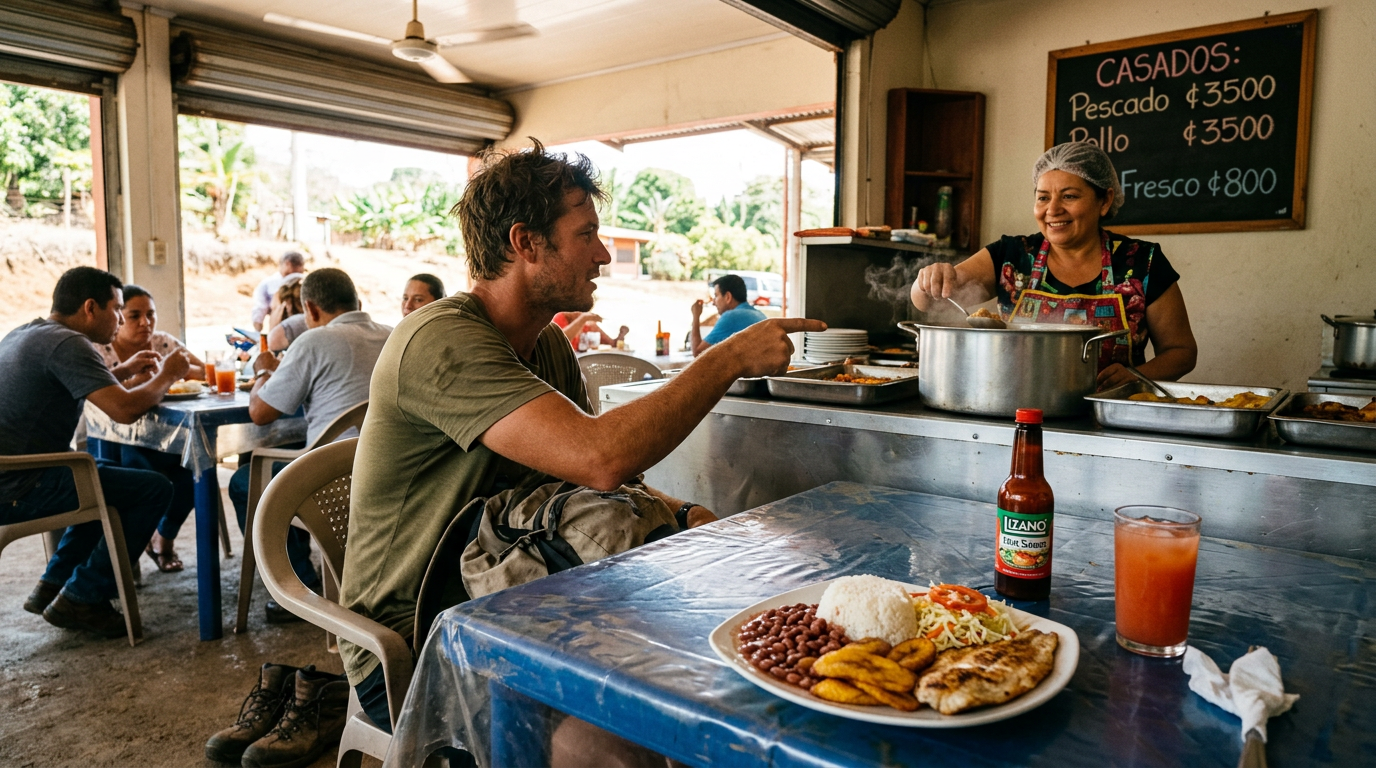
The casado is the most popular everyday lunch in Costa Rica, and its name means “married man” in Spanish. It’s a full plate of rice, beans, a simple salad, and plantain, with your choice of:
- chicken
- beef
- fish
- pork
You’ll find it at sodas, the small local eateries that serve it.
Think of a traveler who stops at a soda around noon after a morning of hiking. They point at the casado, choose fish, and get rice, beans, salad, and plantain on one plate without building a meal from a menu of sides.
The casado is ordinary food, and that’s exactly why it works: it’s made for a regular weekday, not a party.
Celebration rice dishes like arroz con pollo
Arroz con pollo is the festive dish you’ll see at celebrations. It’s rice cooked with chicken, vegetables, and achiote, the seasoning that gives the rice its warm color. Cooks also make variants with shrimp or tuna in place of the chicken.
Consider a host planning a birthday lunch for a crowd. They can serve one dish that feels special and offer shrimp to the guest who doesn’t eat chicken, so nobody goes without.
Hearty stews and soups for Sunday lunch
Sunday lunch is where the hearty stews and soups show up. Olla de carne, a beef stew, is a classic at the family Sunday table, and it comes loaded with:
- chayote
- yuca
- potato
Sopa negra, a black bean soup, is the other bowl to look for on a Sunday.
Picture a visitor invited to a family’s Sunday lunch. They get a big bowl of olla de carne, with chayote, yuca, and potato soaking up the broth, and they leave the table full. Plan on a slow afternoon. Go hungry.
Arreglados sandwiches, steak, and freshwater fish
Arreglados are sandwiches, a simpler option than a full plate. Bistec, a steak, is the beef option you’ll see as a main, and freshwater fish is a staple, so ask what’s on the menu that day.
Think of a traveler who grabs an arreglados sandwich for a quick lunch between stops, then sits down at a soda for dinner. For the evening, a bistec or a plate of freshwater fish is an easy order.
Snacks from Street Stalls and Bars
Some of the most satisfying eating in Costa Rica happens at a bar counter or a street stall. Here’s what to order when you want something quick and local.
Free bocas that can make a meal
Many bars bring a boca, a small snack served free with your drink. Eating one is as much a cultural experience as it is food, so take your time with it.
Common bocas include:
- Ceviche, seafood cured in citrus
- Wings
- Bean soup
Think of a traveler who orders one beer and ends up with a bowl of bean soup and a plate of wings. Together, those can make a full meal for the price of the drink. Treat the boca as lunch, not a nibble.
Order chifrijo for crispy pork and beans
Chifrijo is the bar dish to try at least once. A recipe guide from 196 Flavors describes it as a bar snack made with chicharrón (crispy fried pork) and frijoles (beans), often served with rice, pico de gallo (a fresh salsa), and tortillas.
It’s said to have been invented in a San José bar, and it’s meant to be eaten with a cold beer.
Think of a solo diner in San José who wants dinner without fuss: one beer, one order of chifrijo, and a seat at the bar. Order it once. You’ll see why it’s a favorite.
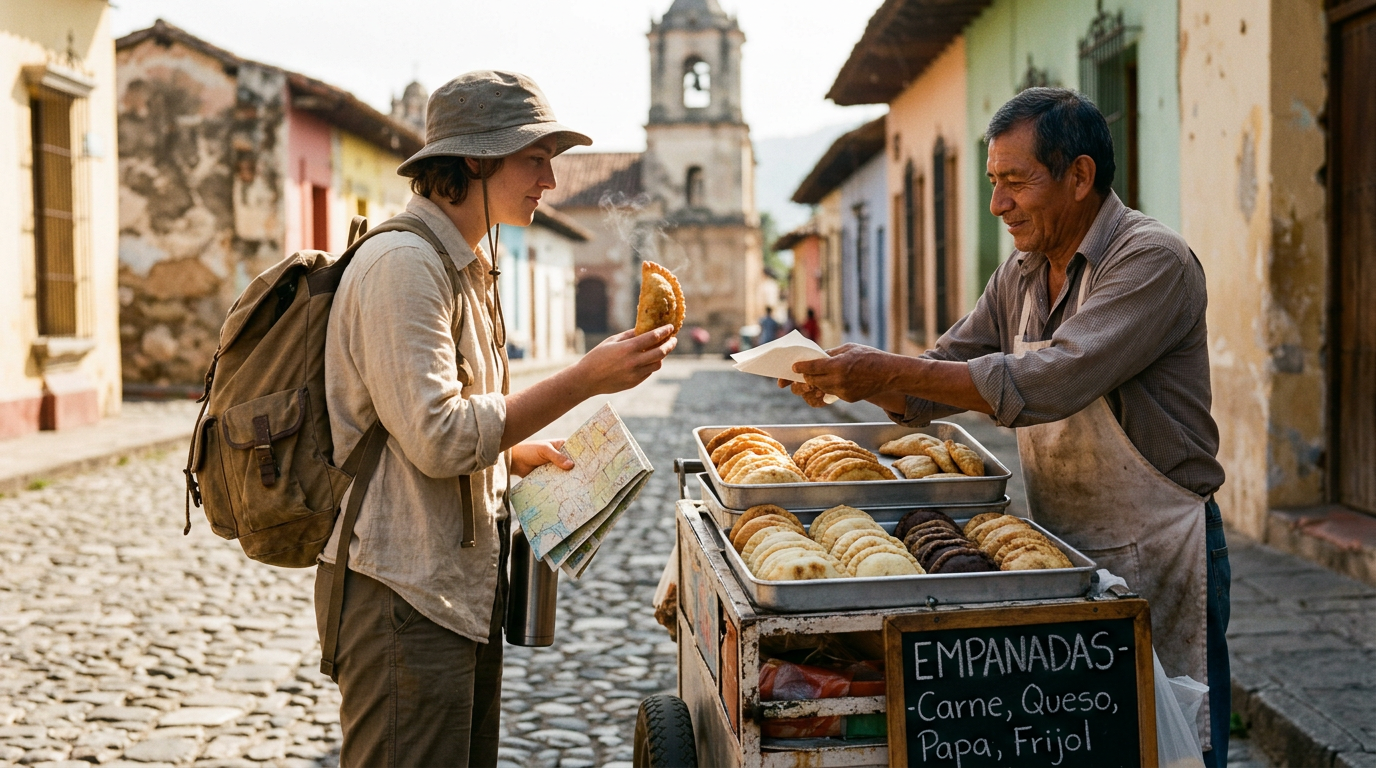
Fried or baked empanadas with many fillings
Empanadas are pastry turnovers, sold fried or baked, and street vendors make them a staple. Fillings include:
- Cheese
- Beans
- Meat
- Potato
Consider a traveler on a long walk between sights who needs something hot to eat. A cheese or potato empanada from a street vendor is a quick lunch that fits in one hand. Grab one while it’s hot.
Fried plantains and twice-fried patacones
Fried plantain is a side on many plates. Patacones are green plantains fried twice for a crisp finish, and they’re often topped with beans or ceviche. That makes them less a side dish and more a base, so they work as a snack on their own.
Picture two friends splitting a plate of bean-topped patacones while they decide what else to order. It’s an easy way to start the evening.
Trusted spots for milder ceviche
Tico-style ceviche, the Costa Rican way, tends to be milder, so it’s a good first try if you’re new to the dish. It’s served with saltine crackers on the side. Buy from established restaurants rather than unfamiliar stalls.
Consider a first-timer who wants to try ceviche without a surprise. A Tico-style plate from an established restaurant is a gentle introduction. Start mild, then go from there.
Drinks and Sweets Worth Trying
Coffee, fruit drinks, coconut water, and a few sweets cover most of what you’ll taste here. Here’s what to order and where.
Coffee grown high on volcanic slopes
Coffee here is grown high on volcanic slopes, so start by tasting it plain. Many cafés brew with a chorreador, a cloth filter that lets hot water drip slowly through the grounds. It takes longer than a machine, so you’ve got time to watch it drip.
Black lets you taste the beans, while café con leche, coffee with hot milk, softens them. For the full story, try a plantation visit.
Think of a couple on a rainy afternoon who tour the grounds, learn how the coffee is grown, and then taste the cup they just watched come together.
Batidos and refrescos you’ll see everywhere
A batido is a fruit shake, and you’ll find one almost everywhere you stop. Ask whether it’s made with milk or water, because that choice changes the whole drink.
Refrescos, or fruit drinks, turn up on most menus too. Most sit-down restaurants also serve jugos naturales, or natural juices made from fresh fruit. If you’d rather skip the shake, try one instead. Taste the fruit.
Agua de sapo and pipa coconut water
Agua de sapo is a traditional drink served with ginger, and it’s a good local pick.
Pipa is fresh coconut water, served straight from the shell. Think of a hiker at the end of a beach walk who buys one from a roadside stand and drinks it on the sand. With pipa, it’s less about what you drink and more about where you drink it.
Beer and wine are easy to find if you’d like something with dinner. Sodas, or soft drinks, fill out the rest of the menu.
Tres leches cake and handmade chocolate
Tres leches is a sweet, milky sponge cake you’ll see in bakery cases and on dessert menus.
Handmade indigenous chocolate is the sweet worth seeking out. Buy it at a market or a small shop rather than a supermarket shelf. You may also find chocolate paired with bananas, a simple combination worth a try.
Consider a traveler heading home with a gift for a friend. Skip the imported bar and pick up a small handmade chocolate from a local maker instead. It tells your friend where you’ve been.
Fruits and Sauces You Should Know
Two things will tell you more about everyday Costa Rican meals than any menu: the fruit piled at the market and the bottles on the table. Here’s what to look for and how to use them.
Unusual tropical fruits found at markets
Many of these fruits won’t be sitting on a shelf back home, so the market is where you meet them. Consider a home cook buying for Sunday lunch who wants something fresh and different.
A few of these on the table turn a plain fruit bowl into a conversation.
Look for these:
- Mamones
- Pejibaye
- Limón dulce
- Manzana de agua
- Jocote
- Chiverre
Go to the fruit markets to try them. Ask the vendor which fruit is ripe that day, and buy one to taste before you commit to a bag. Ask first. Taste second.
Reach for Salsa Lizano and hot sauce
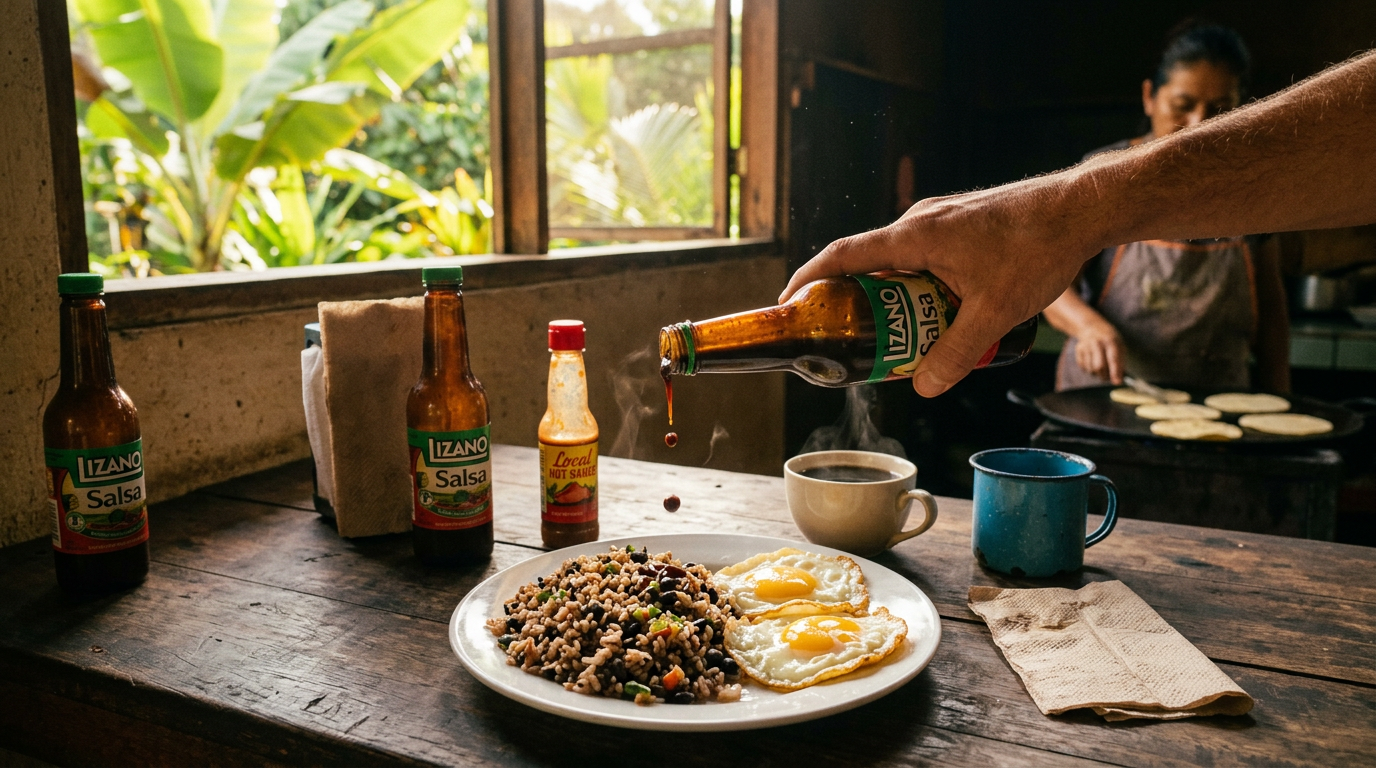
Expect two bottles on the table: Salsa Lizano, a Worcestershire-like sauce, and hot sauce. Hot sauce is on every table, so you can set the heat yourself.
Consider a traveler ordering gallo pinto with eggs at a breakfast counter. Lizano is added to the rice and beans, and a splash of hot sauce goes on the eggs. By the end of the plate, they’ll know what a local breakfast tastes like.
Lizano doesn’t stop at breakfast. It pairs with eggs, cheese, and marinades, so one bottle can carry you through the day. Start with a dash, not a pour. Then taste.
Regional Dishes and Festive Favorites
Costa Rica’s traditional food shifts as you move between coast, lake, and town. Here’s what to order where, and when.
How the Caribbean coast cooks differently
The Caribbean coast cooks with plenty of coconut. Start with rice and beans with coconut milk, a rich, mild staple. Then try rondón, a coconut seafood stew that suits a long, slow lunch. You’ll also find:
- jerk-influenced chicken and seafood
- spiced breads that pair well with coffee
Think of a traveler on the coast who wants a real local lunch. They skip the hotel buffet, find a family-run spot, and order the coconut rice with fish. The payoff is a plate that tastes like where they are.
Here, where you eat matters as much as what you order. Go with the fish.
Fish and other dishes across the regions
Around Lake Arenal, grilled bass is the dish to order. Smoked trout and marlin show up where the catch is fresh, so ask what came in that morning. San Vito’s Italian influence makes its food worth a meal of its own.
Indigenous traditional foods are worth asking about, since a local host can tell you what their family cooks.
Here’s how to match dishes to regions:
- Lake Arenal: grilled bass
- Caribbean coast: rondón and coconut rice
- San Vito: Italian-influenced dishes
- Indigenous communities: traditional foods, best learned about by asking a host
Christmas tamales and chiverre empanadas
Christmas tamales are the holiday dish to look for. Corn dough wrapped in banana leaf gives them their shape. Think of a traveler in town for the holidays who asks a host to show them the wrapping. They leave with a new skill.
During Semana Santa (Holy Week), look for chiverre empanadas, a seasonal treat. Timing is the whole point.
Practical Tips for Eating Like a Local
Eating like a local in Costa Rica mostly comes down to where you sit and how you order.
Ordering at sodas and street stands
Try both: a soda is a small, family-run restaurant serving everyday food, and street stands offer quick bites. Ask whether your casado (rice, beans, salad and a protein) includes a drink, and request crispy bacon when you order.
Menus are often handwritten and not in English, so point at what the next table is eating and say eso (that one). Skip resort-only dining and choose a soda over a resort restaurant, and you’ll taste what locals eat.
Is $20 a lot in Costa Rica? It depends where you spend it: at a soda it stretches much further than at a resort, so check the posted price.
If you’re vegetarian or avoiding meat, ask whether beans or rice were cooked with meat or broth, since that isn’t always clear.
Is $500 enough for a week? For food, it depends mostly on how often you eat at sodas. Consider a solo traveler who eats soda lunches most days and one resort dinner, which keeps the food budget in check.
Tracking a few days of spending shows whether it fits.
What foods to beware of in Costa Rica?
Watch for raw turtle eggs, which are discouraged even when offered as a local treat. Sidewalk ceviche cups (seafood marinated in lime) are tempting, but pick a busy stand and eat right away. Stick to bottled or filtered water if your stomach is sensitive.
Food safety is about choosing well, not skipping local food. Stay careful, and eat freely.
Join a farm-to-table or city food walk
- Culinary rural tours take you to the countryside for meals built on local ingredients.
- Farm-to-table tours visit the farms behind the plate.
- Guided San José food walk follows a local guide who orders and explains each stop.
Traditional Costa Rican food is a daily routine built on rice, beans, fresh fruit, and simple cooking. Gallo pinto in the morning, a casado at lunch, a snack from a street stall, and a sweet to finish: each meal tells you something about where you are.
Order with curiosity, ask what’s fresh that day, and let one meal lead to the next. Pull up a chair, order the casado, and let the food do the talking.
References
- Chifrijo - Traditional and Authentic Costa Rican Recipe — 196flavors.com (2022)
Questions
What is Costa Rica known for?
Costa Rica is known for its biodiversity, rainforests, volcanoes, beaches, and ecotourism. It is also known for coffee, tropical fruit, and the relaxed “pura vida” way of life.
What are casados?
Casados are everyday set meals, commonly served at small local eateries called sodas. A typical plate includes rice, beans, salad, plantain, and a choice of chicken, beef, fish, or pork.
What to beware of in Costa Rica?
For food safety, avoid raw turtle eggs and choose ceviche from established restaurants or busy stalls, eating it soon after purchase. Use bottled or filtered water if you have a sensitive stomach, and take normal precautions with valuables in crowded areas.
What do they eat for dinner in Costa Rica?
Dinner varies, but common choices include a casado with rice, beans, salad, plantain, and meat or fish. People may also eat steak, freshwater fish, sandwiches, or bar snacks such as chifrijo; hearty soups and stews are especially common for Sunday lunch.
Is $500 enough for a week in Costa Rica?
For food alone, $500 can be enough for a week if you mostly eat at local sodas and keep resort meals limited. For a full trip budget including lodging, transport, and activities, it may not be enough; costs depend on your travel style and destination.
Is $20 a lot in Costa Rica?
It depends on where you spend it. At a local soda, $20 can go much further than at a resort, so check menu prices before ordering.
What to be cautious of in Costa Rica?
Be cautious about food and water choices if you are prone to stomach upset: avoid raw turtle eggs, choose ceviche carefully, and use bottled or filtered water if needed. Also keep an eye on your belongings in busy tourist areas and use reputable transport providers.
What kind of food is Costa Rica famous for?
Costa Rica is famous for simple, filling food built around rice, beans, meat, vegetables, corn, and plantains. Signature dishes include gallo pinto, rice and beans cooked together, and casado, a plate of rice, beans, salad, plantain, and a protein.